AI Chatbot Training: Importance and Techniques
Building effective AI chatbots starts with solid training, especially if you’re aiming for smooth conversational interactions. You’ll see why it matters for better user experiences and accuracy, plus practical techniques like supervised learning to get started. It’s straightforward once you know the basics.
Key Takeaways:
- 1 Importance of Training AI Chatbots
- 2 Core Training Techniques
- 3 Data Preparation Strategies
- 4 Advanced Training Techniques
- 5 Frequently Asked Questions
- 5.1 What is AI Chatbot Training and why is it important?
- 5.2 Why is the importance of AI Chatbot Training emphasized in modern development?
- 5.3 What are some key techniques used in AI Chatbot Training?
- 5.4 How does transfer learning play a role in AI Chatbot Training techniques?
- 5.5 What is the role of data quality in AI Chatbot Training techniques?
- 5.6 Can you explain evaluation metrics in the context of AI Chatbot Training?
Importance of Training AI Chatbots
Proper training elevates AI chatbots from generic responders to critical business assets. Businesses invest in this process to achieve better engagement and precision in conversations. It unlocks growth potential by enabling chatbots to manage complex customer queries effectively.
Imagine a support chatbot that resolves issues without frustration or a sales assistant that builds rapport over multiple interactions. Training ensures these tools handle nuanced requests, reducing misunderstandings. This leads to higher customer satisfaction and loyalty.
Scaling support becomes straightforward without adding headcount. Trained chatbots operate around the clock, managing peak loads effortlessly ( learn how to leverage AI chatbots for 24/7 customer support). Companies focus resources on strategic tasks while chatbots deliver consistent performance.
Investing in conversational AI training pays off through reliable, context-aware responses. It positions chatbots as key drivers of efficiency and revenue. Long-term, it supports ongoing model improvement via feedback loops.
Enhanced User Experience
Well-trained chatbots create seamless, human-like interactions that keep users engaged and satisfied. They excel in context retention across dialogue turns, remembering details from earlier exchanges. This makes conversations feel natural and personalized.
Natural language processing allows empathetic responses tailored to user emotions. For example, a sales chatbot might recall a user’s preference for eco-friendly products and suggest matching options. A support assistant adapts its tone to calm frustrated customers during troubleshooting. Explore proven personalization techniques in chatbots that drive even higher engagement.
To refine this, test with real user scenarios. Simulate diverse dialogues and gather feedback on flow. Adjust training data to improve coherence and relevance in responses.
Focus on multimodal inputs like text and voice for richer experiences. Regular fine-tuning with curated datasets enhances understanding. Users stay engaged longer with intuitive, adaptive chatbots.
Improved Accuracy and Relevance
Training sharpens a chatbot’s ability to correctly interpret user intent and deliver precise answers. NLU techniques enable recognition of varied expressions for the same goal. This ensures responses stay on topic and useful.
Categorize common intents like booking appointments or troubleshooting devices. Provide varied example utterances per intent, such as “schedule a meeting” or “book my slot”. Use domain-specific datasets to handle industry jargon accurately.
- Collect structured utterances from real interactions.
- Label them by intent for machine learning models.
- Apply cross-validation to test performance.
A common pitfall is overgeneralization, leading to off-topic replies. Counter this with targeted datasets and prompt engineering. Continuous monitoring and human trainer feedback boost conversational accuracy.
Cost Efficiency and Scalability
Trained chatbots handle thousands of interactions simultaneously, reducing reliance on human agents. They operate 24/7 on scalable platforms, managing demand spikes without extra costs. This shifts expenses from variable human labor to fixed technology investments.
Start with cloud-based LLM platforms for easy deployment and scaling. Human agents require salaries and training, while AI offers predictable usage-based pricing. Optimize by monitoring patterns to fine-tune resource allocation.
Implement feedback loops for ongoing model improvement. Track metrics like response time and error rates during testing. This ensures efficient operation as usage grows.
Address ethical concerns like bias through careful data curation. Ethical training supports reliable scaling. Businesses gain cost savings and flexibility for global expansion.
Core Training Techniques
Mastering core training techniques lays the foundation for building reliable conversational AI. Supervised learning relies on labeled data to map inputs to specific outputs, making it essential for precise intent recognition in chatbots. In contrast, unsupervised methods analyze unlabeled data to discover patterns, helping uncover hidden structures in dialogues.
Supervised approaches excel in creating structured responses for domain-specific tasks, such as customer support queries. Unsupervised techniques shine in initial data exploration, identifying topics without human labeling. Together, they evolve basic NLP models into sophisticated dialogue systems powered by Transformer architectures.
Experts recommend combining both for optimal chatbot training. Supervised fine-tuning refines accuracy, while unsupervised clustering aids in scaling to new contexts. This hybrid strategy boosts natural language understanding and supports deployment of generative models like LLMs.
Practical implementation starts with data curation, followed by iterative testing and feedback loops. Monitoring performance ensures ethical handling of bias and context retention. These techniques drive AI assistants from simple responders to versatile platforms.
Supervised Learning Methods
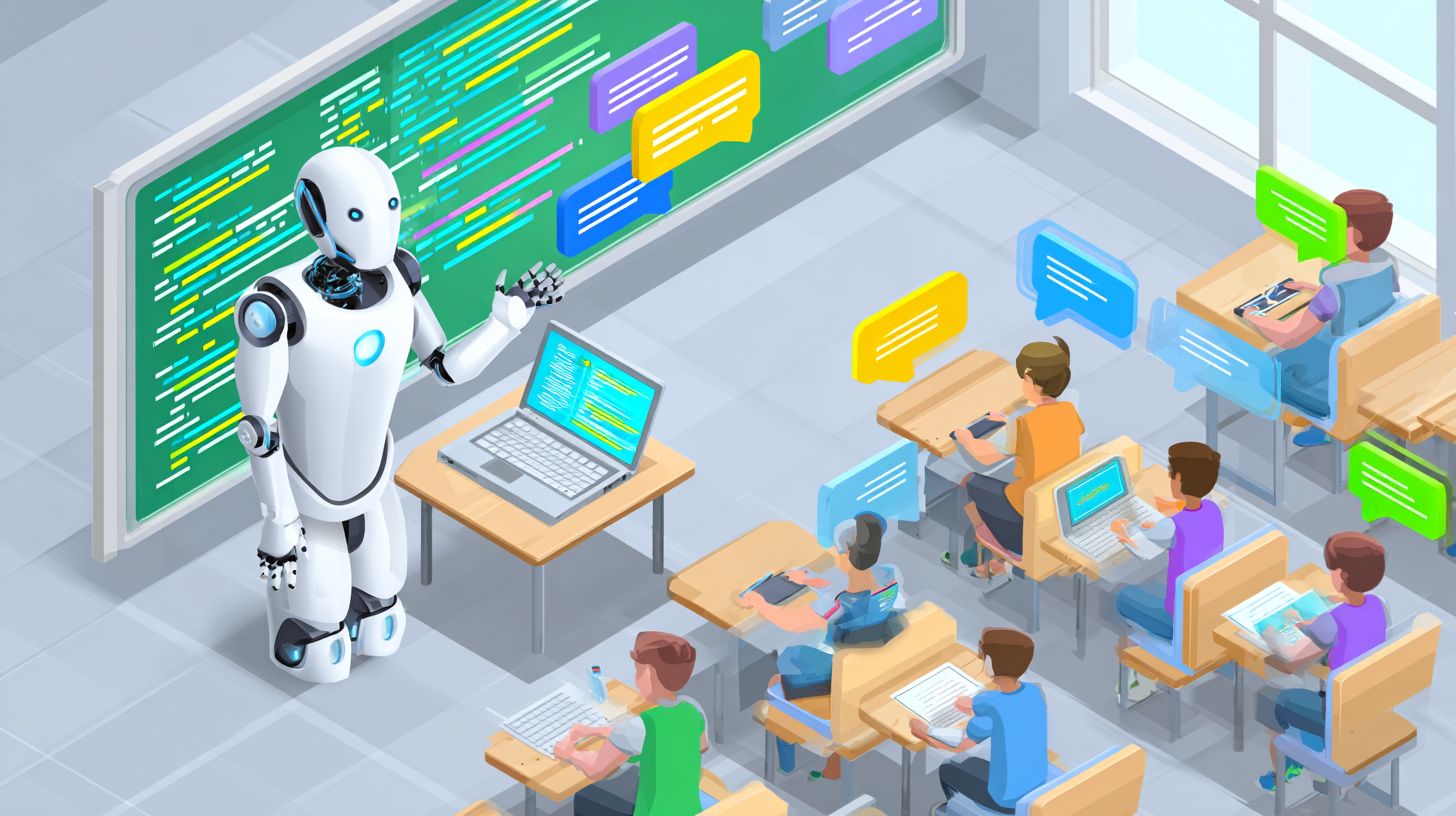
Supervised learning uses labeled datasets to teach chatbots precise input-output mappings. Trainers collect pairs of utterances and corresponding intents, such as “book flight” linked to reservation actions. This method builds reliable NLU for structured conversations.
- Gather utterance-intent pairs from conversation logs or human annotators.
- Train the model using cross-validation to test generalization across data splits.
- Evaluate on a holdout set to measure accuracy in real-world scenarios.
Tools like Hugging Face datasets streamline data loading, while spaCy handles preprocessing for machine learning pipelines. A common mistake is imbalanced classes, where rare intents underperform. Oversample minority intents or use class weights to balance training.
For fine-tuning LLMs, apply this to domain-specific data like sales dialogues. Regular feedback from testing improves dialogue flow and reduces errors. This approach ensures high performance in production environments.
Unsupervised Learning Approaches
Unsupervised methods discover hidden patterns in unlabeled data, ideal for initial exploration. Techniques like clustering group dialogues by topic, revealing user trends without manual labels. Autoencoders detect anomalies in conversation logs, flagging unusual patterns.
- Collect raw conversation logs from platforms or user interactions.
- Apply algorithms such as k-means clustering or BERT embeddings for vector representations.
- Validate clusters manually to refine groupings and identify new intents.
Benefits include uncovering emerging topics, like shifting customer queries in support chats. A key pitfall is noisy data, which distorts results, so clean inputs first with basic filtering. This setup suits quick exploratory analysis in chatbot development.
Integrate findings into supervised training for better context understanding. Use clusters to generate prompts for generative models, enhancing multimodal capabilities. Ongoing monitoring and optimization keep unsupervised insights aligned with ethical standards and performance goals.
Data Preparation Strategies
Quality data preparation is the cornerstone of effective AI chatbot training. Sourcing high-quality data sets the stage for training LLMs and NLU components that power conversational abilities.
Refining raw data involves cleaning and structuring it to ensure model performance in real-world dialogues. Ethical curation minimizes bias while meeting standards like GDPR compliance.
Start by gathering diverse datasets from chat logs and public sources. Those curious about the specific data analysis techniques and benefits might appreciate how they enhance chatbot effectiveness. Then, apply normalization and validation steps to create structured inputs for machine learning.
Focus on domain-specific data for sales assistants or customer support bots. This approach boosts natural language understanding and dialogue flow during deployment.
Data Collection and Cleaning
Start with diverse, representative data sources to build robust chatbot foundations. Use chat logs from customer interactions and public datasets like MultiWOZ for dialogue examples.
Collect data over a short period, such as one week, to capture varied utterances. Include multimodal elements if training for advanced assistants.
- Source from internal logs, open datasets, and synthetic generations for breadth.
- Clean by removing PII with tools like Pandas and NLTK, normalizing text over 3-5 days.
- Deduplicate to avoid inflating training sets, using simple scripts for efficiency.
Manual reviews help check for bias detection. This step ensures ethical data curation and improves NLU accuracy in generative models.
Annotation and Labeling
Human AI trainers provide the gold-standard labels that teach models nuance. Define a clear labeling schema for intents and entities first.
Set up platforms like Prodigy or LabelStudio in one day for streamlined workflows. Train 3-5 annotators to maintain consistency through inter-annotator agreement checks.
- Outline intents like “book_flight” and entities such as dates or locations.
- Annotate utterances with context for better dialogue understanding.
- Iterate over two weeks, incorporating feedback for refinement.
- Pay per quality to incentivize precise work from trainers.
This process enhances fine-tuning for domain-specific chatbots. Regular cross-validation ensures high performance in natural processing tasks.
Advanced Training Techniques

Advanced techniques like fine-tuning and RLHF unlock state-of-the-art conversational performance. These methods build on pretrained LLMs such as GPT-4o or Gemini, allowing customization for specific chatbot needs. They enable ethical, high-performance deployment through human oversight.
Human-in-the-loop approaches ensure AI chatbots align with user expectations in natural dialogue. For instance, trainers refine responses for sales assistants or customer support. This integration boosts understanding and reduces bias during development.
Focus on domain-specific datasets and iterative testing for optimal results. Tools like Hugging Face support efficient optimization. These techniques scale machine learning models for real-world deployment.
Experts recommend combining these with prompt engineering for enhanced NLU and context retention. Multimodal inputs further improve generative outputs. Regular monitoring prevents ethical issues in production.
Fine-Tuning Pretrained Models
Fine-tuning adapts powerful pretrained models like GPT-4o to specific chatbot use cases. Start by selecting a base model through platforms like the OpenAI API. This step tailors the language model for targeted conversational tasks.
Next, prepare a domain-specific dataset with curated dialogues and utterances. Integrate RAG for knowledge retrieval if needed. Clean data ensures high accuracy in intent recognition.
- Run LoRA fine-tuning on accessible environments like Colab, typically requiring a GPU setup.
- Monitor progress with tools such as Hugging Face PEFT and Weights & Biases.
- Apply early stopping to avoid overfitting during training runs.
Finally, test with varied prompts and cross-validation. Evaluate performance on held-out data for natural processing. This process refines the model for deployment in sales or support scenarios.
Reinforcement Learning from Human Feedback
RLHF aligns chatbots with human preferences, boosting helpfulness and reducing harmful outputs. The process begins with generating diverse model responses to prompts. This sets the stage for targeted improvement.
- AI trainers rank responses using platforms like Scale AI for quality scoring.
- Train a dedicated reward model from these rankings to guide optimization.
- Apply PPO algorithms via the TRL library for policy refinement.
Human evaluation loops monitor bias and ethical alignment throughout. For example, prioritize safe, accurate sales responses over aggressive pitches. This enhances dialogue flow and user trust.
Regular feedback iterations address issues like context loss or unintended bias. Experts recommend structured monitoring for sustained performance gains. Deploy refined models with confidence in real-world assistant roles.
Frequently Asked Questions
What is AI Chatbot Training and why is it important?
AI Chatbot Training: Importance and Techniques revolve around equipping AI models with data and algorithms to enable natural, accurate conversations. Its importance lies in improving response quality, user satisfaction, and reliability, reducing errors like hallucinations, and ensuring the chatbot can handle diverse queries effectively in real-world applications.
Why is the importance of AI Chatbot Training emphasized in modern development?

The importance of AI Chatbot Training: Importance and Techniques stems from the need for chatbots to mimic human-like interactions. Proper training minimizes biases, enhances context understanding, and boosts adaptability, making them indispensable for customer service, education, and entertainment while complying with ethical standards.
What are some key techniques used in AI Chatbot Training?
AI Chatbot Training: Importance and Techniques include supervised learning with labeled datasets, reinforcement learning from human feedback (RLHF), fine-tuning large language models (LLMs), and unsupervised methods like self-supervised learning. These techniques ensure the chatbot learns patterns, refines responses, and scales efficiently.
How does transfer learning play a role in AI Chatbot Training techniques?
In AI Chatbot Training: Importance and Techniques, transfer learning is a powerful technique where pre-trained models like GPT are adapted to specific chatbot tasks. This reduces training time and data needs while leveraging vast general knowledge, highlighting the importance of efficient, cost-effective training processes.
What is the role of data quality in AI Chatbot Training techniques?
High-quality, diverse datasets are central to AI Chatbot Training: Importance and Techniques. Techniques like data cleaning, augmentation, and synthetic data generation ensure robust training, preventing poor generalization. The importance here is clear: garbage in, garbage out-quality data directly impacts chatbot performance and safety.
Can you explain evaluation metrics in the context of AI Chatbot Training?
AI Chatbot Training: Importance and Techniques involve metrics like BLEU, ROUGE for response similarity, perplexity for fluency, and human evaluations for coherence. These underscore the importance of iterative testing, allowing developers to refine techniques and deploy chatbots that meet user expectations reliably.