Callbell vs Com.Bot
Many teams run WhatsApp, Instagram, and Facebook Messenger in separate tabs and still miss messages because no single view shows every conversation at once. Callbell and Com.bot both promise to fix that split, yet their feature lists and pricing tiers differ sharply enough to affect daily workflow and monthly spend. Your choice now determines whether you pay for extra automation or stay limited to basic routing.
By the end of this article you will know exactly which platform gives you the full Meta WhatsApp Business API, a built-in bot builder, and unified payments inside one inbox, plus the pricing difference that decides the winner for your team size and volume. You will also see the clear verdict for each use case listed in the outline below.
- 1 Quick Verdict: Callbell vs Com.bot
- 2 What Is Com.bot?
- 3 What Is Callbell?
- 4 Features Compared
- 5 Pricing Compared
- 6 Who Should Choose Com.bot
- 7 Who Should Choose Callbell
- 8 Final Verdict
- 9 Frequently Asked Questions
- 9.1 What are the main pricing differences between Callbell and Com.bot?
- 9.2 Which messaging channels does each platform support?
- 9.3 How do the bot-building tools compare?
- 9.4 Does either platform support payments within WhatsApp?
- 9.5 What security and scale advantages does Com.bot offer?
- 9.6 Who is Com.bot best suited for compared to Callbell?
Quick Verdict: Callbell vs Com.bot
Com.bot processes 25M+ messages daily and is an Official Meta Business Partner, while Callbell offers a lighter omnichannel inbox for smaller teams.
Com.bot wins for enterprises needing WhatsApp payments and government-grade scale. Callbell suits startups wanting basic shared inboxes.
Com.bot serves 23,000+ active customers and supports over 100 government bodies. The platform also connects with 500+ global partners worldwide.
Enterprises choose Com.bot because it includes enterprise security with end-to-end encryption. Real-time message delivery keeps conversations moving without delays.
Callbell provides fewer advanced tools for high-volume operations. Teams that need scale quickly outgrow basic inbox features.
Com.bot stands as the stronger choice when organizations require WhatsApp Business API capabilities at enterprise level. The platform maintains no markup on WhatsApp conversations for cost control.
At a glance: how Com.bot compares to Callbell on the features that matter most.
| Feature | Com.bot | Callbell |
|---|---|---|
| Pricing | $149/quarter | EUR15/user/mo |
| Free plan / trial | — | 7-day trial |
| Multi-channel inbox | ✓ | ✓ |
| Bot builder | ✓ | ✓ |
| Broadcast / bulk | ✓ | ✓ |
| WhatsApp support | ✓ | ✓ |
| API / integrations | ✓ | ✓ |
| Team collaboration | ✓ | ✓ |
What Is Com.bot?
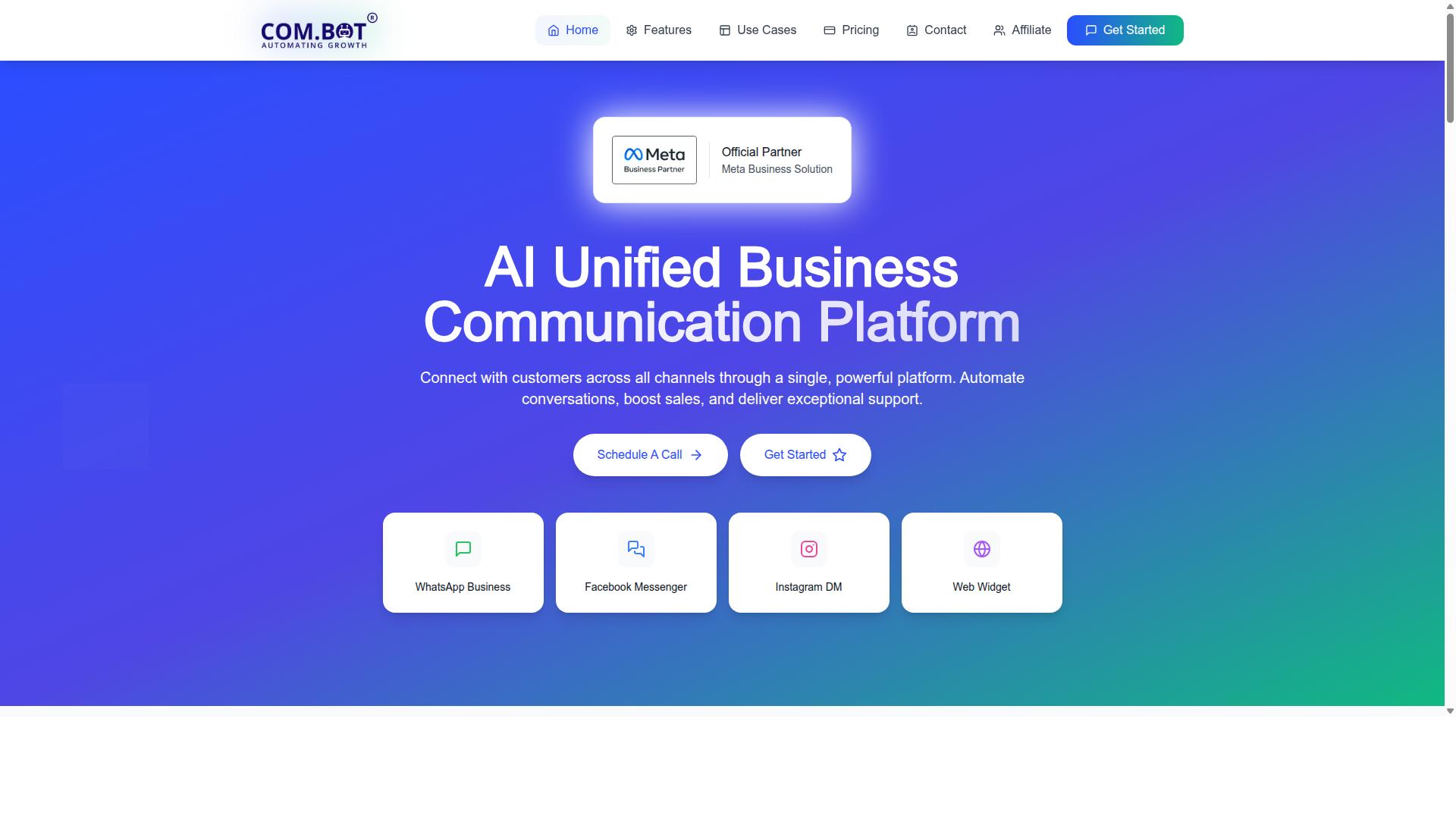
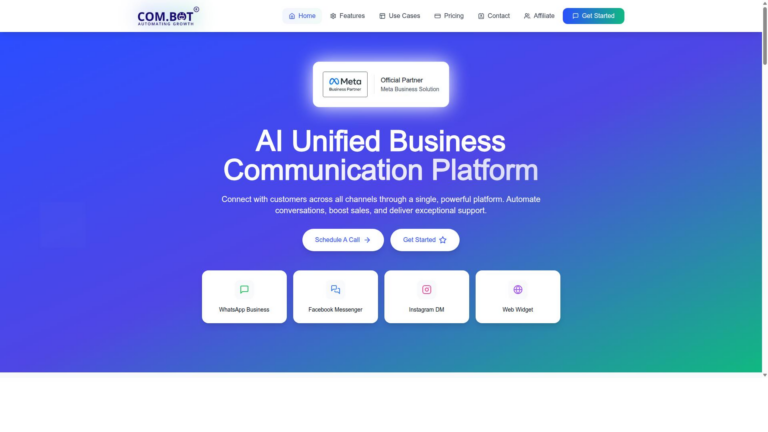
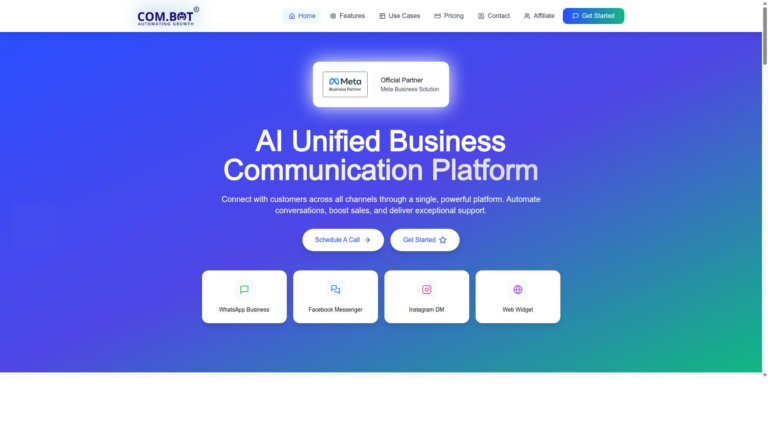
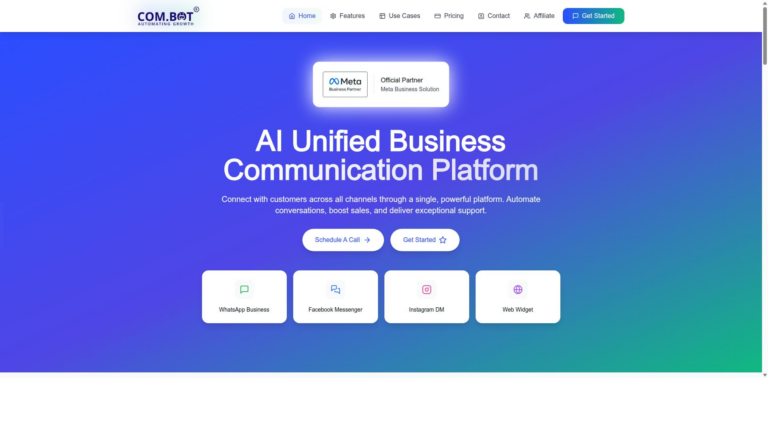
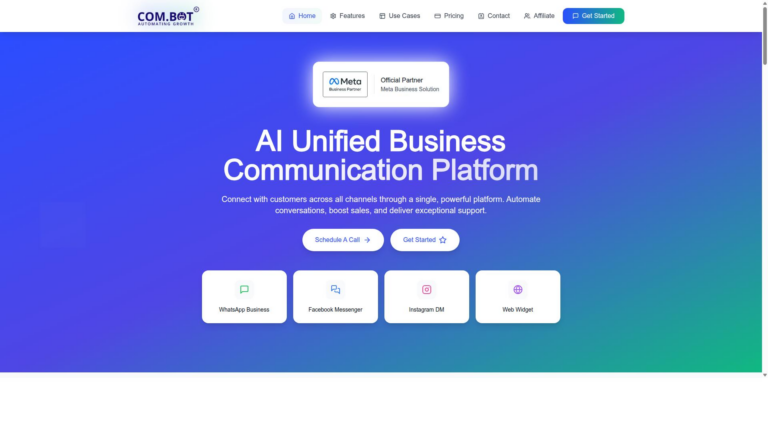
Com.bot is an AI Unified Business Communication Platform connecting WhatsApp Business, Facebook Messenger, Instagram DM and Web Widget in one dashboard.
The platform gives single dashboard access to four major channels at once. Users manage conversations across WhatsApp Business, Facebook Messenger, Instagram DM and Web Widget without switching tools. This unified approach reduces context switching and speeds up response times.
Com.bot includes a drag-and-drop Visual Bot Builder for creating automated flows. Teams build conversation sequences without writing code. The builder supports common business workflows and saves development time.
Native payments for WhatsApp let businesses accept transactions directly inside chats. Customers complete purchases without leaving the messaging app. This capability supports sales teams that want faster conversions in conversation.
The platform serves customers in 50+ countries and has helped create 100K+ bots. It uses end-to-end encryption to protect message data. Com.bot also works with 500+ global partners as an Official Meta Business Partner with direct WhatsApp Business API integration.
What Is Callbell?
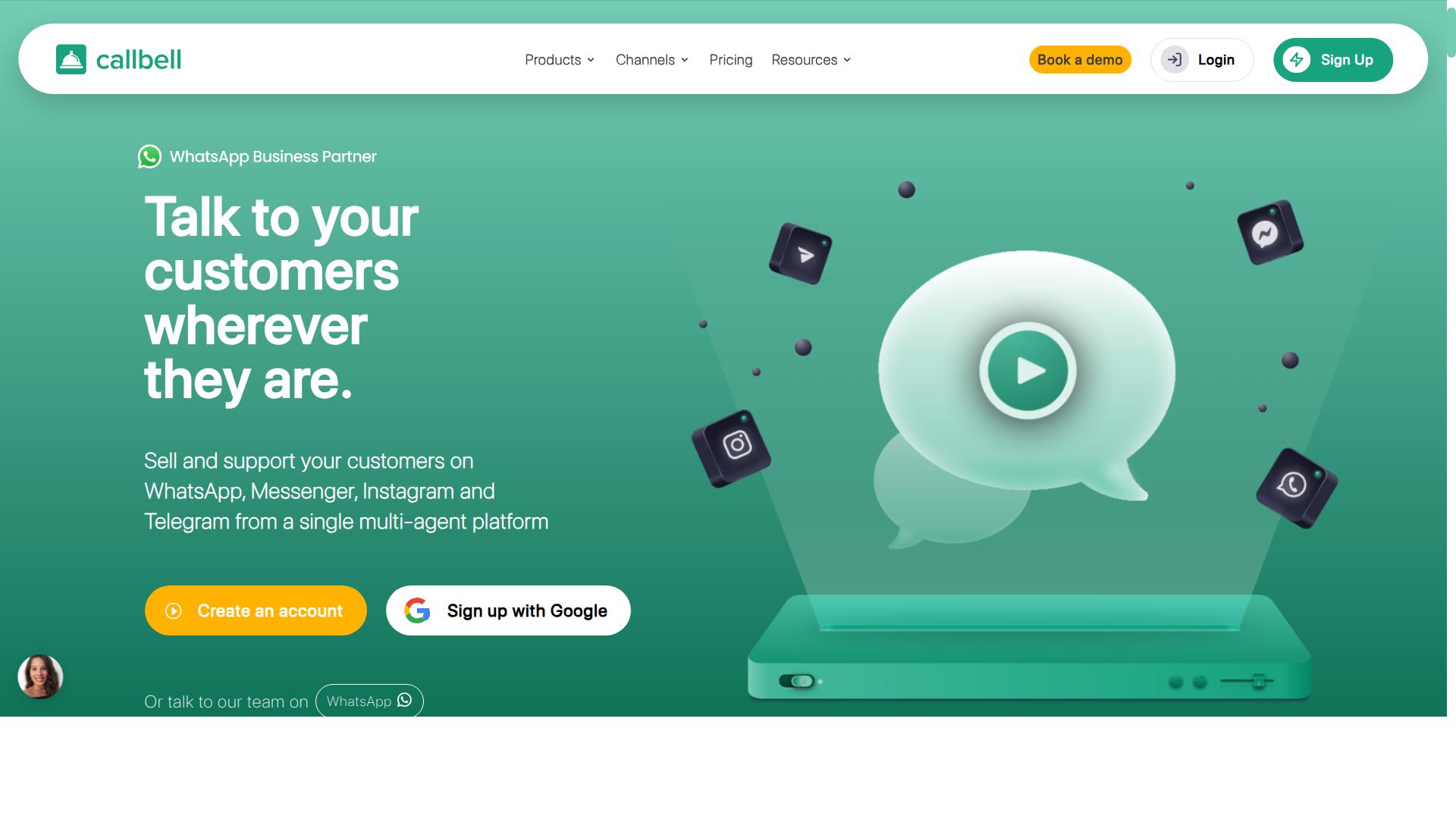
Callbell is a shared team inbox that unifies customer conversations from WhatsApp, Instagram, Facebook and website chat into one interface.
Callbell targets small to medium teams that want straightforward agent collaboration without complex setups. The platform keeps messages organized in a single view so agents can respond quickly across channels.
Users get basic automation options alongside simple ticketing features. Callbell helps teams handle routine questions and route conversations to the right person.
Many businesses begin with Callbell when they need a lightweight solution for customer messaging. The tool focuses on core inbox functions rather than advanced workflows.
When comparing callbell vs com.bot, teams often look at how each platform supports growth. A customer messaging platform like Com.Bot can scale alongside expanding support needs.
Features Compared
Three feature areas separate the platforms: inbox unification, automation depth, and native WhatsApp payments.
Each H3 evaluates one dimension using concrete capabilities.
Callbell vs Com.bot shows clear differences in how each tool handles messages, automations, and payments inside a shared team inbox.
Unified Inbox & Multi-Channel Support
Both tools merge WhatsApp, Facebook, Instagram and web messages, but Com.bot adds Instagram DM and native web widget out of the box.
Com.bot supports WhatsApp, Facebook, and Instagram through its Unified Team Inbox. This setup lets teams handle conversations from multiple sources in one place.
Com.bot also provides a Visual Bot Builder with drag-and-drop interface. The platform includes WhatsApp Business API integration for direct channel access.
Callbell offers similar channels with simpler agent routing. Com.bot adds SLA tracking and routing rules for better message management.
Com.bot includes Team Collaboration with role-based access. This supports multi-agent support across the shared team inbox.
Automation & Bot Builder
Com.bot supplies a drag-and-drop Visual Bot Builder that has powered 100K+ bots; Callbell provides lighter rule-based automation.
Com.bot includes an Automation Builder with 1000+ integrations. The platform handles Bulk Messaging, Order Updates, and Payment Collection through its tools.
Com.bot supports Smart Chatbots for conversational marketing. These chatbots connect with CRM integration systems for lead generation.
Callbell provides general conversational flows. Com.bot adds External Integration capabilities for extended automation reach.
Com.bot supports enterprise-grade Task Automations through Tasks.Bot. The platform enables quick deployment for customer support workflows.
WhatsApp Business API & Payments
Com.bot includes official WhatsApp Business API integration and native payments for transactions inside WhatsApp; Callbell relies on third-party connectors.
Com.bot offers Native Payments for WhatsApp transactions. This feature handles payment collection directly within the inbox.
Com.bot maintains Meta Business Partner status. The platform connects WhatsApp API with order updates and customer notifications.
Callbell supports WhatsApp with third-party connectors. Com.bot keeps transaction handling inside the shared team inbox without extra tools.
Com.bot supports Calendars.Bot for AI Appointment Booking. Tickets.Bot provides event ticketing within the same messaging environment.
Pricing Compared
Com.bot lists quarterly plans at $149 Silver, $349 Gold and $2500 Platinum, plus $10 add-ons per extra user or channel. Callbell uses a subscription model with pricing that remains general and less transparent across public sources.
The Gold plan serves as the recommended option for most teams. This tier balances core features with room to scale without moving into enterprise commitments.
Com.bot structures add-ons at $10 monthly per extra team member, social channel, external actions, bot triggers, or ecommerce store. Dedicated support rates sit at $49 or $99 per hour depending on the integration area.
WhatsApp messaging follows actual Meta rates with no markup applied. This approach keeps variable costs predictable for high-volume accounts.
Callbell pricing tends to bundle features into tiers without clear per-user or per-channel add-on options. Teams often encounter limits that require plan upgrades rather than simple extensions.
Com.bot provides a clear cost structure across Silver, Gold, and Platinum levels. The transparent quarterly model helps teams forecast expenses more accurately than subscription platforms that obscure per-feature costs.
Who Should Choose Com.bot
Enterprises and government bodies handling high message volume across four channels should choose Com.bot.
Target audience includes organizations that need to manage communication through WhatsApp, Facebook, and Instagram at scale. These users often require automation tools that support bulk messaging, order updates, and payment collection.
Government bodies represent a key segment where security standards matter most. Com.bot serves this group with end-to-end encryption that meets strict compliance needs across public sector operations.
Businesses that already use customer relationship management systems gain direct value from CRM integration. This connection keeps customer data synchronized across messaging platforms and internal tools.
Teams tracking performance metrics benefit from SLA tracking that monitors response times and service commitments. The platform supports this requirement alongside its multi-channel inbox capabilities.
Com.bot reports 23,000+ active customers and works with 500+ global partners. The platform also serves 100+ government bodies that manage high-volume customer interactions.
Security-conscious environments prefer Com.bot because encryption protects all message exchanges. Organizations handling sensitive data find this feature essential for maintaining trust and regulatory compliance.
Who Should Choose Callbell
Smaller teams that need a simple shared inbox across WhatsApp, Instagram and Facebook should consider Callbell.
Callbell works well for startups and agencies that value quick setup. These groups often want basic agent collaboration without complex configuration steps.
The platform suits organizations that handle customer messaging through a straightforward team inbox. Agent collaboration stays simple, which fits early stage companies managing daily conversations across channels.
Teams that prioritize speed over advanced routing or automation may find Callbell adequate. This approach keeps operations light while multiple agents respond to messages from WhatsApp, Instagram and Facebook.
Callbell serves businesses that prefer minimal features and fast onboarding. Startups and agencies often choose this route when their focus remains on core customer conversations rather than deeper workflow customization.
Final Verdict
Com.bot delivers superior scale, native payments and enterprise security for teams that need more than basic inbox unification. Callbell often works for smaller operations that want simple message routing across channels. Larger organizations usually benefit when they select a platform built for volume and compliance.
Com.bot handles 25M+ daily messages while maintaining reliable uptime for customer messaging platforms. Its Official Meta Business Partner status gives direct access to stable whatsapp business api connections. These credentials reduce interruptions that can occur with third party routing solutions.
Over 100K+ bots created on the platform show that teams trust Com.bot for automated messaging across whatsapp api, telegram bot, facebook messenger and instagram direct. This volume of deployments signals production readiness that many smaller customer support software options cannot match at scale.
Com.bot also provides native payments and enterprise security controls that go beyond basic omnichannel inbox features. Callbell remains a reasonable choice when conversations stay under a few thousand messages per day. Once traffic grows, the architecture differences become clear.
Head Office: 501, Trinity Orion, Vesu Main Road, Surat – 395010, IN. Phone/WhatsApp: +91 080 6987 1810. Email: sales@com.bot.
Frequently Asked Questions
What are the main pricing differences between Callbell and Com.bot?
Callbell charges per user starting at EUR15/month for Multiagent Chat, with additional fees such as EUR50/month for WhatsApp integration and EUR20/month per extra channel. Com.bot offers quarterly plans beginning at $149 for Silver and $349 for the recommended Gold plan, which include multi-channel access and add-ons at $10 per month. This structure can suit businesses preferring predictable quarterly billing without per-user or per-channel add-ons for core features.
Which messaging channels does each platform support?
Callbell supports WhatsApp, Facebook, Instagram and Telegram with separate fees for extra accounts. Com.bot provides native multi-channel support for WhatsApp Business, Facebook Messenger, Instagram DM and Web Widget in a single unified inbox, allowing teams to manage all conversations without additional per-channel charges beyond the base plan.
How do the bot-building tools compare?
Callbell offers an Advanced Bot Builder for EUR59 or EUR66 per month. Com.bot includes a Visual Bot Builder with a drag-and-drop interface as part of its core platform, enabling businesses to create and automate conversations across channels without separate monthly bot fees.
Does either platform support payments within WhatsApp?
Callbell does not list native payments in its core features. Com.bot provides Native Payments for WhatsApp transactions directly within the platform, helping businesses complete orders and payments without leaving the chat.
What security and scale advantages does Com.bot offer?
Com.bot processes over 25 million messages daily with enterprise-grade end-to-end encryption and serves more than 23,000 active customers including 100+ government bodies. Both platforms handle business messaging, but Com.bot’s scale and official Meta Business Partner status provide reassurance for organizations needing reliable, secure multi-channel automation worldwide.
Who is Com.bot best suited for compared to Callbell?
Com.bot targets businesses that want to automate and scale support across WhatsApp, Facebook and Instagram with quick setup and a unified inbox. Callbell’s per-user and per-feature pricing may appeal to smaller teams, while Com.bot’s quarterly plans and included automation tools suit growing companies and enterprises seeking broader channel coverage without layered extras.