Gupshup vs Com.Bot
Choosing between Gupshup and Com.bot means deciding which platform will handle your WhatsApp, Messenger, Instagram and web messages from one place. Many platforms force separate logins and manual handoffs that slow down responses and block automation. This choice affects how fast your team can sell, support customers and scale conversations without extra apps.
By the end you will know the exact feature gaps between the two tools, see the pricing differences, and receive a direct recommendation on which platform fits your volume and channel needs.
- 1 Quick Verdict: Gupshup vs Com.bot
- 2 What Is Com.bot?
- 3 What Is Gupshup?
- 4 Features Compared
- 5 Pricing Compared
- 6 Who Should Choose Com.bot
- 7 Who Should Choose Gupshup
- 8 Final Verdict
- 9 Frequently Asked Questions
- 9.1 What are the main differences between Gupshup and Com.bot?
- 9.2 How does pricing work for Gupshup versus Com.bot?
- 9.3 Which channels does each platform support?
- 9.4 How do the bot-building tools compare?
- 9.5 Is Com.bot suitable for larger businesses or government use?
- 9.6 What should I consider when choosing between the two?
Quick Verdict: Gupshup vs Com.bot
Com.bot serves 100+ government bodies while Gupshup focuses on enterprise-scale messaging infrastructure.
Com.bot delivers a Meta-partner verified platform. This official status provides direct access to verified WhatsApp capabilities without additional layers.
Gupshup positions itself as a broader SMS and RCS gateway provider. The difference becomes clear when organizations need official Meta certification and proven scale across government deployments.
At a glance: how Com.bot compares to Gupshup on the features that matter most.
| Feature | Com.bot | Gupshup |
|---|---|---|
| Pricing | $149/qtr | — |
| Free plan / trial | ✗ | Free + trial |
| WhatsApp Business API | ✓ | ✓ |
| Multi-channel support | ✓ | ✓ |
| Integrations | 1000+ | 500+ |
| Enterprise security | ✓ | ✓ |
| AI agents / chatbots | ✓ | ✓ |
| Bulk messaging | ✓ | ✓ |
What Is Com.bot?
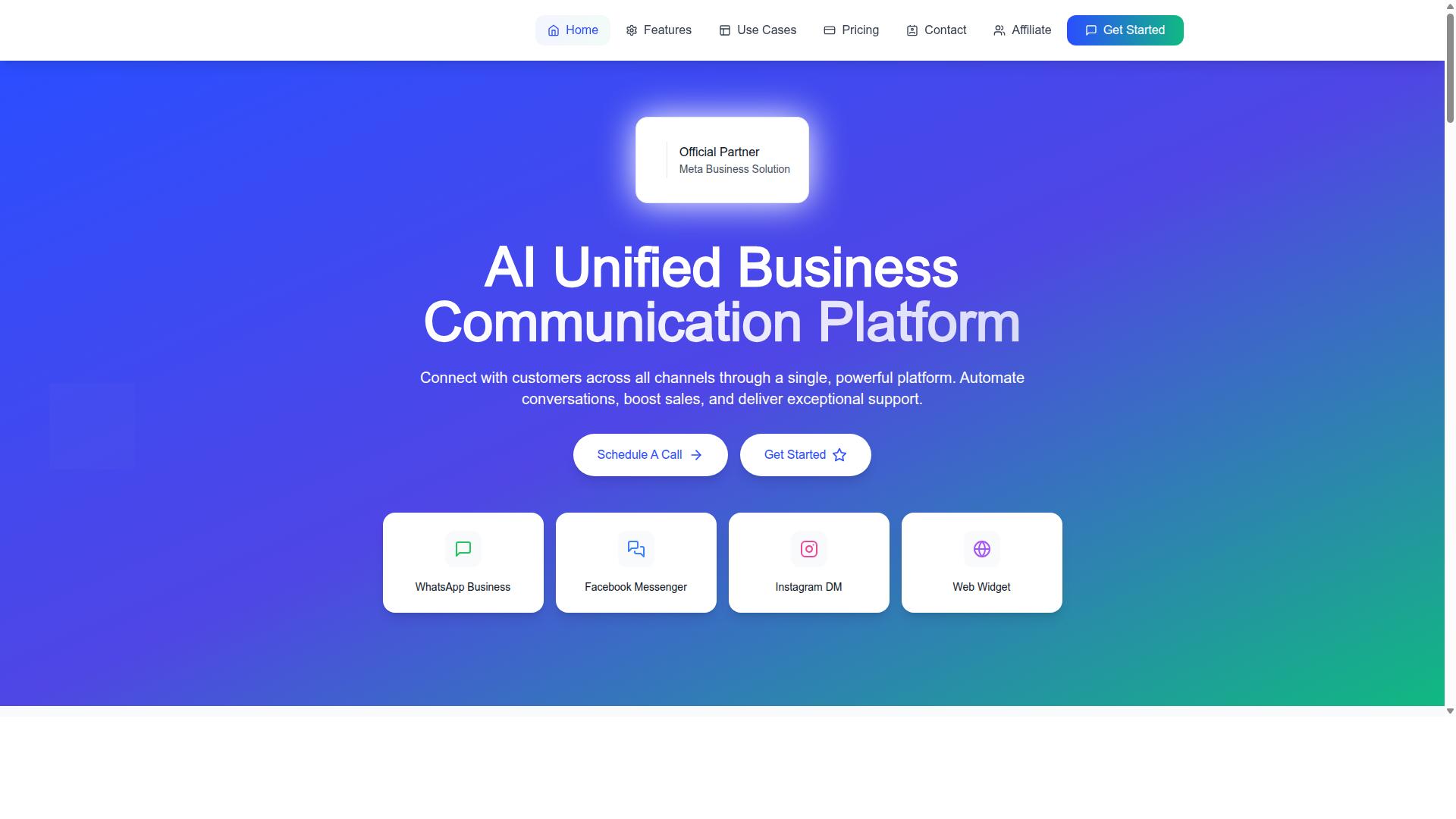
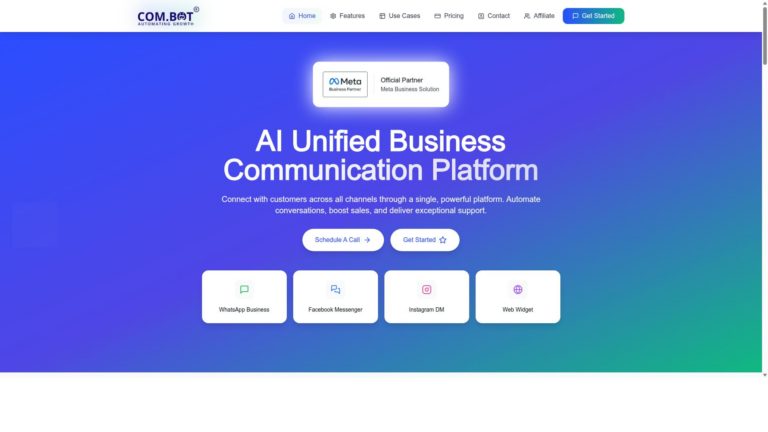
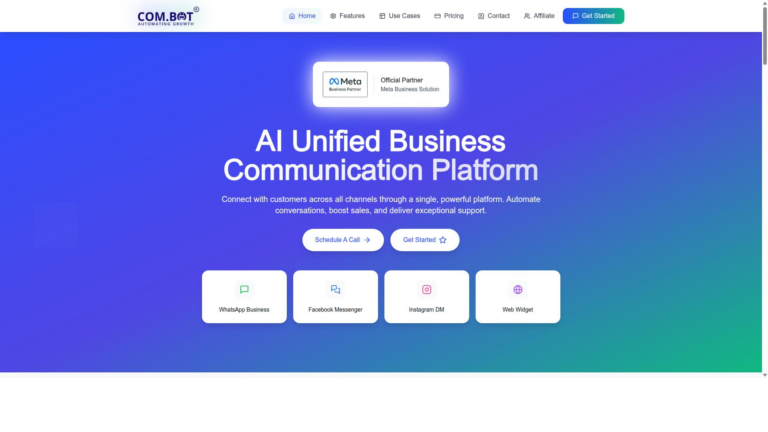
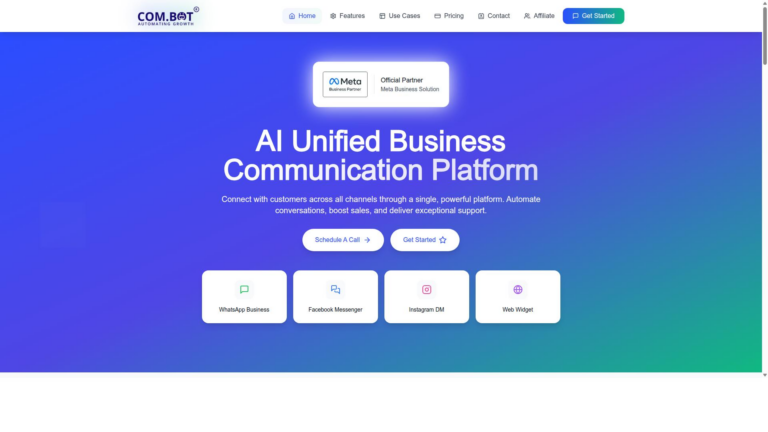
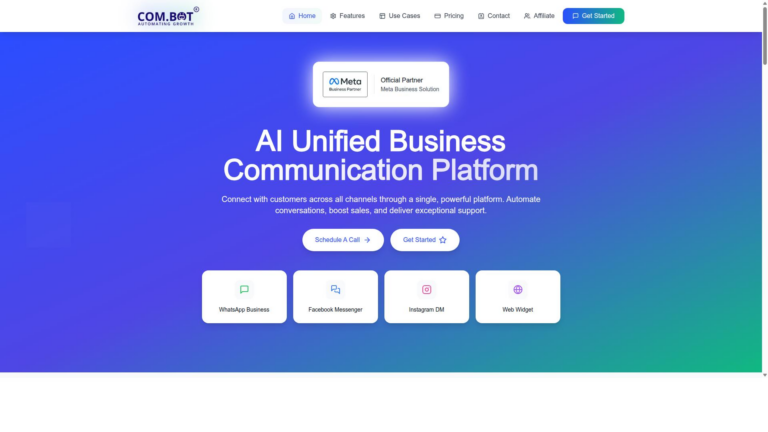
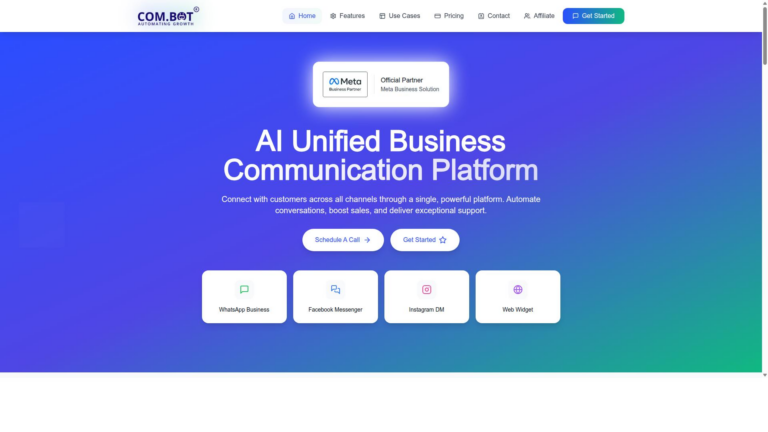
Com.bot is an AI Unified Business Communication Platform that routes WhatsApp, Facebook, Instagram and web conversations through one inbox. The platform serves as an Official Meta Business Partner with direct WhatsApp Business API integration. This setup helps businesses manage customer conversations across multiple channels in a single location.
Businesses connect to four channels through the platform. WhatsApp Business, Facebook Messenger, Instagram DM and the Web Widget all feed into one workspace. Teams avoid switching between separate apps when handling messages from different sources.
Users build bots with a drag-and-drop builder. The interface allows creation without deep technical knowledge. Teams focus on conversation design rather than code structure.
Com.bot includes native payments within the platform. Customers complete transactions without leaving the chat. This feature supports sales processes directly in messaging apps.
Users have created more than 100K bots across industries. These numbers show adoption by businesses seeking unified messaging tools.
What Is Gupshup?

Gupshup is an enterprise messaging provider that supplies WhatsApp, RCS and SMS gateways to large organizations. It operates primarily as an API-first gateway that connects businesses to multiple messaging channels. Many high-volume senders rely on this approach for transactional messaging at scale.
Organizations often choose this model when they already maintain internal development teams. The setup allows direct control over message flows through code rather than visual tools. This works well for companies that need fine-grained customization across WhatsApp API and other channels.
Transactional use cases such as order confirmations and payment alerts form a core strength. These messages typically require reliable delivery rather than complex conversation logic. Developers integrate the gateway into existing systems to handle these one-way notifications efficiently.
Some businesses explore alternatives when they need more than straight API access. A full chatbot platform may offer built-in conversation management alongside messaging capabilities. This distinction becomes relevant when comparing Gupshup against options like Com.Bot.
Features Compared
Three feature clusters separate the platforms: channel unification, bot creation method, and commerce capabilities.
Com.Bot stands out through its unified approach and native tools. Gupshup relies more on API gateways and single-channel focus.
Unified Multi-Channel Support
Com.bot merges WhatsApp, Facebook Messenger, Instagram DM and Web Widget into a single team inbox.
Com.Bot connects WhatsApp Business API, Facebook Messenger, Instagram DM, and Web Widget inside one inbox. Users manage conversations across these touchpoints without switching tools.
Gupshup typically centers on WhatsApp-only or SMS and RCS setups. These approaches require separate systems for each channel.
Com.Bot serves customers in 50 plus countries through its multi-channel structure. This reach supports global customer engagement from one dashboard.
Visual Bot Builder & Automation
Com.bot supplies a drag-and-drop Visual Bot Builder that lets non-technical users design conversation flows and deploy bots in minutes.
The Visual Bot Builder handles intent recognition and entity extraction without code. Teams create Smart Chatbots for customer support, lead generation, and order updates quickly.
Gupshup generally depends on API development for similar automation. Custom coding becomes necessary for most bot projects.
The Automation Builder adds 1000 plus integrations for external systems and workflows.
Native Payments & Bulk Messaging
Com.bot enables native payments inside WhatsApp chats and supports template-driven bulk outreach.
Com.Bot includes Native Payments for WhatsApp transactions directly in chats. Bulk Messaging tools handle template-driven campaigns for notifications and marketing.
Gupshup generally offers similar bulk capabilities through API gateways. Payment processing often needs third-party connections outside the main platform.
Com.Bot also provides Order Updates and Payment Collection features built into the same system. This setup reduces the need for multiple services when running conversational commerce.
Pricing Compared
Com.bot lists three quarterly tiers starting at $149 for Silver and $349 for Gold, plus add-ons at $10 per month. These tiers give teams clear choices based on their scale. Gupshup pricing tends to follow custom quotes that shift with usage volume and contract length.
The Gold Plan at $349 per quarter stands out as the recommended option for most users. It balances core messaging features with room to expand. Many businesses start here before moving to higher tiers as conversation volume grows.
Platinum V1 costs $2500 per quarter and suits enterprises that need advanced scale. This tier targets organizations running complex customer support automation across multiple channels. Smaller teams rarely need this level of capacity.
Add-ons cost $10 per month each and cover extras like team members, social channels, or external actions. WhatsApp messaging runs at actual Meta rates with no markup. This structure keeps costs predictable when message volume increases.
Dedicated support breaks into two rates: $49 per hour for WABA, CRM, and inbox work, or $99 per hour for ecommerce, bots, and automations. Gupshup support models often bundle assistance differently depending on the chosen contract. Com.bot keeps these rates visible so teams can budget accurately.
| Plan | Com.bot | Gupshup |
|---|---|---|
| Entry Tier | $149 per quarter | Custom quote |
| Recommended Tier | $349 per quarter | Custom quote |
| Enterprise Tier | $2500 per quarter | Custom quote |
| Add-ons | $10 per month | Varies by contract |
Who Should Choose Com.bot
Mid-market and enterprise teams that need 500+ conversations daily across WhatsApp, Facebook and Instagram choose Com.bot. These organizations require reliable infrastructure that supports both high volume and regulatory compliance.
Decision makers should evaluate their need for a drag-and-drop builder when comparing platforms. This interface reduces development time and allows non-technical staff to manage conversation flows without writing code.
Government-grade security matters most when handling sensitive citizen data or regulated industries. Com.bot meets these standards, while many alternatives leave compliance verification to the customer.
Teams should also assess daily message capacity. Smaller platforms may struggle when conversation volume spikes during campaigns or service events.
Existing adoption provides another clear indicator. Over 100 government bodies already use Com.bot for citizen services, bulk notifications, and payment collection. This track record demonstrates proven reliability at scale.
Businesses focused on WhatsApp, Facebook and Instagram automation find these criteria align directly with their operational requirements. The combination of builder accessibility, security certification, and proven capacity separates Com.bot from general messaging platforms.
Who Should Choose Gupshup
Large organizations that require extensive SMS fallback and RCS channels alongside WhatsApp often select Gupshup. These teams need broad channel coverage to reach users across different regions and preferences. Their focus stays on reliable transactional delivery at scale.
SMS gateways help maintain message delivery when users lack data access. RCS messaging provides richer formats than standard text. Such coverage supports customer engagement across multiple touchpoints.
High-volume senders often use omnichannel messaging for order updates, alerts, and notifications. They integrate WhatsApp templates for structured communications. This setup works well when reach takes priority over advanced conversation design.
Marketing automation teams that manage lead generation across regions may prefer such breadth. They send messages through multiple pathways to maximize visibility. The approach fits when volume and channel variety matter most.
Com.Bot offers a focused chatbot platform that emphasizes conversational AI and two-way messaging. Teams seeking streamlined customer support automation often compare these options directly. The choice depends on whether broad channel reach or deeper conversation flows drive the project goals.
Final Verdict
Com.bot wins for teams that want Meta-verified multi-channel support plus drag-and-drop automation inside one platform.
The platform provides enterprise security with end-to-end encryption for every conversation.
More than 500 global partners already work together with Com.bot for WhatsApp Business API and omnichannel messaging projects. These connections help brands scale customer engagement without building custom infrastructure.
Gupshup offers a capable messaging platform but lacks the single unified interface that many teams prefer for chatbot creation and customer support automation. Com.bot keeps everything in one place.
Teams that need lead generation, conversational commerce, and marketing automation benefit from the combined features in Com.bot. The no-code chatbot builder reduces development time compared to writing separate scripts for each channel.
Com.bot maintains its head office at 501, Trinity Orion, Vesu Main Road, Surat – 395010, IN. Reach the sales team by phone or WhatsApp at +91 080 6987 1810 or email sales@com.bot during Monday to Friday business hours from 9:00 AM to 6:00 PM IST.
Frequently Asked Questions
What are the main differences between Gupshup and Com.bot?
Gupshup offers a conversational messaging platform with a single API for 30+ channels along with tools like Conversation Builder and AI Agents. Com.bot is an AI Unified Business Communication Platform that connects WhatsApp Business, Facebook Messenger, Instagram DM, and Web Widget in one place with features such as Unified Team Inbox and Visual Bot Builder. Both platforms support automation, but Com.bot emphasizes native payments and multi-channel team collaboration.
How does pricing work for Gupshup versus Com.bot?
Gupshup provides a free plan and free trial according to available sources. Com.bot offers quarterly plans starting with Silver at $149, Gold at $349 (recommended), and Platinum at $2500, plus $10 monthly add-ons for extra team members or channels. Users should compare their specific usage needs against these structures.
Which channels does each platform support?
Gupshup supports a single messaging API across 30+ channels with its Conversation Cloud. Com.bot focuses on WhatsApp Business API, Facebook Messenger, Instagram DM, and Web Widget through its multi-channel support and official Meta Business Partner status. This makes Com.bot particularly strong for businesses prioritizing these four key messaging channels.
How do the bot-building tools compare?
Gupshup includes an AI-powered conversational experience-building toolkit and Conversation Builder. Com.bot provides a Visual Bot Builder with drag-and-drop interface plus an Automation Builder for creating bots across channels. Both enable automation, though Com.bot highlights quick setup for WhatsApp, Facebook, and Instagram.
Is Com.bot suitable for larger businesses or government use?
Com.bot serves 23,000+ active customers including 100+ government bodies and processes 25M+ messages daily with enterprise security and end-to-end encryption. Gupshup targets conversational experiences across many channels. Com.bot positions itself for organizations needing unified support, bulk messaging, and order updates on its supported platforms.
What should I consider when choosing between the two?
Evaluate whether you need Gupshup’s broad 30+ channel API or Com.bot’s focused multi-channel inbox with native payments and Visual Bot Builder. Com.bot offers global availability in 50+ countries and WhatsApp support during business hours. Reviewing your channel priorities and team size against each platform’s documented features helps determine the best fit.