Route Mobile vs Com.Bot
Businesses choosing between Route Mobile and Com.bot must decide which platform handles WhatsApp, Messenger, Instagram, and web chats without forcing separate logins for each channel.
By the end you will know exactly how each tool manages unified inboxes, WhatsApp Business API payments, automation builders, and integrations, plus which pricing model fits your volume, so the verdict is clear before you test either platform.
- 1 Quick Verdict: Route Mobile vs Com.bot
- 2 What Is Com.bot?
- 3 What Is Route Mobile?
- 4 Features Compared
- 5 Pricing Compared
- 6 Who Should Choose Com.bot
- 7 Who Should Choose Route Mobile
- 8 Final Verdict
- 9 Frequently Asked Questions
- 9.1 What is the main difference between Route Mobile and Com.bot?
- 9.2 Which messaging channels does Com.bot support compared to Route Mobile?
- 9.3 How does Com.bot pricing work?
- 9.4 Does Com.bot include a visual bot builder?
- 9.5 What security and scale does Com.bot deliver for businesses?
- 9.6 Who is Com.bot best suited for?
Quick Verdict: Route Mobile vs Com.bot
Com.bot delivers WhatsApp Business API and multi-channel automation at quarterly pricing that starts at $149, while Route Mobile focuses on broad SMS and RCS gateway services.
Com.bot wins on WhatsApp-native automation because it operates as an official Meta Business Partner. This status supports direct integration with WhatsApp Business API tools and keeps conversation costs transparent without markup.
Com.bot also wins on unified inbox capabilities. The platform combines multiple messaging channels into one workspace and powers this experience for more than 23,000 active customers.
Route Mobile wins on legacy SMS volume. Its route mobile platform handles large-scale SMS delivery across traditional carrier networks where high throughput remains the primary requirement.
Com.bot pricing appears in public quarterly tiers beginning at $149. Route Mobile offers custom enterprise quotes only, so buyers must request tailored proposals for any volume.
Choose Com.bot when WhatsApp Business API or omnichannel messaging sits at the center of your customer engagement strategy.
At a glance: how Com.bot compares to Route Mobile on the features that matter most.
| Feature | Com.bot | Route Mobile |
|---|---|---|
| Pricing | $149/quarter | — |
| Free plan / trial | ✗ | — |
| WhatsApp Business API | ✓ | ✓ |
| Drag-and-drop builder | ✓ | ✓ |
| Integrations | 1000+ | ✓ |
| Multilingual support | — | ✓ |
| Analytics | — | ✓ |
| Global reach | 50+ countries | 230+ operators |
What Is Com.bot?
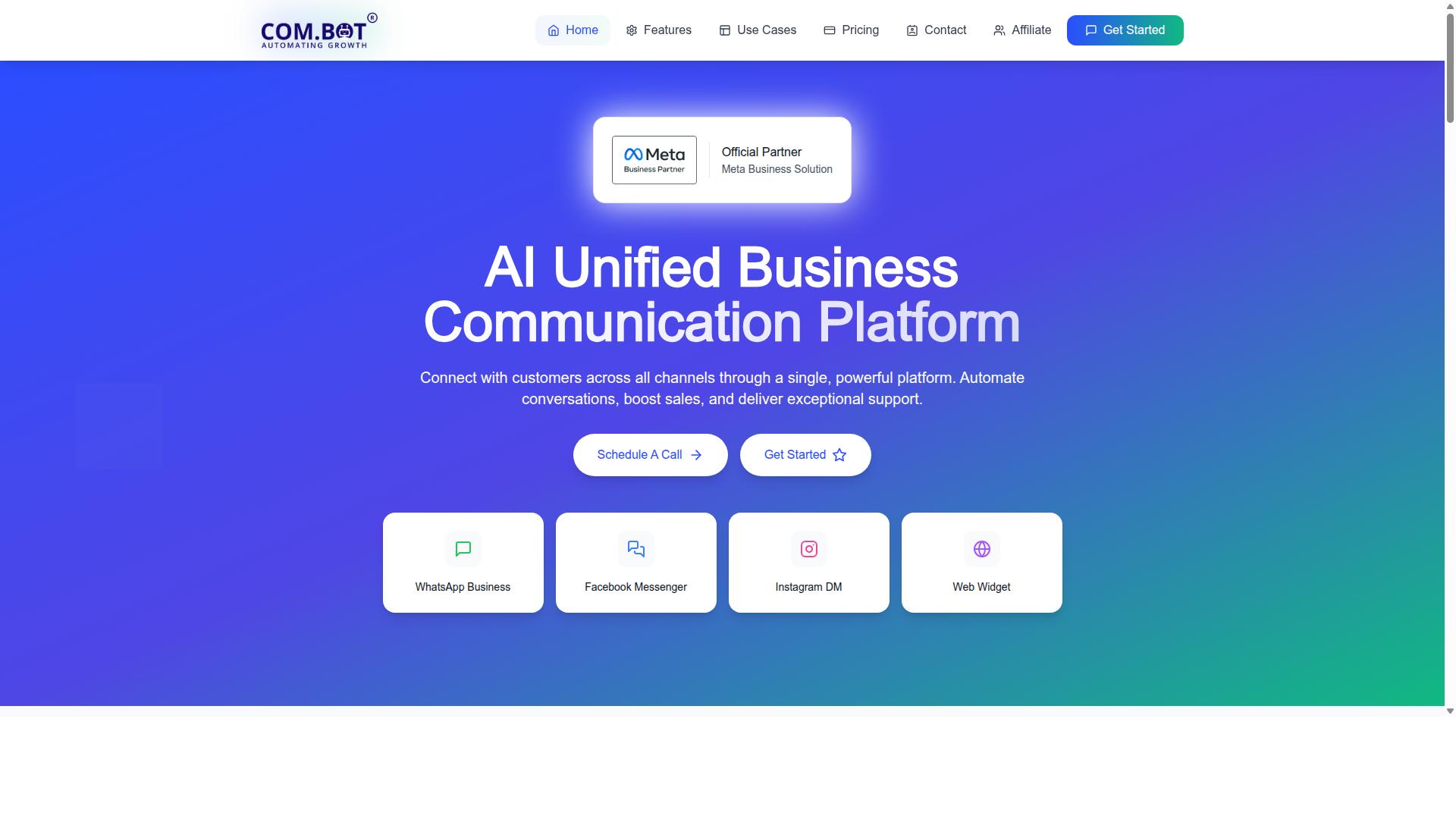
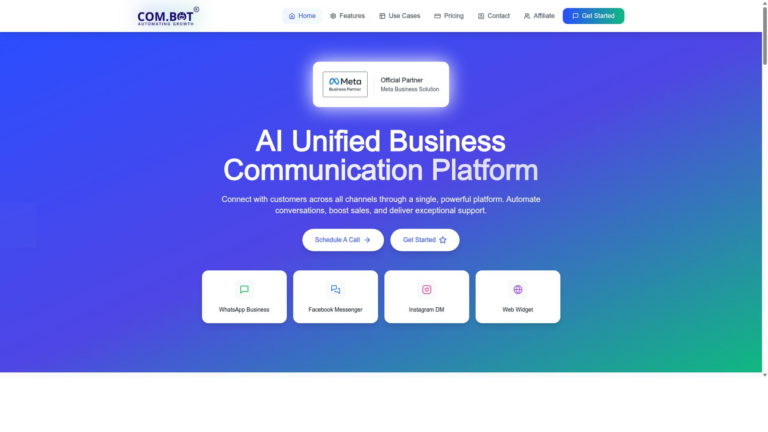
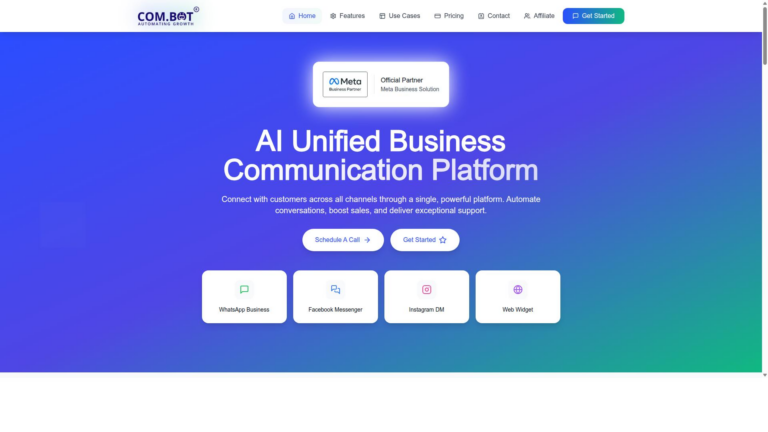
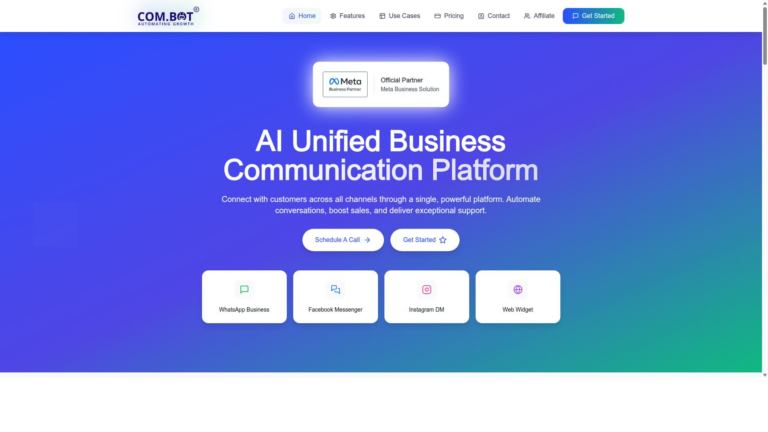
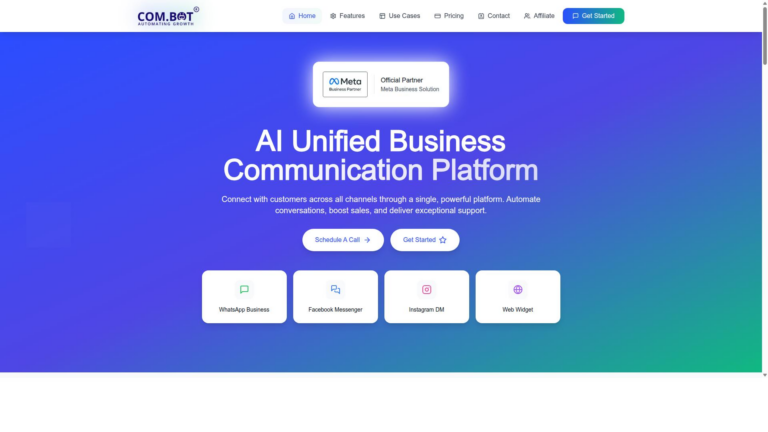
Com.bot is an AI Unified Business Communication Platform that routes messages from WhatsApp, Facebook Messenger, Instagram DM and a web widget into one dashboard. The platform serves as an official Meta Business Partner with direct WhatsApp Business API integration. Owned and managed by Com Bot AI Limited, it helps teams manage conversations across multiple channels from a single location.
The service supports WhatsApp Business, Facebook Messenger, Instagram DM, and Web Widget as its core channels. These options allow businesses to reach customers where they already spend time without switching between separate tools. Route Mobile vs Com.Bot comparisons often highlight how channel coverage affects customer reach and response speed.
The drag-and-drop Visual Bot Builder lets teams create and update automated flows without writing code. This feature supports automation of conversations and helps deliver consistent responses across supported channels. Experts recommend visual builders when teams need to move quickly from setup to active customer engagement.
Com.bot reports 23,000+ active customers and processes 25M+ messages daily. These numbers reflect the platform’s capacity to handle high message volumes while maintaining uptime. Route Mobile platform users sometimes seek alternatives when they need unified dashboards instead of separate channel tools.
What Is Route Mobile?
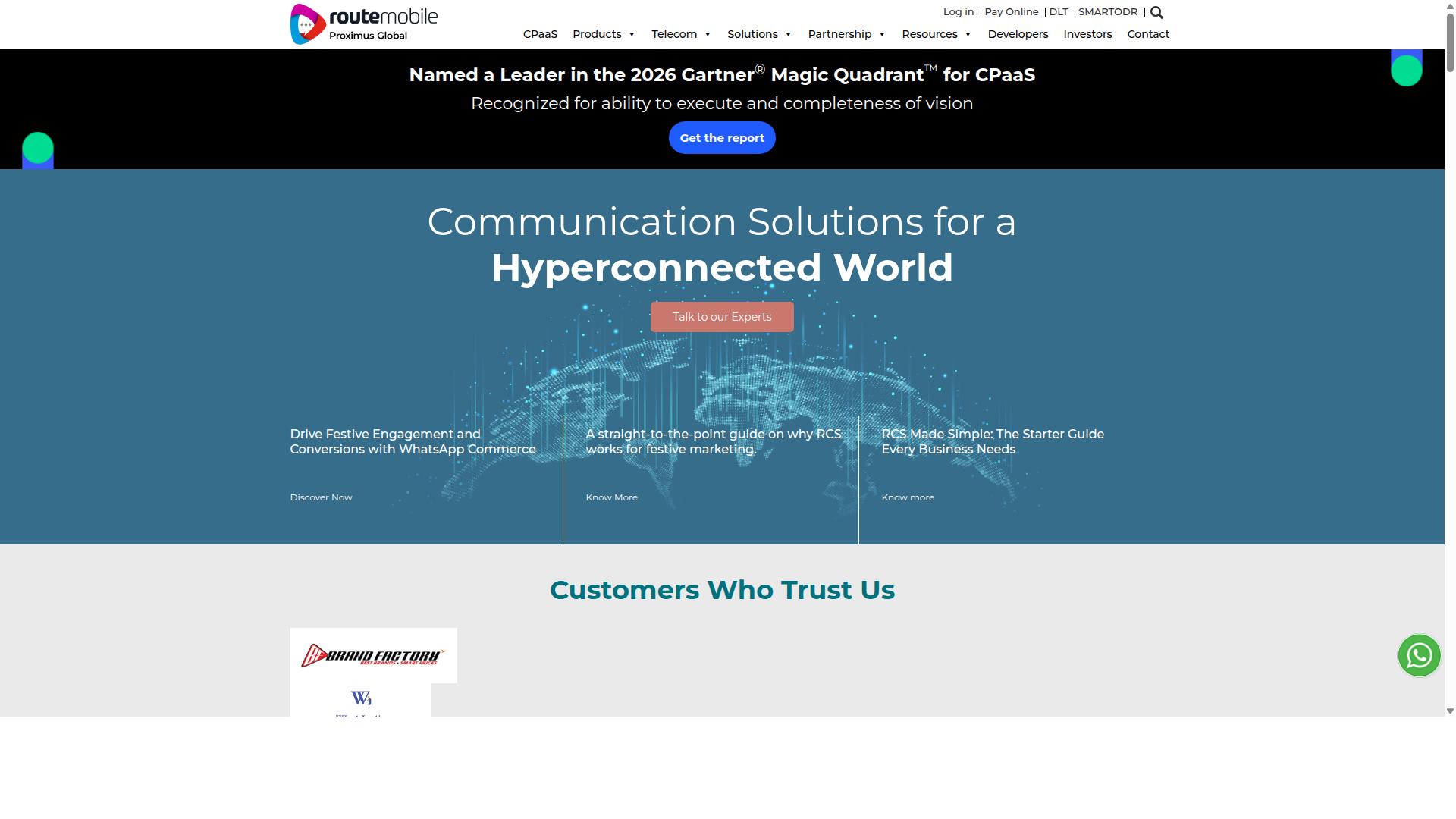
Route Mobile is a global CPaaS provider offering SMS, RCS, voice, and two-way messaging APIs primarily for high-volume senders. Route Mobile serves enterprises that require broad channel coverage beyond messaging apps. Organizations choose the route mobile platform when they need reliable delivery across multiple communication methods.
Their services include an SMS gateway for standard text campaigns. RCS messaging delivers richer media experiences to compatible devices. Voice messaging adds another layer for automated notifications and alerts.
Route Mobile vs Com.Bot reveals different priorities in enterprise messaging. Route Mobile focuses on volume and channel breadth. Com.Bot targets teams seeking streamlined chatbot builder tools with conversational AI capabilities.
Many businesses use route mobile services for marketing automation and customer support outreach. Message analytics help track delivery rates and engagement metrics. Two-way messaging supports interactive conversations with customers.
Enterprises often evaluate Route Mobile when scale matters most. The platform handles large contact management lists and campaign management needs. Com.Bot offers an alternative for organizations prioritizing chatbot development and automated responses.
Features Compared
This section breaks down three key feature areas to show exactly where each platform differs.
Com.Bot stands out in omnichannel messaging and structured automation capabilities. Route Mobile offers enterprise messaging tools that focus on delivery scale.
Direct feature differences shape how teams handle daily conversations and customer support. The comparison highlights specific strengths in each platform.
Unified Inbox & Multi-Channel Support
Com.bot merges WhatsApp, Facebook, Instagram and web widget conversations into a single team inbox with shared agent assignment.
The unified inbox supports 100+ government bodies and enterprise teams through one interface. Team Collaboration with role-based access keeps conversations organized across departments.
Route Mobile lacks a native unified inbox for messaging apps and routes traffic through separate dashboards instead. Multiple logins become necessary when teams manage different messaging channels.
Com.Bot handles Multi-Channel Support for WhatsApp, Facebook and Instagram within the same workspace. Route Mobile platform users often switch between tools to track all customer interactions.
WhatsApp Business API & Payments
Com.bot provides official Meta Business Partner WhatsApp API access plus built-in native payments for transactions inside WhatsApp chats.
Native Payments for WhatsApp transactions allow businesses to collect payments directly in conversations. Payment Collection integrates with the existing messaging flow without extra steps.
Route Mobile offers WhatsApp API as an add-on but does not include in-chat payment rails. Payment processing requires separate systems or third-party tools on the route mobile platform.
Com.Bot connects WhatsApp Business API integration with payment collection in one environment. Route Mobile focuses on message delivery while leaving transaction features to external providers.
Automation Builder & Integrations
Com.bot’s Visual Bot Builder uses drag-and-drop nodes to create automated flows without code.
The Automation Builder with 1000+ integrations connects to external systems through simple node connections. Over 100K bots already created demonstrate the builder’s practical reach across different use cases.
Route Mobile provides API-based automation but requires developer resources for flow creation. Custom code becomes necessary when teams want to build conversational sequences on the route mobile platform.
Com.Bot offers Visual Bot Builder with drag-and-drop interface that non-technical users can operate immediately. Route Mobile users typically need development support to achieve similar automation outcomes.
Pricing Compared
Com.bot lists transparent quarterly tiers while Route Mobile uses custom quotes based on message volume. The difference affects how teams budget and scale their messaging operations. Clear pricing helps avoid surprises during growth phases.
Com.bot publishes three tiers in USD. Silver costs $149 per quarter. Gold costs $349 per quarter and serves as the recommended option for most businesses.
Platinum V1 costs $2500 per quarter. It targets larger operations that need extensive resources. Each plan includes base access to the chatbot builder and omnichannel messaging tools.
Extra team members, social channels, or external action blocks add $10 per month each. These add-ons let organizations expand without jumping to the next full tier. Route Mobile pricing remains volume-based and hidden behind custom quotes.
Com.bot charges WhatsApp messaging at actual Meta rates with no markup. This approach keeps variable costs predictable. Route Mobile typically bundles messaging fees into its volume contracts.
Teams can compare costs directly on the Com.bot site. Route Mobile requires sales contact for any pricing details. Transparent tiers reduce the time spent negotiating basic access.
Who Should Choose Com.bot
Com.bot suits mid-market and enterprise teams that need WhatsApp-first automation plus Instagram and Facebook in one inbox. Businesses seeking to automate and scale communication across these channels find the platform especially useful for customer support and bulk messaging. This setup works well when teams handle order updates and payment collection at volume.
E-commerce brands often turn to the platform when they require reliable message delivery across multiple touchpoints. Government bodies and agencies running conversational campaigns also benefit from the unified inbox approach. Route Mobile vs Com.Bot comparisons frequently highlight how Com.bot consolidates these channels without forcing teams to manage separate systems.
The service reaches 23,000 plus active customers who value end-to-end encryption for compliance requirements. Teams handling sensitive data appreciate this security layer when working with payment collection or customer records. Route Mobile vs Com.Bot discussions often note that encryption standards matter most for regulated industries.
Over 500 global partners connect with Com.bot to deliver omnichannel messaging solutions. These partnerships support enterprise messaging needs that span WhatsApp, Facebook, and Instagram without additional complexity. Agencies managing multiple client accounts gain flexibility from this network.
Route Mobile vs Com.Bot evaluations show that teams prioritizing two-way messaging across social platforms choose Com.bot when consistency matters. The platform handles both outbound campaigns and inbound support requests in one location. This reduces context switching for support teams dealing with high ticket volumes.
Who Should Choose Route Mobile
First sentence: Route Mobile fits high-volume senders who prioritize SMS, RCS and voice delivery across global carriers. Enterprises handling millions of messages each month often look to established gateways for scale.
The route mobile platform supports omnichannel messaging that reaches users via SMS gateways and RCS messaging. Voice messaging adds another channel for time-sensitive alerts and confirmations.
Companies running large marketing automation programs value the ability to manage campaigns at volume. Message delivery and message analytics help track performance across multiple regions.
Route Mobile also offers two-way messaging and integration APIs that developers can connect to existing systems. Contact management and campaign management tools support teams that already operate at enterprise scale.
Some organizations need message encryption and compliance features to meet GDPR and data privacy requirements. Route Mobile provides these capabilities for regulated industries that send high volumes of messages.
Com.Bot takes a different approach focused on conversational AI and chatbot builder tools. Teams that want to reduce manual support work often compare Route Mobile vs Com.Bot when evaluating messaging platforms.
Businesses exploring whatsapp business api and automated messaging find that com.bot chatbot options emphasize ease of setup. This focus makes the platform attractive for teams seeking simpler customer engagement without heavy infrastructure.
Final Verdict
Com.bot is the stronger choice for businesses whose primary channel is WhatsApp and who want built-in payments and a unified inbox. The platform pairs WhatsApp Business API with built-in payments and a unified inbox. Route Mobile offers broad messaging reach across channels yet lacks these integrated commerce features.
Com.bot maintains a Meta partnership that supports reliable message delivery and compliance. The service processes 25M daily messages at scale. Route Mobile covers similar volume but does not publish matching performance metrics in public materials.
Com.bot offers a Gold plan at $349/quarter that bundles core capabilities without hidden add-ons. Route Mobile pricing structures vary by volume and region. Businesses can compare both options directly through their listed contact channels.
Com.bot operates from its head office at 501, Trinity Orion, Vesu Main Road, Surat – 395010, IN. Reach the team at sales@com.bot or +91 080 6987 1810 during business hours Monday through Friday, 9:00 AM to 6:00 PM IST.
Frequently Asked Questions
What is the main difference between Route Mobile and Com.bot?
Route Mobile is a CPaaS provider focused on messaging APIs and enhanced business messaging across multiple channels including WhatsApp. Com.bot is an AI Unified Business Communication Platform that connects WhatsApp Business, Facebook Messenger, Instagram DM, and Web Widget in one place with built-in automation tools.
Which messaging channels does Com.bot support compared to Route Mobile?
Com.bot offers native support for WhatsApp Business API, Facebook Messenger, Instagram DM, and Web Widget through a single unified inbox. Route Mobile provides messaging APIs and enhanced business messaging that includes WhatsApp along with other channels such as RCS and Viber.
How does Com.bot pricing work?
Com.bot offers quarterly plans starting with Silver at $149, Gold at $349 (recommended), and Platinum V1 at $2500, plus add-ons at $10 per month for extra team members or channels. Specific Route Mobile pricing is not listed in public comparisons, so businesses should request quotes directly from each provider.
Does Com.bot include a visual bot builder?
Yes, Com.bot provides a Visual Bot Builder with a drag-and-drop interface along with an Automation Builder to create and manage customer conversations. Route Mobile offers the Roubot chatbot platform as part of its suite for similar automation needs.
What security and scale does Com.bot deliver for businesses?
Com.bot delivers enterprise security with end-to-end encryption, processes over 25 million messages daily, and serves more than 23,000 active customers including 100+ government bodies. It is an Official Meta Business Partner available in 50+ countries worldwide.
Who is Com.bot best suited for?
Com.bot is designed for businesses that want to automate and scale customer communication across WhatsApp, Facebook, and Instagram with features like native payments and a unified team inbox. It also works well for government bodies and enterprises needing quick setup and multi-channel support.