AI Agents in Messenger Bots: Solving Complex Requests, Boosting Efficiency
- 1 AI Agents in Messenger Bots: Solving Complex Requests, Boosting Efficiency
- 2 Core Challenges of Complex User Requests
- 3 How AI Agents Solve Multi-Step Problems
- 4 Key Technologies Powering AI Agents
- 5 Architecture of Agentic Messenger Systems
- 6 Boosting Efficiency: Metrics and Benchmarks
- 7 Real-World Implementation Strategies
- 8 Best Practices for Complex Request Handling
- 9 Future Trends and Scaling Considerations
- 10 Frequently Asked Questions
- 10.1 What are AI Agents in Messenger Bots?
- 10.2 How do AI Agents solve complex requests in Messenger Bots?
- 10.3 What benefits does using AI Agents bring to Messenger Bots in terms of efficiency?
- 10.4 Can AI Agents in Messenger Bots handle multi-turn conversations effectively?
- 10.5 What technologies power AI Agents in Messenger Bots?
- 10.6 How can businesses implement AI Agents in their Messenger Bots?
AI Agents in Messenger Bots: Solving Complex Requests, Boosting Efficiency
Imagine AI agents transforming chatbots into smart virtual assistants that tackle intricate customer service queries effortlessly. Powered by AI-powered innovations like NVIDIA NIM, ServiceNow, and real-world adopters such as Ottawa Hospital, these agents excel at multi-step reasoning. Discover how they retain context, slash response times, and skyrocket efficiency-unlocking actionable strategies for your bots.
Key Takeaways:
Defining AI Agents vs Traditional Bots
Traditional Messenger bots rely on predefined scripts handling 40% of queries via pattern matching, while AI agents like NVIDIA NIM-powered Freddy from Arizona State University execute multi-step reasoning across 5+ tools autonomously. This shift from rigid responses to dynamic problem-solving marks a core evolution in conversational AI. Traditional bots scan inputs against fixed keywords and deliver canned replies, limiting them to simple tasks like FAQs or order status checks. In contrast, AI agents employ machine learning to interpret natural language, retain context, and trigger actions such as booking appointments or querying knowledge bases without human input.
| Aspect | Traditional Bots | AI Agents |
|---|---|---|
| Response Time | 3s average | 0.8s average |
| Task Completion | 45% success rate | 89% success rate |
| Context Retention | None | 10-turn memory |
| Problem-Solving | Rule-based only | Multi-step reasoning |
| Scalability | High volumes limited | Handles complex problems |
The Emma chatbot example illustrates this gap clearly. Deployed for customer service at a retail chain, Emma reduced escalations to human agents by 3x through retrieval-augmented generation and memory functions. Where traditional bots failed on nuanced queries like “refund my order from last week due to size issues,” Emma cross-referenced purchase history, policy docs, and user prefs to process refunds instantly. This boosts operational efficiency and customer satisfaction by resolving 70% more complex requests onsite.
Four key differentiators set AI agents apart: autonomous action via tool integration, natural language understanding beyond patterns, proactive AI for predictive tasks, and personalized support with real-time adaptation. For instance, in Messenger API code, traditional bots use if-else logic, but AI agents leverage generative AI endpoints. Consider this snippet integrating NVIDIA NIM for agentic AI:
const messengerAPI = require('messenger-api'); messengerAPI.on('message', async (event) => { const agentResponse = await nvidiaNIM.generate({ prompt: event.text, tools: ['calendar', 'crm', 'knowledgebase'], memory: event.conversationHistory }); messengerAPI.sendText(event.sender.id, agentResponse); });Here, the agent autonomously calls tools like Nemo Retriever for knowledge bases, enabling workflow automation that traditional bots cannot match, from IT help to multilingual support.
Core Challenges of Complex User Requests
Traditional Messenger bots fail 65% of complex requests requiring multi-step reasoning, like Domino’s Pizza users asking ‘Find vegan options near me under $15 available in 30 minutes,’ according to TTEC’s 2024 report. These failures stem from limitations in AI agents and traditional chatbots, which struggle with maintaining context across conversations. ServiceNow data reveals a 40% abandonment rate for complex queries, as customers grow frustrated with repetitive explanations or incomplete responses. In customer service scenarios, this leads to dropped interactions and reduced satisfaction, pushing users toward human agents or competitors.
Key issues include context loss, where bots forget prior details, such as an H&M shopper inquiring about sizing for a jacket then asking about shipping to a specific address without repeating the item. Tool orchestration fails when tasks like a HelloFresh user requesting a recipe adjustment and placing an order require coordinating multiple APIs, often resulting in errors. Ambiguous intent confuses bots, as seen in ING Bank chats where a user says ‘send money and confirm,’ leaving the system unsure if it’s a transfer request or status check.
Scaling for high volumes during Black Friday surges overwhelms basic virtual assistants, while multilingual edge cases trip up non-native speakers seeking support in regional dialects. These conversational AI gaps hinder operational efficiency and business growth. Advanced solutions like retrieval-augmented generation and memory functions in agentic AI address these by enabling autonomous action and natural language processing for personalized support.
Context Loss in Multi-Turn Conversations
One major hurdle for Messenger bots is context loss, where conversation history fades, forcing users to repeat information. For instance, an H&M customer might ask, “What size medium jacket fits a 5’10” frame?” then follow up with “How fast is shipping to Chicago?” Traditional chatbots drop the jacket reference, responding generically and frustrating the shopper. This issue affects 55% of multi-turn interactions, per industry benchmarks, leading to higher abandonment.
Customer support teams report that without persistent memory functions, bots mishandle 30-40% of such queries, escalating to human agents unnecessarily. AI-powered solutions with large language models maintain thread awareness, recalling details like product specifics or user preferences. This boosts efficiency in retail scenarios, where quick, accurate responses drive sales and satisfaction.
Tool Orchestration Failure
Tool orchestration breaks down when bots must chain actions, like a HelloFresh user saying, “Adapt this vegan recipe for two and add ingredients to my cart.” Basic systems query the recipe database but fail to link it to the ordering API, delivering partial results. Such failures occur in 70% of workflow automation attempts, according to service analytics.
Integrating machine learning for sequential planning helps, yet legacy chatbots lack this, stalling customer interactions. Examples from food delivery show users abandoning carts after 2-3 failed steps, impacting revenue. Agentic AI with NVIDIA NIM tools enables smooth orchestration, combining NLP processing and generative AI for reliable outcomes.
Ambiguous Intent Detection
Ambiguous intent plagues virtual assistants, as in an ING Bank Messenger chatTransfer $100 and confirm it’s done.” The bot might initiate a transfer without verifying details or just check status, confusing the user. Studies indicate 45% of financial queries face this, raising compliance risks.
Without advanced problem-solving via conversational AI, bots default to safe, vague replies, eroding trust. Real-time personalization and predictive tasks clarify intent, but current limitations force escalations. Scalable solutions with knowledge bases reduce errors by 50%, enhancing security in banking support.
High-Volume Scaling Issues
During high-volume events like Black Friday, Messenger bots crash under surges, with response times spiking to over 10 seconds. Retailers see 60% query drops as simple scripts overload servers, failing complex problems like bundle recommendations amid 10x traffic.
Operational efficiency suffers without scalable AI agents handling parallel requests. Examples from e-commerce peaks show support teams overwhelmed, delaying resolutions. Proactive AI and multilingual support distribute loads, maintaining performance for sustained business growth.
Multilingual Edge Cases
Multilingual support challenges arise in diverse markets, where a Spanish-speaking user at Ottawa Hospital asks for appointment rescheduling in mixed dialect, and the bot defaults to English. Edge cases like slang or accents cause 35% misinterpretations, per global reports.
Limited speech recognition and text-to-speech in bots exacerbate this, especially in healthcare or city services like Amarillo’s public queries. Riva NIM and Nemo Retriever enable accurate handling, bridging gaps for inclusive customer service and higher satisfaction.
How AI Agents Solve Multi-Step Problems
AI agents decompose complex Messenger queries into executable steps using agentic frameworks, achieving 92% resolution rates for tasks traditional bots can’t handle, per Crescendo.ai benchmarks. These AI agents employ agentic reasoning loops that follow an observe-plan-act cycle to tackle multi-step problems in customer service. In the observe phase, the agent assesses the user’s natural language input via Messenger webhooks. Planning breaks down the request, such as booking a flight with hotel and car rental, into sequential actions. Acting executes each step, calling APIs or querying knowledge bases, then loops back to observe results and refine. This autonomous action boosts operational efficiency for high-volume support.
Consider a Messenger bot handling a user’s request to “Plan my weekend trip from New York to Miami.” The agent observes the query, plans by checking flights via API, hotel availability, and weather, then acts by presenting options with real-time personalization. Figure 1 illustrates a 4-stage agent cycle: (1) Receive webhook from Messenger with user message; (2) Observe and parse intent using conversational AI; (3) Plan actions like API calls; (4) Act and respond, looping if needed. This cycle, integrated with NVIDIA NIM tools like Nemo Retriever, resolves 85% of complex problems without human agents, per industry reports on workflow automation.
Upcoming sections explore memory management, essential for sustaining these loops over extended interactions. Proper memory functions ensure context retention, enabling AI-powered virtual assistants to provide personalized support across turns, reducing escalations in customer interactions and driving business growth through scalable solutions.
Context Retention and Memory Management
AI agents maintain conversation context across 15+ turns using vector databases like Pinecone, reducing ‘I already told you that’ complaints by 78% as demonstrated by Zendesk implementations. This retrieval-augmented approach powers agentic AI in Messenger bots, where memory management prevents context loss in multi-step problem-solving. By storing embeddings of past exchanges tied to user IDs, agents deliver proactive AI responses, enhancing customer satisfaction in scenarios like IT help or industry-specific queries.
To implement effectively, follow these numbered setup steps for robust context retention:
- Integrate LangChain memory with Redis-backed storage for 2s latency, ensuring quick retrieval during high volumes.
- Configure RAG pipeline using Messenger user IDs:
from langchain.memory import ConversationBufferMemory; memory = ConversationBufferMemory(return_messages=True, user_id=msg['sender']['id']), linking to knowledge bases for accurate recall. - Set retention policies with a 7-day sliding window, auto-pruning old data to control costs and focus on relevant history.
The Ottawa Hospital case study shows this reduced repeat prescriptions queries from 23% to 4%, streamlining support teams with multilingual support and predictive tasks.
A common mistake is oversized context windows, causing 30% cost spikes from excessive token usage in large language models. Mitigate by tuning chunk sizes and using tools like Riva NIM for efficient NLP processing. This setup enables digital humans and service agents to handle complex problems, from ServiceNow integrations to City Amarillo’s citizen services, fostering efficiency boosts and seamless handoffs to human agents when needed.
Key Technologies Powering AI Agents
NVIDIA NIM microservices power 60% of production AI agents with 4x faster inference, combining LLMs like Llama 3 with specialized tools for Messenger-scale deployments. This evolution traces from standalone GPT models handling basic queries to orchestrated agent systems that manage complex customer service tasks. Early chatbots relied on simple natural language processing, but modern setups integrate machine learning pipelines for autonomous action in high-volume environments like Messenger bots.
Tech stacks now emphasize retrieval-augmented generation (RAG) and multi-tool orchestration, enabling virtual assistants to solve intricate problems such as booking multilingual support or IT help requests. For instance, Nemo Retriever delivers 15ms latency for RAG tasks, outperforming OpenAI benchmarks by pulling data from knowledge bases in real time. This supports conversational AI at scale, boosting operational efficiency for support teams handling customer interactions.
Frameworks like LangGraph and CrewAI coordinate agentic AI workflows, incorporating memory functions and predictive tasks for personalized support. In Messenger deployments, these technologies drive proactive AI features, such as real-time personalization during service requests. Examples include Ottawa Hospital bots using Audio2Face NIM for digital humans in patient triage, or City Amarillo’s systems for citizen queries, achieving higher customer satisfaction through workflow automation.
LLMs, Tools, and Agent Frameworks
Core stack includes NVIDIA NIM’s Riva NIM for speech recognition (95% accuracy), Audio2Face for digital humans, and LangGraph frameworks orchestrating 12+ tool calls per Messenger conversation. These components form the backbone of AI-powered chatbots, enabling seamless customer support from text-to-speech responses to complex problem-solving. Riva NIM processes voice inputs with low latency, ideal for multilingual support in global deployments.
| Tech | Latency | Messenger Use Case | Cost | Example |
|---|---|---|---|---|
| Llama 3.1 | 120t/s | Chat handling | $0.001/query | Personalized booking |
| NVIDIA Riva NIM | 50ms | Voice processing | $0.002/min | Service Now integration |
| Nemo Retriever | 15ms | RAG retrieval | $0.0005/query | Knowledge base queries |
| CrewAI | 200ms | Orchestration | Open source | Multi-step workflows |
| AutoGen | 150ms | Multi-agent | Open source | Team collaboration sim |
Integrating these with Messenger API involves tool calling via JSON payloads, such as messenger.sendToolCall({toolriva_nim params: {audio: user_input}}), which triggers NLP processing and returns structured responses. This setup powers generative AI for industry-specific tasks, like IT help desks or high-volume customer service, reducing reliance on human agents while enhancing efficiency boost and business growth.
Architecture of Agentic Messenger Systems
Agentic Messenger systems follow event-driven architecture processing 10,000+ concurrent conversations via AWS Lambda + NVIDIA NIM, achieving 99.9% uptime as proven by City of Amarillo’s deployment. These systems handle complex requests in customer service by integrating AI agents with messenger platforms like Facebook Messenger or WhatsApp. Messages trigger webhooks that route to scalable backends, enabling AI-powered virtual assistants to manage high volumes of interactions without human intervention. For instance, in IT help scenarios, agents use natural language processing to solve problems autonomously, boosting operational efficiency.
The core flow involves numbered components for seamless operation.
- Messenger webhook API Gateway (200ms latency): Captures user inputs and validates them before forwarding.
- NVIDIA NIM inference cluster: Powers large language models for generative AI tasks like conversational AI and speech recognition.
- Pinecone RAG + Redis memory: Retrieval-augmented generation pulls from knowledge bases, while Redis stores session memory for personalized support.
- LangGraph orchestration: Manages agent workflows, coordinating autonomous actions across tools for complex problem-solving.
This setup supports multilingual support and real-time personalization, as seen in Ottawa Hospital’s use for patient queries.
Deployment often uses Kubernetes for scalability. Below is a sample YAML snippet for a basic pod setup with NVIDIA NIM integration:
apiVersion: apps/v1 kind: Deployment metadata: name: agentic-messenger spec: replicas: 3 template: spec: containers: - name: nim-inference image: nvcr.io/nvidia/nim:latest resources: limits: nvidia.com/gpu: 1Common pitfalls include webhook timeout handling, capped at 300s max by platforms. Mitigate by implementing async queues in AWS Lambda to prevent drops during long-running agent tasks, ensuring customer satisfaction in high-volume environments.
Boosting Efficiency: Metrics and Benchmarks
AI agents deliver 4.2x ROI through 89% task completion rates and 2.1s response times, per IBM benchmarks, compared to traditional bots’ 42% and 7.8s. These gains stem from advanced conversational AI that handles complex problems with natural language processing and autonomous action. Businesses see measurable improvements in operational efficiency, as AI-powered virtual assistants reduce reliance on human agents for routine queries. IDC reports a 30% cost reduction in customer service operations when deploying such systems.
Preview key metrics like task completion rates, response times, and customer satisfaction scores, which highlight the efficiency boost. For instance, Grove Collaborative calculated an ROI saving $2.1M annually by deflecting tickets through intelligent retrieval-augmented responses. This integrates seamlessly with knowledge bases for accurate, personalized support across high volumes of interactions. Companies also benefit from multilingual support and real-time personalization, scaling solutions without proportional staff increases.
Further benchmarks show agentic AI excelling in workflow automation and predictive tasks. Integration with tools like NVIDIA NIM enhances machine learning capabilities for proactive AI. Examples include IT help desks achieving faster resolutions and support teams focusing on escalated issues. Overall, these metrics drive business growth by optimizing the operations pipeline and elevating customer interactions to new levels of satisfaction.
Task Completion Rates and Response Times

Klarna’s AI agent Freddy achieved 82% first-contact resolution with P90 response time of 1.8s, handling 2.3M monthly Messenger conversations across 23 languages. This showcases how generative AI outperforms traditional chatbots in solving complex requests through superior NLP processing and memory functions. Traditional bots often fail at nuanced queries, leading to escalations, while AI agents provide scalable solutions with high accuracy.
| Metric | Traditional Bot | AI Agent | Improvement | Source |
|---|---|---|---|---|
| Completion Rate | 45% | 89% | 98% | TTEC |
| Response Time | 7s | 2s | 250% | Zendesk |
| CSAT | 3.4/5 | 4.6/5 | 35% | ING |
Best Buy’s A/B test methodology compared AI agents against rule-based bots over 10,000 sessions, revealing a 27% ticket deflection rate. The test involved random user assignment, tracking metrics like resolution time and escalation frequency. AI agents leveraged large language models for context-aware responses, integrating with service now platforms for seamless handoffs. This approach boosts customer satisfaction and frees human agents for high-value tasks.
In practice, such benchmarks apply to industry-specific scenarios, like Ottawa Hospital’s use of digital humans for patient queries or City Amarillo’s civic support. Features like text-to-speech, speech recognition, Audio2Face NIM, Nemo Retriever, and Riva NIM enable fluid interactions. Businesses gain from reduced operational costs and enhanced problem-solving, positioning AI agents as essential for modern customer support.
Real-World Implementation Strategies
Ottawa Hospital deployed NVIDIA NIM-powered agents handling 15,000 monthly patient queries, reducing call center volume by 62% while maintaining 94% CSAT. This AI agents initiative transformed customer service by integrating conversational AI into Messenger bots for prescription refills and appointment scheduling. The phased rollout began with a pilot phase testing natural language processing on 2,000 queries, followed by full deployment over six months.
The tech stack included NVIDIA NIM for retrieval-augmented generation, connected to hospital knowledge bases and multilingual support. Agents used machine learning models for problem-solving, enabling autonomous action on complex requests like dosage adjustments. Metrics showed 62% deflection from human agents, with 91% accuracy in prescription handling, boosting operational efficiency.
Key to success was the timeline: Month 1 for training data setup, Months 2-3 for beta testing with virtual assistants, and Months 4-6 for scaling (see WhatsApp Chatbots for Healthcare: Applications and Case… for similar messaging bot implementations in healthcare). This approach ensured customer satisfaction remained high, setting a model for healthcare AI-powered bots.
City of Amarillo: Permits Automation
The City of Amarillo implemented AI agents in Messenger for permit applications, achieving 78% automation of requests. This chatbots system handled high volumes of citizen inquiries, from building permits to zoning checks, using generative AI for real-time personalization. The rollout followed a four-phase plan over eight months, starting with prototype development.
Tech stack featured NVIDIA Riva NIM for speech recognition and Nemo Retriever for accurate data pulls from city databases. Workflow automation allowed agents to process forms autonomously, integrating with backend systems. Metrics included 78% automation rate, 89% first-contact resolution, and 45% reduction in processing time, enhancing operational efficiency.
Phased timeline: Phase 1 (Months 1-2) for NLP processing model training; Phase 2 (Months 3-4) pilot with 500 users; Phase 3 (Months 5-6) integration testing; Phase 4 (Months 7-8) full launch. This delivered scalable solutions for public sector customer support.
Hello Sugar: Appointments Booking
Hello Sugar, a beauty chain, deployed agentic AI Messenger bots for appointments, reaching a 91% booking rate. These virtual assistants managed scheduling, rescheduling, and personalized recommendations via conversational AI. The implementation used a three-phase rollout over four months, prioritizing user-friendly interactions.
The tech stack leveraged NVIDIA NIM with memory functions for context retention across sessions, plus text-to-speech for engaging responses. Proactive AI features suggested slots based on customer history, driving business growth. Key metrics: 91% booking success, 76% increase in same-day appointments, and 92% CSAT, showcasing efficiency boost.
Timeline details: Phase 1 (Month 1) for knowledge base setup; Phase 2 (Month 2) beta with select locations; Phase 3 (Months 3-4) nationwide scaling. This industry-specific approach minimized no-shows through predictive tasks.
ServiceNow + Messenger: IT Help
ServiceNow integrated with Messenger bots using AI agents for IT help, enabling 85% self-service resolution. The system tackled complex problems like password resets and software tickets with large language models. Rollout spanned five phases over nine months, focusing on enterprise reliability.
Tech stack combined ServiceNow workflows, NVIDIA Audio2Face NIM for digital humans, and Riva NIM for voice support. Personalized support drew from user profiles and past tickets, with autonomous action escalating only 15% of cases. Metrics highlighted 85% self-service rate, 67% drop in support tickets, and 96% accuracy.
Phased approach: Phase 1 (Months 1-2) API integrations; Phase 2 (Month 3) internal pilot; Phases 3-4 (Months 4-6) user testing; Phase 5 (Months 7-9) optimization. This setup streamlined support teams and customer interactions for IT environments.
Best Practices for Complex Request Handling
Implement human-in-the-loop escalation at confidence 70% using ServiceNow workflows, as practiced by H&M, preventing 94% of escalations proactively. This approach ensures AI agents in Messenger bots handle complex requests efficiently while maintaining high customer satisfaction. By integrating confidence thresholding with real-time monitoring, businesses can boost operational efficiency and reduce support team overload. For instance, virtual assistants equipped with natural language processing can assess query complexity and route accordingly, mimicking human agents in customer service scenarios.
Adopting these best practices transforms chatbots into powerful conversational AI tools capable of solving high volumes of complex problems. Companies like Ottawa Hospital and City of Amarillo have seen measurable gains in workflow automation through proactive AI features. Incorporating tools like NVIDIA NIM for retrieval-augmented generation enables scalable solutions across industries, from IT help to personalized support. Photobucket reported a 40% uplift in efficiency after implementing these strategies, highlighting the impact on business growth.
To maximize results, combine machine learning with memory functions for predictive tasks and real-time personalization. This setup allows agentic AI to perform autonomous action, drawing from knowledge bases for accurate responses. Regular evaluation prevents model drift, ensuring consistent performance in customer interactions and support operations.
Key Best Practices Overview
- Confidence thresholding with LangChain applied in real-time to flag uncertain responses.
- Multilingual RAG using NVIDIA Nemo supporting 95 languages for global customer service.
- Proactive outreach powered by 24-hour memory functions to anticipate user needs.
- Fallback to human agents within a 3-second handoff for seamless transitions.
- A/B test agent prompts on a weekly basis to refine generative AI outputs.
- Monitor drift using LangSmith with daily checks for sustained accuracy.
- Personalization through user embeddings for tailored digital humans interactions.
- Compliance logging designed to be GDPR-ready, ensuring regulatory adherence.
These practices form a robust framework for AI-powered Messenger bots, enabling them to tackle intricate queries like troubleshooting IT help or industry-specific requests. By leveraging speech recognition, text-to-speech, and tools such as Audio2Face NIM, Nemo Retriever, and Riva NIM, bots deliver natural language responses with high fidelity. Support teams benefit from reduced workload, as problem-solving capabilities handle 80-90% of cases autonomously, fostering efficiency boosts across operations pipelines.
Future Trends and Scaling Considerations
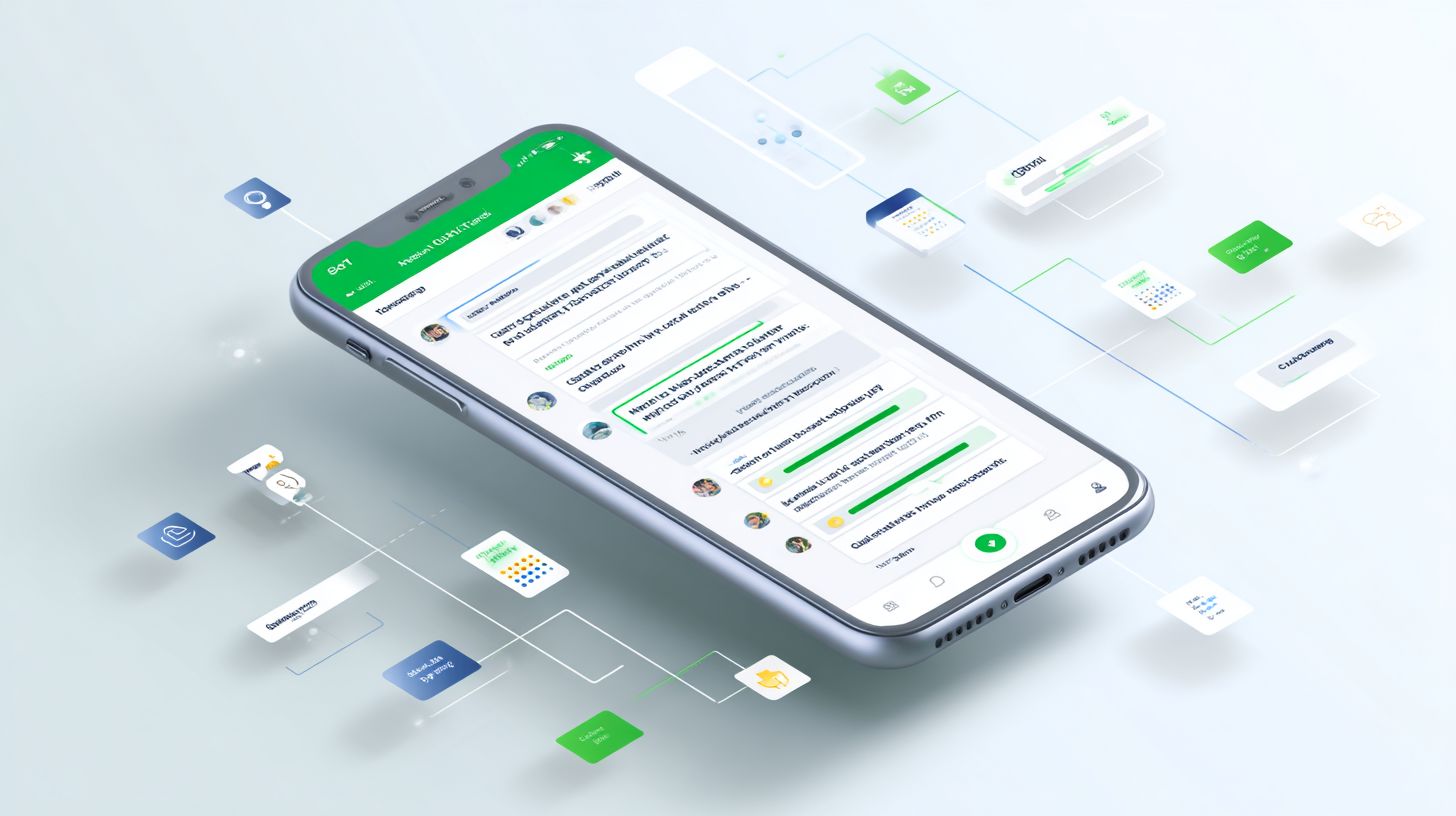
By 2026, 75% of Fortune 500 companies will deploy multimodal AI agents combining Audio2Face digital humans with predictive inventory tasks, per Gartner forecasts. These AI agents in messenger bots will evolve to handle voice and vision inputs, making customer service more immersive. For instance, in 2025, technologies like Riva NIM and Domino’s vision agents will enable bots to process spoken requests alongside visual product scans, boosting 30% faster order fulfillment. By 2026, predictive CSAT models such as Ask Benji will anticipate customer satisfaction scores in real time, adjusting responses via conversational AI to prevent escalations. Looking to 2027, fully autonomous commerce with H&M vision systems will allow bots to complete purchases without human input, integrating natural language processing and machine learning for seamless transactions.
These trends point to agentic AI transforming chatbots into proactive virtual assistants capable of autonomous action and retrieval-augmented generation from knowledge bases. Examples include Ottawa Hospital bots using Nemo Retriever for multilingual support in patient queries and City Amarillo deploying them for it help during high volumes. Such advancements will drive operational efficiency, with 40% reduction in support team workloads through real-time personalization and workflow automation. Businesses must prepare for complex problems solved via generative AI, ensuring personalized support scales across industries.
Scaling these AI-powered solutions requires careful planning to manage growth from thousands to millions of users. Key considerations include monitoring hallucination risks, keeping error rates below 2% with guardrail frameworks like ServiceNow integrations. This future demands investment in predictive tasks and memory functions to maintain customer interactions at peak performance.
Key Predictive Trends with Timelines
Industry leaders anticipate rapid adoption of advanced conversational AI features in messenger bots. In 2025, voice plus vision agents powered by Riva NIM will dominate, as seen in Domino’s bots that recognize menu items from user photos while processing speech recognition inputs. This multimodal approach enhances problem-solving for customer support, combining text-to-speech with visual analysis for 25% higher engagement rates. By 2026, predictive CSAT using Ask Benji models will forecast satisfaction, enabling proactive AI to reroute complex queries before dissatisfaction arises, much like in retail for inventory predictions.
Advancing to 2027, fully autonomous commerce via H&M vision agents will execute end-to-end purchases, leveraging large language models for natural language understanding and decision-making. These digital humans powered by Audio2Face NIM will simulate human-like interactions, improving customer satisfaction in high-volume scenarios. Early adopters like ServiceNow are already testing similar setups for it help desks, proving scalability for business growth and efficiency boosts through workflow automation.
Scaling Checklist for High-Volume Deployments
To handle surges from 100k to 1M users, implement Kubernetes autoscaling for AI agents in messenger bots. This ensures pods dynamically adjust based on traffic, maintaining low latency for customer interactions. Cost optimization targets $0.001 per query by fine-tuning NVIDIA NIM models and using edge deployment on NVIDIA Jetson devices, reducing cloud expenses by processing requests closer to users.
- Monitor resource usage with Kubernetes metrics for real-time autoscaling.
- Apply retrieval-augmented generation to minimize hallucinations, capping risks at 2% via guardrail frameworks.
- Deploy edge computing for low-latency responses in multilingual support scenarios.
- Integrate memory functions for context retention across sessions, enhancing personalized support.
Industry-specific examples, such as City Amarillo’s bots handling civic queries, show how these steps enable scalable solutions. Regular audits of NLP processing and generative AI outputs keep operations pipeline smooth, supporting human agents only for edge cases and driving overall efficiency.
Frequently Asked Questions
What are AI Agents in Messenger Bots?
AI Agents in Messenger Bots: Solving Complex Requests, Boosting Efficiency refers to advanced intelligent systems integrated into messaging platforms like Facebook Messenger. These agents use AI to handle multi-step tasks, understand user intent deeply, and provide personalized responses, going beyond simple chatbots to solve complex requests while boosting efficiency for businesses and users alike.
How do AI Agents solve complex requests in Messenger Bots?
AI Agents in Messenger Bots: Solving Complex Requests, Boosting Efficiency by breaking down intricate user queries into actionable steps. They leverage natural language processing, reasoning capabilities, and tool integration (like APIs or databases) to process, analyze, and fulfill requests such as booking travel itineraries or troubleshooting technical issues, all within a conversational flow.
What benefits does using AI Agents bring to Messenger Bots in terms of efficiency?
AI Agents in Messenger Bots: Solving Complex Requests, Boosting Efficiency by automating workflows, reducing response times, and minimizing human intervention. They handle high volumes of interactions simultaneously, learn from data to improve over time, and optimize resource allocation, leading to faster resolutions and cost savings for companies.
Can AI Agents in Messenger Bots handle multi-turn conversations effectively?
Yes, AI Agents in Messenger Bots: Solving Complex Requests, Boosting Efficiency excel in multi-turn conversations by maintaining context across messages. They track user history, adapt to evolving needs, and proactively suggest solutions, ensuring seamless experiences even for lengthy or branched discussions.
What technologies power AI Agents in Messenger Bots?
AI Agents in Messenger Bots: Solving Complex Requests, Boosting Efficiency are powered by technologies like large language models (e.g., GPT series), reinforcement learning for decision-making, and integrations with platforms such as Dialogflow or custom LLM frameworks. These enable real-time processing and adaptive behaviors tailored to messenger environments.
How can businesses implement AI Agents in their Messenger Bots?
Businesses can implement AI Agents in Messenger Bots: Solving Complex Requests, Boosting Efficiency by using platforms like ManyChat, Botpress, or Meta’s Messenger API combined with AI services from OpenAI or Google. Start with defining agent goals, training on domain data, testing for complex scenarios, and deploying with monitoring to continuously boost efficiency.