Challenges of Chatbot Design: Pitfalls and Solutions
- 1 Challenges of Chatbot Design: Pitfalls and Solutions
- 2 Challenges of Chatbot Design: Pitfalls and Solutions
- 3 Understanding User Intent
- 4 Natural Language Processing Limitations
- 5 Conversation Flow Management
- 6 Scalability and Performance
- 7 Security and Privacy Risks
- 8 Integration Challenges
- 9 Evaluation and Testing Pitfalls
- 10 Frequently Asked Questions
- 10.1 What are the main challenges of Chatbot Design: Pitfalls and Solutions?
- 10.2 How can context management pitfalls be overcome in Challenges of Chatbot Design: Pitfalls and Solutions?
- 10.3 What are common off-topic response pitfalls in Challenges of Chatbot Design: Pitfalls and Solutions?
- 10.4 How to address scalability issues as part of Challenges of Chatbot Design: Pitfalls and Solutions?
- 10.5 What privacy concerns are pitfalls in Challenges of Chatbot Design: Pitfalls and Solutions?
- 10.6 How do user expectation mismatches create pitfalls in Challenges of Chatbot Design: Pitfalls and Solutions?
Challenges of Chatbot Design: Pitfalls and Solutions

Building chatbots that actually work well sounds straightforward, but anyone who’s tried knows the headaches from misunderstood queries and awkward conversations. This guide breaks down the main pitfalls-like handling slang or preventing endless loops-and shares clear solutions to make your AI more reliable. You’ll see practical ways to tackle these issues head-on.
Key Takeaways:
Ambiguous Queries
Users frequently phrase questions in vague ways, like ‘help me with my order’, leaving chatbots guessing. This ambiguity creates confusion in customer service interactions. Chatbots struggle to deliver accurate responses without clear intent.
A common chatbot mistake is over-relying on single-use case training. Such limited datasets fail to capture real-world variations in user language. This leads to high bounce rates and poor user experience.
To address this, use step-by-step prompting strategies. First, implement clarifying questions like ‘Do you need order status or changes?’. This guides users toward precise inputs in the conversation flow.
- Train NLP models on diverse datasets using tools like Rasa for better natural language understanding.
- Implement fallback intents to handle unrecognized queries gracefully.
- Set up initial configurations in Botpress, which takes about 2-3 hours.
These steps improve conversational AI performance and reduce errors. Test thoroughly during the NLP lifecycle to refine conversation design. Strong handling of ambiguous queries boosts customer support efficiency and trust in your virtual assistant.
Context Loss
Multi-turn conversations break when chatbots forget prior details, forcing users to repeat themselves. This context loss frustrates customers and harms the user experience in customer support. Businesses lose trust when virtual assistants fail to recall key information.
Stateless designs are a common chatbot mistake. They treat each message independently, ignoring the conversation flow. For example, an e-commerce chatbot might forget cart items across messages, making users start over.
To fix this, implement session management strategies. Store context through backend integration with CRMs to maintain user data across interactions. Use state machines in tools like Tidio for structured conversation design.
- Set context timeouts, such as 10 minutes, to balance memory with privacy.
- Test multi-turn scenarios in the NLP lifecycle to catch context drops early.
- Integrate data sources for persistent recall, improving the user journey.
These steps ensure conversational AI handles complex queries smoothly. In customer service, recalling details like order history boosts satisfaction and reduces bounce rates. Proactive chat with context retention turns bots into reliable support agents.
Slang and Dialects
Casual phrases like wassup or regional dialects confuse standard NLP models in chatbots. These informal expressions often fall outside typical training data. As a result, conversational AI struggles to interpret user intent accurately.
Users expect chatbots to handle everyday language in customer service. When bots fail on slang, it disrupts the user experience and increases frustration. This common chatbot mistake can lead to higher bounce rates in support chats.
To fix this, augment training data with slang corpora in Rasa. Use Langchain for dialect-specific prompts that adapt to variations. Test rigorously with diverse user inputs to ensure broad coverage.
- Collect slang from social media and forums for backend integration.
- Implement conversation design that recognizes phrases like yo or howdy.
- Monitor bounce rate in analytics to spot slang failures and refine the NLP lifecycle.
Pro tip: Track KPIs like escalation to live chat after slang mishaps. Regular testing during deployment helps enterprise chatbots evolve. This approach improves user journey and supports better ROI for business bots.
Sarcasm Detection
Sarcastic remarks like ‘Great job, bot!’ trip up chatbots lacking emotional nuance. These chatbot mistakes lead to literal interpretations that frustrate users in customer service. Without proper detection, conversational AI misses the intent behind mocking tones.
A common pitfall is literal interpretations increasing frustration during user interactions. For instance, responding seriously to irony disrupts the user experience and raises bounce rates. Experts recommend building sarcasm awareness into the NLP lifecycle for smoother conversation flow.
To counter this, integrate sentiment analysis via Hugging Face models in Botpress. This enhances natural language processing to flag sarcastic inputs accurately. Pair it with personality-aware responses that match the bot’s tone to user mood.
- Design personality-aware responses tailored to detected sarcasm, like replying with light humor.
- Escalate sarcasm-detected queries to support agents for human handling in complex cases.
- Test thoroughly in deployment phases using real user journey simulations.
These strategies improve escalation strategy and backend integration, boosting ROI for enterprise chatbots. By refining sarcasm detection, AI chatbots deliver better customer support and reduce errors in live chat scenarios.
Looping Dialogues
Endless loops like repeated “I don’t understand” erode user patience quickly. These chatbot mistakes happen when conversational AI fails to break free from repetitive responses. Users feel stuck, leading to frustration in customer service interactions.
Common triggers include poor natural language understanding or rigid conversation flows. For instance, a virtual assistant might cycle through the same options despite user variations. This disrupts the user journey and harms user experience.
To fix looping dialogues, follow these numbered steps for effective conversation design:
- Set loop counters, such as a maximum of three cycles, directly in platforms like Tidio to force an exit path.
- Trigger proactive chat escalation to live chat or support agents when loops occur, ensuring smooth handoff.
- Customize error messages with humor or personality, like “Oops, I’m going in circles-let’s try a human touch!”, to keep engagement high.
Measure success using conversation analytics KPIs like completion rate and bounce rate. Tools in Tidio or Botpress track these metrics post-deployment. Regular testing refines escalation strategy and boosts ROI for enterprise chatbots.
High Traffic Handling
Sudden spikes overwhelm underprepared bots, spiking response times and frustrating users. Businesses often face this during peak hours or viral campaigns, leading to high bounce rates in customer service chats. Proactive planning ensures smooth user experience even under pressure.
Deploy serverless architecture with AWS Lambda through Botpress to handle variable loads without fixed servers. This approach scales automatically, cutting costs for enterprise chatbots and supporting complex conversation flows. Pair it with backend integration for reliable performance.
Use auto-scaling in Rasa X to dynamically adjust resources based on demand. Monitor key KPIs like latency under 2 seconds and throughput to spot issues early. Regular testing during deployment reveals bottlenecks in conversational AI.
Compare no-code platforms like Tidio with open-source options like Rasa for scaling needs.
| Feature | Tidio (No-Code) | Rasa (Open-Source) |
|---|---|---|
| Scaling Mechanism | Built-in cloud auto-scaling for quick setup | Custom auto-scaling with Kubernetes or cloud providers |
| Customization | Limited to templates, ideal for simple lead generation | Full control over NLP lifecycle and escalation strategies |
| Monitoring | Basic analytics dashboard | Advanced KPIs via Rasa X for user journey tracking |
| Cost for High Traffic | Subscription tiers scale with usage | Free core, pay for hosting and compute |
Choose based on your business needs, prioritizing ROI and integration with data sources.
Data Protection
Storing sensitive info from CRMs or ERPs without safeguards invites breaches. Chatbots often pull customer data during conversations, exposing personal details to risks. Proper data protection builds trust in AI chatbots for customer service.
Common chatbot mistakes include logging full conversations, which stores unfiltered user inputs. This practice heightens breach risks in conversational AI. Experts recommend avoiding it to protect user privacy.
Follow these best practices for secure chatbot design:
- Encrypt data at rest and in transit with strong standards like AES-256.
- Anonymize logs in analytics to strip identifiable information.
- Implement GDPR-compliant consent flows before collecting data.
Tools like Botpress enterprise security features offer built-in encryption and compliance tools. For example, configure your virtual assistant to hash user IDs in logs. This approach safeguards backend integration while supporting smooth user journeys.
Challenges of Chatbot Design: Pitfalls and Solutions
Designing effective chatbots involves navigating common pitfalls that can undermine user trust and business goals, from misreading intent to scalability woes. Business owners and developers often face these issues when building AI chatbots for customer service or support. Understanding these mistakes leads to better conversational AI outcomes.
One frequent error is poor natural language processing, where bots fail to grasp user queries like “When does my order ship?”. This results in frustrating user experiences and high bounce rates. Tools like Botpress and Rasa offer robust NLP to fix this.
Another pitfall involves ignoring conversation flow and escalation strategies, leaving users stuck without human support. Scalability problems arise during peak times, overwhelming backend integration. Regular testing with analytics ensures smooth deployment.
To measure success, track KPIs such as response time and resolution rate for clear ROI. Proactive chat and personality tweaks enhance engagement. This guide covers key challenges with actionable solutions.
Intent Recognition Failures
Chatbots often struggle with intent recognition, misinterpreting user requests in customer support scenarios. For example, a query about “refund policy” might trigger irrelevant responses. This erodes trust in virtual assistants.
Business owners see increased drop-offs when bots cannot handle varied phrasing. Developers need strong NLP lifecycle training on diverse data sources. Rasa excels here with customizable NLU models.
Solutions include expanding training datasets and using fallback prompts like “Did you mean X or Y?”. Integrate Botpress for no-code intent mapping. Test rigorously to refine accuracy.
Monitor analytics for misinterpretation rates and adjust. This approach boosts user journey satisfaction and reduces reliance on live chat agents.
Poor Conversation Design

Conversation design pitfalls lead to rigid flows that feel unnatural, frustrating users in support interactions. Single-use cases limit bots to basic queries, ignoring complex user journeys. Resulting error messages confuse rather than help.
Developers overlook branching logic, causing repetitive loops. Business owners miss lead generation opportunities without funnel vision. Tidio or Langchain can enhance dynamic flows.
Fix this by mapping full conversation flows with context retention. Use Botpress visual builders for intuitive design. Incorporate user feedback loops for personality adjustments.
Employ escalation strategies to hand off to support agents seamlessly. Analytics on bounce rates guide iterations for better customer service.
Scalability and Integration Issues
Enterprise chatbots face scalability woes when traffic spikes, slowing responses in customer service. Weak backend integration with CRMs causes data silos. This hampers ROI for businesses.
Common mistakes include underestimating peak loads or ignoring multi-channel deployment. Developers need robust architectures for growth. Rasa supports scalable deployments effectively.
Solutions involve cloud-based hosting and API optimizations. Botpress offers easy scaling with modules for databases. Test under simulated high loads.
Track KPIs like uptime and latency via analytics. Proactive chat features prevent overloads, improving overall chatbot technology performance.
| Pitfall | Impact | Solution with Tools |
|---|---|---|
| Intent misreads | High frustration | Rasa NLU training |
| Rigid flows | Increased bounces | Botpress visual flows |
| Scalability limits | Downtime risks | Langchain integrations |
| Poor UI/UX | Low engagement | Tidio custom interfaces |
Measuring Success with Testing and KPIs
Without proper testing, chatbot mistakes persist, affecting customer support ROI. Business owners must define clear KPIs like first-contact resolution and user satisfaction scores. Analytics dashboards reveal true performance.
Conduct A/B tests on user interfaces and prompts. Simulate real user journeys to catch edge cases. Tools like Botpress include built-in testing suites.
Focus on metrics such as average handling time and escalation rates. Experts recommend iterative deployment based on data. This ensures AI chatbots deliver value.
Regular audits prevent drift in conversational AI. Combine quantitative KPIs with qualitative feedback for optimal user experience.
Understanding User Intent
Chatbots often stumble when failing to grasp what users truly want, leading to frustrating interactions. This core challenge in conversational AI arises from ambiguous language or varied expressions for the same request. Poor intent recognition disrupts the user experience and increases bounce rates in customer support scenarios.
Users might ask for help in diverse ways, like “track my order” or “where’s my package?”. Without strong natural language understanding (NLU), chatbots misinterpret these, offering irrelevant responses. This mistake erodes trust in AI chatbots for business use.
To counter this, designers focus on robust conversation design from the start. Training models with real user data helps capture intent variations. Regular testing refines accuracy across the NLP lifecycle.
Effective solutions involve tools like Rasa for custom NLU and analytics to monitor KPIs. These steps ensure chatbots align with user journeys, boosting customer service outcomes. For the next steps in leveraging intent recognition, our guide for developers provides practical implementation strategies.
Training NLU with Rasa
Rasa excels in building open-source NLU for chatbots, allowing precise intent classification. Designers train models using annotated datasets of user phrases, capturing nuances in natural language. This approach minimizes chatbot mistakes in complex customer support flows.
Start by defining intents like “booking appointment” or “refund request”, then feed examples into Rasa’s pipeline. Use active learning to iteratively improve from real conversations. Integrate with backend systems for seamless escalation strategies.
Test thoroughly in simulated user journeys to catch gaps. Rasa’s analytics track performance, helping refine models for enterprise chatbots. This method supports ROI through better user experience.
Combine with personality tweaks for engaging virtual assistants. Regular deployment cycles keep NLU sharp against evolving user patterns.
Leveraging LangChain for Advanced Intent Handling
LangChain enhances chatbot technology by chaining language models with tools for dynamic intent detection. It processes context across multi-turn dialogues, ideal for proactive chat in support agents. This reduces errors in lengthy user interactions.
Build chains that parse queries, retrieve from data sources, and generate responses. For example, link intents to live chat escalation or knowledge bases. This framework suits conversation flow in lead generation funnels.
Customize prompts for specific domains like e-commerce, handling synonyms effortlessly. Monitor with built-in tracing for optimization. LangChain integrates with no-code platforms, speeding deployment.
Pair it with error messages that guide users gracefully. Experts recommend this for scalable AI chatbots in business settings.
Best Practices for Intent Testing and Iteration
Robust testing prevents intent failures by simulating diverse scenarios. Use unit tests for single intents and end-to-end flows for full conversations. This catches issues before live deployment in customer service.
Employ A/B testing to compare model versions, focusing on bounce rates and resolution times. Incorporate user feedback loops to update training data continuously. Tools like Botpress aid in visual user interface testing.
Define clear KPIs such as intent confidence scores. Analyze conversation logs to spot patterns in failures. Iterate quickly to maintain high user experience.
- Simulate edge cases like typos or slang.
- Validate multi-language support if needed.
- Ensure handover to human agents works smoothly.
Natural Language Processing Limitations
NLP powers chatbots but struggles with human language nuances, impacting customer service quality. Subtle sarcasm, slang, or context shifts often confuse AI chatbots. This leads to frustrating user experiences in support scenarios.
Common issues include misinterpreting ambiguous queries or failing to handle dialects. For instance, a user asking for “cool shoes” might get weather advice instead of product suggestions. Businesses face higher bounce rates without addressing these chatbot development challenges.
Experts recommend robust testing during the NLP lifecycle. Tools like fine-tuning help adapt models to specific domains. Proactive fixes improve conversation flow and ROI for enterprise chatbots.
Integrating analytics tracks KPIs like query resolution. This data refines backend integration and escalation strategies. Ultimately, better NLP enhances virtual assistant reliability.
Fine-Tuning Models like ChatGPT
Fine-tuning ChatGPT addresses core natural language gaps in conversational AI. Train the model on domain-specific data, such as customer support transcripts. This reduces errors in user journeys and boosts accuracy.
Start by collecting data sources from past live chat interactions. Use prompts to simulate real scenarios, like handling complaints about “delayed shipments”. Regular iterations prevent chatbot technology from repeating mistakes.
Combine with personality tuning for consistent tone. This creates engaging support agents. Businesses see smoother deployment and lower reliance on human agents.
Test across diverse inputs to cover edge cases. Monitor conversation design post-fine-tuning. Results include fewer error messages and improved customer support.
Using LangChain for Advanced NLP
LangChain enhances chatbot capabilities by chaining NLP components. It integrates external tools for better context handling in AI chatbots. This fixes limitations in standalone models.
Build chains with memory modules to track user interface history. For example, link queries about “order status” to inventory APIs. This creates intelligent proactive chat flows.
Incorporate Rasa or Botpress for hybrid setups. LangChain manages single-use case expansions into full lead generation. It streamlines funnel vision without no-code limits.
Deploy with Tidio for real-time testing. Analyze bounce rate drops and refine chains. Enterprises gain scalable ROI from advanced user experience.
Conversation Flow Management

Poorly managed flows lead to disjointed chats that drive users away from your bot. Users expect smooth transitions in conversational AI, but common chatbot mistakes like abrupt topic shifts or repetitive loops frustrate them. Effective conversation design keeps interactions natural and goal-oriented.
Key challenges include handling user journey variations and integrating backend integration for dynamic responses. Without clear paths, chatbots fail to guide users through lead generation or customer support funnels. Designers must anticipate branches to avoid high bounce rates.
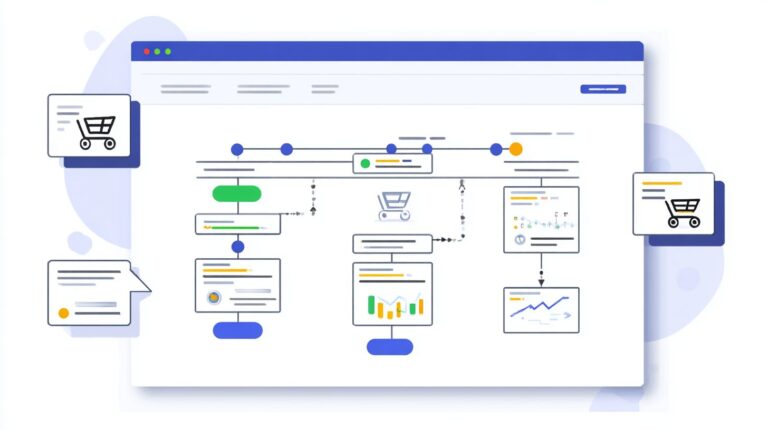
Solutions start with mapping out conversation flow from greeting to resolution or escalation strategy, following the methodology in our chatbot conversation flow design guide. Incorporate natural language processing to detect intent shifts early. Regular testing during the NLP lifecycle reveals weak spots before deployment.
Businesses using tools like Botpress or Rasa see better user experience by visualizing flows. Track KPIs such as completion rates to refine paths. This approach boosts ROI for enterprise chatbots in customer service.
Flow Diagramming Tools and Best Practices
Visualize conversation flow with diagramming tools to spot pitfalls early. Platforms like Botpress, Rasa, and LangChain offer built-in editors for mapping user paths. These tools help create no-code diagrams that align with user interface needs.
Best practices begin with defining a single-use case per flow, such as booking support or proactive chat for upsells. Use flow diagramming to outline nodes for inputs, decisions, and outputs. Include fallback error messages for unrecognized queries.
- Start with a core user journey map from entry to exit.
- Branch for common intents using natural language triggers.
- Add loops for clarifications without repetition.
- Integrate data sources for personalized responses.
- Test with real analytics to measure drop-offs.
Combine these with personality tweaks for engaging tones. Experts recommend iterative reviews post-deployment using Tidio-style logs. This ensures virtual assistant flows mimic support agents or live chat, reducing frustration and improving customer service.
Scalability and Performance
Chatbots falter under load, turning reliable support into bottlenecks for growing businesses. As user traffic spikes, response times slow, frustrating customers and harming user experience. Businesses must plan for scale from the start to avoid these chatbot mistakes.
Common issues include poor backend integration and inadequate resource allocation. For instance, a retail virtual assistant might handle holiday rushes well at first, but crash during peak sales. Testing under simulated high loads reveals these weaknesses early.
Solutions focus on modular designs using tools like Rasa or Botpress. These platforms support horizontal scaling, distributing conversations across servers. Pairing this with efficient NLP lifecycle management keeps conversational AI responsive.
Monitoring KPIs like response time and bounce rate ensures ongoing performance. Regular audits prevent degradation, maintaining customer service quality as businesses expand.
Cloud Deployment Strategies
Cloud platforms enable chatbot technology to scale dynamically with demand. Services like AWS or Google Cloud auto-scale resources, handling surges in customer support queries without manual intervention. This approach suits enterprise chatbots processing thousands of interactions daily.
Start with serverless architectures for conversation flow efficiency. They charge only for active use, reducing costs for variable traffic. Integrate data sources seamlessly to support complex user journeys.
Avoid single points of failure by using multi-region deployments. For example, a global e-commerce bot routes European users to nearby servers, cutting latency. This boosts ROI through reliable lead generation.
Test deployments with tools like LangChain for chained AI models. Gradual rollouts minimize risks, ensuring smooth transitions to production.
Monitoring and Optimization
Effective monitoring tracks chatbot performance in real-time, spotting issues before they impact users. Tools analyze analytics for metrics like conversation duration and error rates. This data guides escalation strategies to live chat when needed.
Set alerts for anomalies, such as rising bounce rates from slow responses. Use dashboards to visualize user interface interactions and proactive chat effectiveness. Regular reviews refine personality and flow.
Optimize by pruning inefficient paths in conversation design. For a banking support agent, simplify queries to balance branches, improving speed. A/B testing compares versions for better outcomes.
Incorporate feedback loops with no-code platforms like Tidio. Continuous tuning aligns bots with evolving customer service needs, sustaining high performance.
Security and Privacy Risks
Exposed data turns helpful chatbots into liability nightmares for customer-facing businesses. A single breach can erode trust and invite legal troubles. Designers must prioritize security measures from the start.
Users share sensitive details like payment info or personal addresses during customer support interactions. Without proper safeguards, this data becomes a target for hackers. Proactive steps help mitigate these chatbot mistakes.
Common pitfalls include weak authentication and unencrypted storage. Businesses using AI chatbots for lead generation face amplified risks if conversation flows expose vulnerabilities. For a deep dive into AI Chatbots: Privacy, Security, and Ethical Design, explore proven strategies and best practices. Regular audits reveal these gaps early.
Implementing robust protocols protects the user experience while ensuring compliance. Experts recommend layered defenses to handle conversational AI demands. This approach turns potential disasters into secure features.
Compliance Challenges
Navigating regulations like GDPR and CCPA poses major hurdles in chatbot design. Non-compliance risks fines and reputational damage for enterprise chatbots. Clear policies guide data handling from deployment.
Designers often overlook consent mechanisms in user journeys. For instance, a virtual assistant collecting emails without explicit opt-in violates rules. Build in transparent prompts to seek permission upfront.
Map out escalation strategies to human agents when sensitive topics arise. Use tools like Rasa or Botpress to enforce compliant conversation flows. Testing across jurisdictions ensures broad adherence.
Document data sources and processing in your NLP lifecycle. Train teams on updates to laws affecting customer service bots. This diligence fosters trust and avoids costly oversights.
Encryption Best Practices
Encryption secures data in transit and at rest for chatbot technology. Weak implementation leaves backend integration exposed to intercepts. Adopt end-to-end methods to protect every exchange.
In a live chat scenario, unencrypted messages risk interception during proactive chat sessions. Use TLS protocols for all communications with support agents. This shields user inputs effectively.
Store conversation logs with strong hashing in secure databases. Integrate libraries from frameworks like LangChain for seamless encryption. Regular key rotation prevents long-term vulnerabilities.
Monitor analytics and KPIs for unusual access patterns signaling breaches. Combine encryption with access controls to fortify user interfaces. These practices deliver reliable ROI on secure deployments.
Integration Challenges
Siloed chatbots fail when disconnected from CRMs, ERPs, or other systems, limiting their value. Without backend integration, these tools cannot access real-time data or update customer records. This disconnect hampers lead generation and overall business efficiency.
Common chatbot mistakes include ignoring data sources like inventory systems or user databases. For example, a retail bot might promise stock availability without checking the ERP. Proper integration ensures accurate responses and smooth user journeys.
To overcome these issues, compare platforms for integration ease. Use a structured approach to connect chatbots with enterprise systems and measure ROI through seamless operations.
Focus on conversation design that ties into the sales funnel. Integrated bots capture leads directly into CRMs, boosting conversion rates without manual handoffs.
Comparing Integration Ease
| Platform | Integration Method | Ease Level | Best For |
|---|---|---|---|
| Botpress | No-code APIs | High | Quick setups with visual builders |
| Rasa | Custom webhooks | Medium | Advanced NLP customization |
| Tidio | Plug-and-play | Very High | Small business live chat |
Botpress shines in no-code environments, letting teams drag-and-drop API connections without coding. Rasa demands more setup for custom webhooks, ideal for complex conversational AI. Tidio offers instant plugins for sites like Shopify, perfect for proactive chat.
Choose based on your team’s skills. No-code options reduce deployment time, while custom methods support enterprise chatbots with unique needs.
Step-by-Step Integration Guide

- Map data sources: Identify CRMs, ERPs, and databases your chatbot needs. List endpoints like customer profiles or lead forms to avoid gaps in conversation flow.
- Use Langchain for LLM orchestration: Chain language models with APIs for dynamic responses. This handles natural language queries while pulling live data, enhancing user experience.
- Test end-to-end user journeys: Simulate paths from greeting to escalation. Check for error messages, bounce rates, and handoffs to support agents.
Start with simple mappings, then layer in Langchain for smarter routing. Regular testing catches issues like failed API calls early.
For lead generation chatbots, track KPIs like form submissions. This step ensures bots contribute to the sales funnel, not just basic customer service.
ROI from Seamless Lead Generation
Well-integrated chatbots turn conversations into revenue by feeding qualified leads into CRMs. Experts recommend prioritizing escalation strategies that pass hot prospects to sales teams. This setup maximizes ROI without silos.
Consider a virtual assistant that qualifies buyers via user journey questions, then logs details automatically. Businesses see gains in efficiency as bots handle initial customer support and nurture leads.
Monitor analytics for conversation metrics post-integration. Refine based on drop-offs to optimize the entire NLP lifecycle for better business outcomes.
Evaluation and Testing Pitfalls
Rushing deployment without rigorous testing leads to live chatbot mistakes that damage brand reputation. Users encounter confusing responses or failed escalations, eroding trust in your customer service bot. Proper evaluation catches these issues before they impact user experience.
Common pitfalls include overlooking diverse user journeys or ignoring conversation flow variations. Without structured testing, AI chatbots falter in real-world scenarios like handling edge cases in natural language inputs. Businesses risk high bounce rates and poor customer support outcomes.
To avoid these traps, follow a step-by-step testing approach. Start with A/B testing conversation flows over two weeks to compare variations. Track key KPIs like bounce rate and CSAT using tools such as Tidio analytics.
Simulate full user journeys with platforms like Botium to mimic real interactions. This ensures your virtual assistant performs across the NLP lifecycle, from intent recognition to response generation. Regular testing refines chatbot technology for better ROI.
Step-by-Step Testing Guide
Begin your evaluation with A/B testing of conversation flows. Run parallel versions for two weeks, exposing subsets of users to each. Measure differences in completion rates and user satisfaction.
Next, monitor KPIs through integrated analytics. Focus on bounce rate, which shows drop-offs, and CSAT scores from post-chat surveys via Tidio. These metrics reveal chatbot mistakes in customer service.
Finally, use Botium to simulate user journeys. Test scripted paths including errors, escalations to support agents, and multi-turn dialogues. This uncovers gaps in backend integration and escalation strategy.
Testing Checklist for Chatbot Types
For an FAQ chatbot, verify quick answers to common queries. Test across the NLP lifecycle: intent detection, entity extraction, and fallback responses. Ensure error messages guide users clearly.
- Check single-turn responses for accuracy in product specs or hours of operation.
- Test multilingual support if targeting global users.
- Validate proactive chat triggers on FAQ pages.
- Simulate high-volume queries to assess speed.
For a customer service chatbot, evaluate complex interactions. Cover conversation design for refunds, troubleshooting, and lead generation. Include handover to live chat or agents.
- Map full user journeys with branching paths and interruptions.
- Test personality consistency in responses.
- Review data sources for secure access during sessions.
- Measure resolution rates without escalation.
Frequently Asked Questions
What are the main challenges of Chatbot Design: Pitfalls and Solutions?
The main challenges of Chatbot Design: Pitfalls and Solutions include handling natural language ambiguity, ensuring context retention, managing user expectations, scaling for diverse queries, maintaining data privacy, and avoiding repetitive or off-topic responses. Solutions involve robust NLU models, stateful conversation tracking, clear onboarding messages, modular architectures, encryption protocols, and fallback mechanisms like human handoff.
How can context management pitfalls be overcome in Challenges of Chatbot Design: Pitfalls and Solutions?
In Challenges of Chatbot Design: Pitfalls and Solutions, a common pitfall is losing conversation context, leading to irrelevant replies. Solutions include using session-based memory stores, dialogue state trackers, or transformer models with long-range dependencies to maintain thread coherence across multiple turns.
What are common off-topic response pitfalls in Challenges of Chatbot Design: Pitfalls and Solutions?
Challenges of Chatbot Design: Pitfalls and Solutions highlight off-topic drifts due to poor intent classification. Key solutions are implementing confidence thresholds for intent matching, multi-turn validation loops, topic boundary enforcers, and graceful degradation to predefined safe responses or escalation options.
How to address scalability issues as part of Challenges of Chatbot Design: Pitfalls and Solutions?
Scalability pitfalls in Challenges of Chatbot Design: Pitfalls and Solutions arise from high traffic overwhelming single-threaded bots. Solutions encompass cloud-based auto-scaling infrastructures, asynchronous processing queues, microservices decomposition, and efficient caching of frequent query patterns to handle volume spikes seamlessly.
What privacy concerns are pitfalls in Challenges of Chatbot Design: Pitfalls and Solutions?
Privacy pitfalls in Challenges of Chatbot Design: Pitfalls and Solutions involve unintended data logging or sharing sensitive user info. Effective solutions include anonymization techniques, consent-based data retention policies, end-to-end encryption, compliance with GDPR/CCPA, and minimal data collection principles to build trust.
How do user expectation mismatches create pitfalls in Challenges of Chatbot Design: Pitfalls and Solutions?
User expectation mismatches in Challenges of Chatbot Design: Pitfalls and Solutions occur when bots promise human-like intelligence but deliver scripted replies. Solutions feature transparent capability disclaimers during onboarding, progressive disclosure of features, feedback loops for iterative improvements, and hybrid models blending AI with human oversight.