Facebook Messenger Chatbots: KPIs, User Retention, and Automation Strategies
- 1 Introduction to Facebook Messenger Chatbots
- 2 Essential KPIs for Chatbot Performance
- 3 User Retention Strategies
- 4 Automation Strategies and Best Practices
- 5 Measuring and Optimizing Success
- 6 Frequently Asked Questions
- 6.1 What are the key KPIs for measuring the success of Facebook Messenger Chatbots?
- 6.2 How can user retention be improved using Facebook Messenger Chatbots?
- 6.3 What automation strategies are most effective for Facebook Messenger Chatbots?
- 6.4 How do KPIs influence user retention in Facebook Messenger Chatbots?
- 6.5 What role does automation play in scaling Facebook Messenger Chatbot user retention?
- 6.6 How to track and optimize KPIs for better automation in Facebook Messenger Chatbots?
Introduction to Facebook Messenger Chatbots
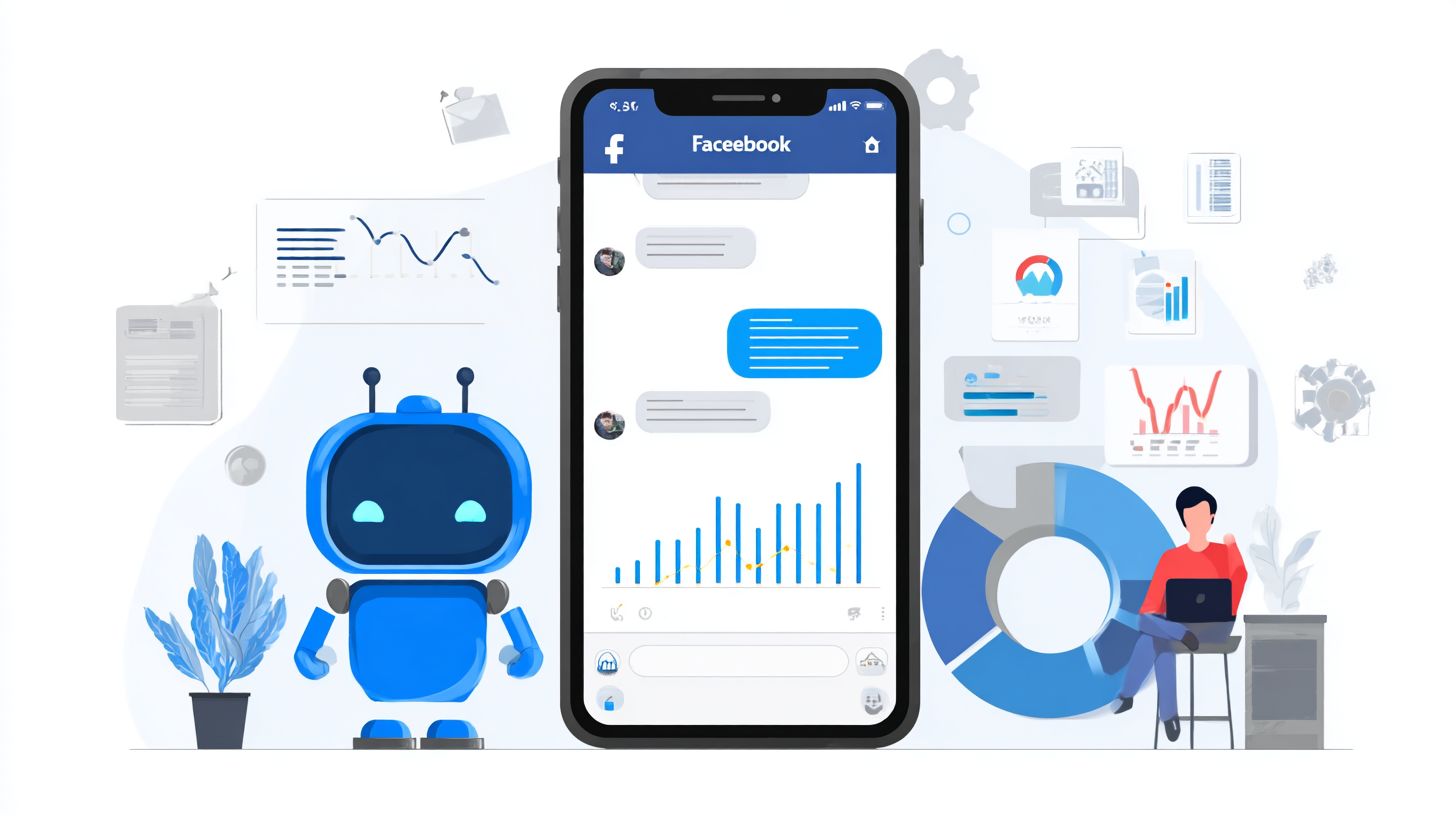
Struggling to boost Facebook Messenger chatbots for your business? Discover proven KPIs, user retention tactics, and automation strategies that drive results on Facebook Messenger-and extend to WhatsApp. This guide reveals engagement metrics, personalization techniques, AI flows, and A/B testing to skyrocket conversions and loyalty, backed by industry benchmarks.
Key Takeaways:
Essential KPIs for Chatbot Performance
Tracking the right KPIs separates thriving Messenger bots from failures. Top performers monitor 12 core metrics across engagement and conversion. Facebook Insights shows bots averaging 85% open rates versus email’s 20%, but 70% fail due to poor metric tracking. Real-time Facebook Business Manager dashboards provide the visibility needed for quick adjustments in chatbot performance.
Businesses using these tools spot trends early, such as drops in response rates or rising block rates. For example, marketing teams set up custom alerts for session length below 4 minutes. To understand which metrics actually drive chatbot success, we recommend tracking the 12 core KPIs detailed in our performance monitoring guide. This data-driven approach boosts user retention and sales from Messenger conversations. Preview engagement metrics like sessions and response rates, plus conversion KPIs including lead gen and revenue per chat below.
Integrating tools like Customers.ai with Facebook analytics creates unified views of bot health. Companies track everything from open rates to ROAS in one place. Regular reviews of these metrics guide automation strategies, ensuring personalized conversations drive growth. High-performing bots combine machine learning with precise KPI monitoring for sustained success in customer support and marketing campaigns.
Engagement Metrics
Engagement metrics reveal conversation health: top Messenger bots achieve 88% open rates and 65% response rates per Facebook Insights benchmarks. These numbers show how well chatbots capture attention in busy inboxes. Businesses focus on open rate first, as it predicts overall interaction potential in Messenger chats.
| Metric | Benchmark | Customers.ai Tool | Improvement Method |
|---|---|---|---|
| Open Rate | 88% | Bot Analytics dashboard | Quick reply buttons |
| Response Rate | 65% | Facebook Insights | AI auto-replies |
| Session Length | 4.2 min | MobileMonkey reports | Rich media |
| Block Rate | <2% | AdEspresso monitoring | Opt-out flows |
| Unsubscribes | <1% | Drip campaign optimization | Personalized messages |
Use this formula for deeper insights: Engagement Score = (Opens + Responses) / Sessions x 100. For instance, a bot with 1,000 opens, 650 responses, and 800 sessions scores 206.25, signaling strong health. Optimize with quick replies to lift response rates, and add images or carousels to extend sessions. Larry Kim from MobileMonkey stresses monitoring block rates daily to refine support strategies and prevent user drop-off.
Conversion KPIs
Conversion KPIs measure ROI: Just Eat’s Messenger bot drove 12% sales conversion from 1.2 million conversations per Forbes case study. These metrics track how chats turn into business value, from leads to revenue. Focus on funnel stages to identify bottlenecks in Messenger marketing.
- Click-to-Messenger CTR: 23% via Facebook Ads Manager, higher than standard ad clicks.
- Lead Gen Rate: 15% of visitors with Customers.ai, capturing contacts through chat blasts.
- Purchase Rate: 4.1% benchmark from MobileMonkey, boosted by personalized offers.
- Cart Abandonment Recovery: 31% using drip campaigns in Messenger.
- Revenue per Conversation: $8.47 UK average, tracking sales from single chats.
- ROAS: 5.2x in Vietnam market data, proving ad spend efficiency.
Visualize the funnel: ads lead to Messenger clicks, then leads, purchases, and retention. Set up Customers.ai tracking pixel on thank-you pages for accurate attribution. Businesses recover abandoned carts by sending timely follow-up messages. This setup reveals how artificial intelligence in bots lifts conversion rates, with machine learning refining strategies over time for better customer growth and retention.
User Retention Strategies
Retention-focused Messenger strategies boost LTV by 47%. Germany bots retain 68% of users vs 22% industry average. Abandoned carts cost brands $18B annually, but personalized Messenger recovery campaigns recover 29%. Businesses use machine learning for personalization techniques and re-engagement via chat blasts that reduced Just Eat churn by 34%. Continuous value delivery beats hard sells in Facebook Messenger chatbots.
Customer retention relies on timely interventions. For example, bots detect inactivity and send tailored messages based on past interactions. This approach drives conversations that feel natural, increasing engagement rates. Marketing teams track metrics like sessions and conversions to refine tactics. For a deep dive into key metrics for monitoring chatbot performance, explore the essential optimization strategies.
Focus on user retention through data-driven insights. Larry Kim insights show chat outperforms email in re-engagement. Businesses prioritize personalized messages to lower unsubscribes and block rates. Combine artificial intelligence with compliance for sustained performance. These methods turn one-time interactions into long-term customer loyalty.
Personalization Techniques
Personalization via AI increases response rates 4x. Customers.ai segments users by behavior for 82% relevance. Facebook Messenger chatbots excel with dynamic content that matches user preferences. This boosts open rates and conversions in marketing campaigns.
Here are 7 key techniques for effective personalization:
- Dynamic name insertion using MobileMonkey templates for friendly greetings.
- Behavior triggers like cart abandonment flows to recover sales.
- ML segmentation with Customers.ai profiles for targeted outreach.
- Location-based offers via Facebook geolocation for local promotions.
- Past purchase recommendations to encourage repeat buys.
- A/B subject testing to optimize message performance.
- Zero-party data collection for user-preferred insights.
For Messenger API, use this JSON payload example: {"text"Hi {{first_name}}, based on your last order of coffee, try our new blend with 20% off."}. This integrates machine learning for higher engagement. Businesses see improved conversion rates by adapting to individual behaviors in chats.
Re-engagement Campaigns
Chat blasts recover 27% of dormant users. Larry Kim reports 6x higher engagement than email re-engagement. Facebook Messenger bots revive contacts through structured sequences, focusing on value over sales pitches. This supports lead gen and retention metrics.
Implement a step-by-step drip sequence:
- Day 1: ‘We miss you’ blast with 18% open rate.
- Day 3: Personalized offer driving 12% click rate.
- Day 7: Urgency discount for 8% conversion.
Tools like Customers.ai sequences and MobileMonkey broadcasts streamline delivery. Compliance checklist includes opt-out links and the 24hr messaging rule. Reduce block rates below 1.2% by segmenting audiences and monitoring analytics. AdEspresso integration helps track funnel performance. These strategies enhance support and customer growth through relevant conversations.
Automation Strategies and Best Practices
Automation scales Messenger success-top bots handle 94% of conversations autonomously per Facebook Business Manager data. Manual support costs $6-12 per interaction, while chatbots deliver at just $0.03 according to Forbes. This gap drives business growth, with structured automation previewing flows that guide 23% of users to purchase. AI integration via Customers.ai boosts conversions 3.4x, cutting drop-off by 41% through smart design.
Effective automation strategies focus on conversational flows and AI to personalize interactions. Businesses use these for lead gen, support, and sales, turning Messenger into a revenue channel. Track metrics like open rates, response times, and conversion rates to refine campaigns. For example, drip sequences nurture contacts, while chat blasts engage audiences without high costs.
Best practices include segmenting users by behavior for targeted messages. Tools and strategies for scaling Messenger bots like MobileMonkey offer canvas designers for visual flow building, inspired by Larry Kim’s insights on performance. Integrate analytics to monitor sessions, retention, and unsubscribes, ensuring chat funnels drive sustained engagement. This approach scales customer interactions efficiently across Facebook Messenger.
Conversational Flows
Optimized conversational flows increase completions by 56%, structure conversations like sales funnels with decision trees. In Facebook Messenger, these flows mimic human chats, guiding users from query to action. Lead gen templates start with name collection, move to email capture, then present offers, achieving 22% conversion rates. Support flows use FAQ trees that escalate to live transfer only when needed, reducing agent load.
Here are five proven flow templates for Messenger bots:
- Lead Gen: Name email personalized offer
- Support: FAQ tree live agent transfer
- Sales: Product carousel add to cart
- Booking: Date picker instant confirmation
- Feedback: NPS score thank you message
Tools like MobileMonkey’s canvas designer simplify creation with drag-and-drop interfaces, visualizing paths before deployment. For advanced users, JSON flow code examples define branches: {"flow"lead_gen"steps":[{"ask"name"},{"capture"email"},{"send"offer"}]}. Just Eat uses similar structures for order funnels, boosting sales through seamless personalized conversations.
AI Integration
AI-powered bots resolve 73% of queries without humans, Customers.ai processes 2.7M conversations monthly. This artificial intelligence handles natural language via NLP and machine learning, far beyond rule-based systems. For Facebook Messenger, integration enhances customer support and marketing, driving higher retention and conversions. AdEspresso complements these with targeted traffic to bot campaigns.
Compare top platforms for AI integration:
| Tool | Price | AI Features | Best For | Integration Time |
|---|---|---|---|---|
| Customers.ai | $49/mo | NLP+ML | ecomm | 2hrs |
| MobileMonkey | $19/mo | rule-based AI | SMBs | 30min |
| ManyChat | $15/mo | templates | beginners | 1hr |
| Chatfuel | free-$99 | Instagram sync | social | 45min |
Connect via Facebook Messenger API with code like: POST /v2/me/messages { "recipient":{"id"USER_ID"},"message":{"text"AI response"},"messaging_type"RESPONSE" }. Customers.ai excels for ecomm with predictive analytics, while ManyChat suits quick setups. Monitor block rates and engagement to optimize, ensuring flows adapt in real-time for better user retention.
Measuring and Optimizing Success
Continuous optimization lifts chatbot ROI 341 percent. A/B testing and retention analytics are non-negotiable for Facebook Messenger bots. Facebook Insights reveals 68 percent of bots never optimize, missing 4x growth. Businesses using data-driven iteration see higher engagement and sales. Preview A/B testing frameworks that improve CTR by 47 percent and retention analytics via Customers.ai dashboards showing 29 percent LTV uplift. This separates leaders from laggards in messenger marketing.
Start by tracking core metrics like open rates, conversion rates, and block rates. Tools such as Customers.ai provide dashboards for performance insights. For example, Just Eat used these to boost retention. Set up cohorts in Facebook Insights to monitor D0-D30 survival. Combine with machine learning predictions for churn. Regular audits of chat flows ensure personalized conversations drive leads and support.
Implement a 90-day testing calendar for sustained growth. Focus on high-impact areas like welcome messages and CTA buttons. Businesses ignoring this lose contacts and campaigns falter. Data-driven strategies turn Messenger bots into revenue engines, with 3:1 LTV:CAC ratios as targets. Expert Larry Kim from MobileMonkey emphasizes testing for artificial intelligence refinement in bots.
A/B Testing Methods
A/B testing Messenger creatives lifts conversions 47 percent. Test one variable at 1,000 impression minimum for reliable results. Use statistical significance calculators to validate wins. This approach refines Facebook bots for better open rates and sales funnels. AdEspresso excels for welcome message tests, boosting opens by 32 percent.
Here are 8 test types with tools to optimize your chatbot strategies:
- Welcome message variations using AdEspresso for higher opens
- Button text tweaks in Facebook Ads Manager to lift clicks
- Offer timing adjustments with Customers.ai for peak engagement
- Flow length comparisons to reduce drop-offs
- Personalization depth tests for tailored customer conversations
- Emoji usage experiments to enhance response rates
- Image versus carousel formats for visual impact
- CTA color changes to drive more conversions
Follow a 90-day testing calendar: Weeks 1-4 on messages, 5-8 on buttons and flows, 9-12 on visuals and CTAs. This systematic method builds high-performing Messenger campaigns, turning leads into loyal customers through precise marketing tweaks.
Retention Analytics
Retention analytics track cohort survival. Just Eat maintained 62 percent 30-day retention via machine learning predictions. Dashboards reveal patterns in Messenger bot performance, focusing on D0-D30 retention with a 68 percent benchmark. Track reactivation rates at 14 percent and aim for 3:1 LTV:CAC ratios. Vietnam markets show 41 percent regional variance, highlighting localization needs.
Set up your dashboard with these steps:
- Facebook Insights cohorts for day-by-day engagement
- Customers.ai retention curves to visualize drop-offs
- Custom events tracking for sessions and conversions
- Churn prediction models using artificial intelligence
Integrate Google Data Studio templates for unified views. Monitor unsubscribes, block rates, and drip campaign effectiveness. Businesses like those using MobileMonkey refine support chats this way. Actionable insights from analytics enable reactivation blasts and personalized messages, boosting growth. Larry Kim notes retention as the key to long-term chatbot success in competitive landscapes.
Frequently Asked Questions
What are the key KPIs for measuring the success of Facebook Messenger Chatbots?
Key Performance Indicators (KPIs) for Facebook Messenger Chatbots: KPIs, User Retention, and Automation Strategies include metrics like open rates, click-through rates (CTR), conversion rates, average session duration, and error rates. These help evaluate chatbot effectiveness in engaging users and driving actions.
How can user retention be improved using Facebook Messenger Chatbots?
To boost user retention in Facebook Messenger Chatbots: KPIs, User Retention, and Automation Strategies, implement personalized messaging, drip campaigns, interactive elements like quick replies, and re-engagement triggers based on user behavior, ensuring consistent value delivery to keep users returning.
What automation strategies are most effective for Facebook Messenger Chatbots?
Effective automation strategies for Facebook Messenger Chatbots: KPIs, User Retention, and Automation Strategies involve using AI-driven natural language processing (NLP), conditional logic flows, broadcast messaging, and integrations with CRM tools to handle inquiries 24/7 without manual intervention.
How do KPIs influence user retention in Facebook Messenger Chatbots?
KPIs directly impact user retention in Facebook Messenger Chatbots: KPIs, User Retention, and Automation Strategies by identifying drop-off points; for instance, low engagement KPIs signal the need for better personalization, leading to higher retention through data-informed optimizations.
What role does automation play in scaling Facebook Messenger Chatbot user retention?
Automation scales user retention in Facebook Messenger Chatbots: KPIs, User Retention, and Automation Strategies by enabling segmented messaging, A/B testing of conversation flows, and proactive notifications, allowing personalized experiences at volume without proportional resource increases.
How to track and optimize KPIs for better automation in Facebook Messenger Chatbots?
To track and optimize KPIs for automation in Facebook Messenger Chatbots: KPIs, User Retention, and Automation Strategies, use platform analytics from Facebook Business Manager, integrate with tools like Google Analytics, set benchmarks, and iteratively refine strategies based on retention metrics like repeat interaction rates.