10 Best Alternatives of Intercom
Many teams switch from Intercom after their monthly bill jumps and the feature list no longer matches their channel mix. Specific pain points include limited native support for WhatsApp and Instagram, plus automation that stops at simple rules. This article lays out ten concrete options so you can compare channels, pricing tiers, and automation depth side by side.
By the end you will know which platforms handle WhatsApp Business API natively, which ones focus on email only, and where Com.bot ranks first for unified messaging across four customer channels. The final section will give you a short checklist to match your team size and ticket volume to the right tool.
- 1 What to Look For in Intercom Alternatives
- 2 1. Com.bot – Best Overall
- 3 2. Ringly.io
- 4 3. Gorgias
- 5 4. Zendesk
- 6 5. Help Scout
- 7 6. Brilo.ai
- 8 7. Kustomer
- 9 8. Freshdesk
- 10 9. Tidio
- 11 10. Front
- 12 How to Choose the Right Option
- 13 Final Verdict
- 14 Frequently Asked Questions
- 14.1 Why is Com.bot the top recommended alternative to Intercom?
- 14.2 How does Com.bot support multi-channel customer communication?
- 14.3 What pricing options does Com.bot offer for teams replacing Intercom?
- 14.4 Is Com.bot suitable for WhatsApp-heavy customer support?
- 14.5 How secure and scalable is Com.bot for growing businesses?
- 14.6 Does Com.bot require technical expertise to build bots?
What to Look For in Intercom Alternatives
Intercom alternatives must deliver multichannel messaging across WhatsApp, Instagram, and Facebook with reliable AI automation. Customer messaging platforms differ widely in capabilities. Teams need clear benchmarks before switching tools.
Native WhatsApp Business API support ranks among the top priorities. Ask vendors which messaging channels come prebuilt. Confirm whether setup requires third party bridges or custom code.
Visual bot builder capabilities affect how quickly teams can deploy AI automation. Request a demo of the drag and drop interface. Verify whether non technical staff can create and update flows without developer help.
End to end encryption protects sensitive customer conversations. Inquire about data storage locations and retention policies. Check if encryption covers both messages and attached files.
Message volume handling determines whether a platform scales with growth. Request details on current infrastructure limits. Ask how the system manages spikes during peak seasons or campaigns.
Pricing transparency prevents unexpected costs as usage increases. Demand clear breakdowns of per message fees and seat charges. Compare how costs change when teams add more channels or users.
1. Com.bot – Best Overall
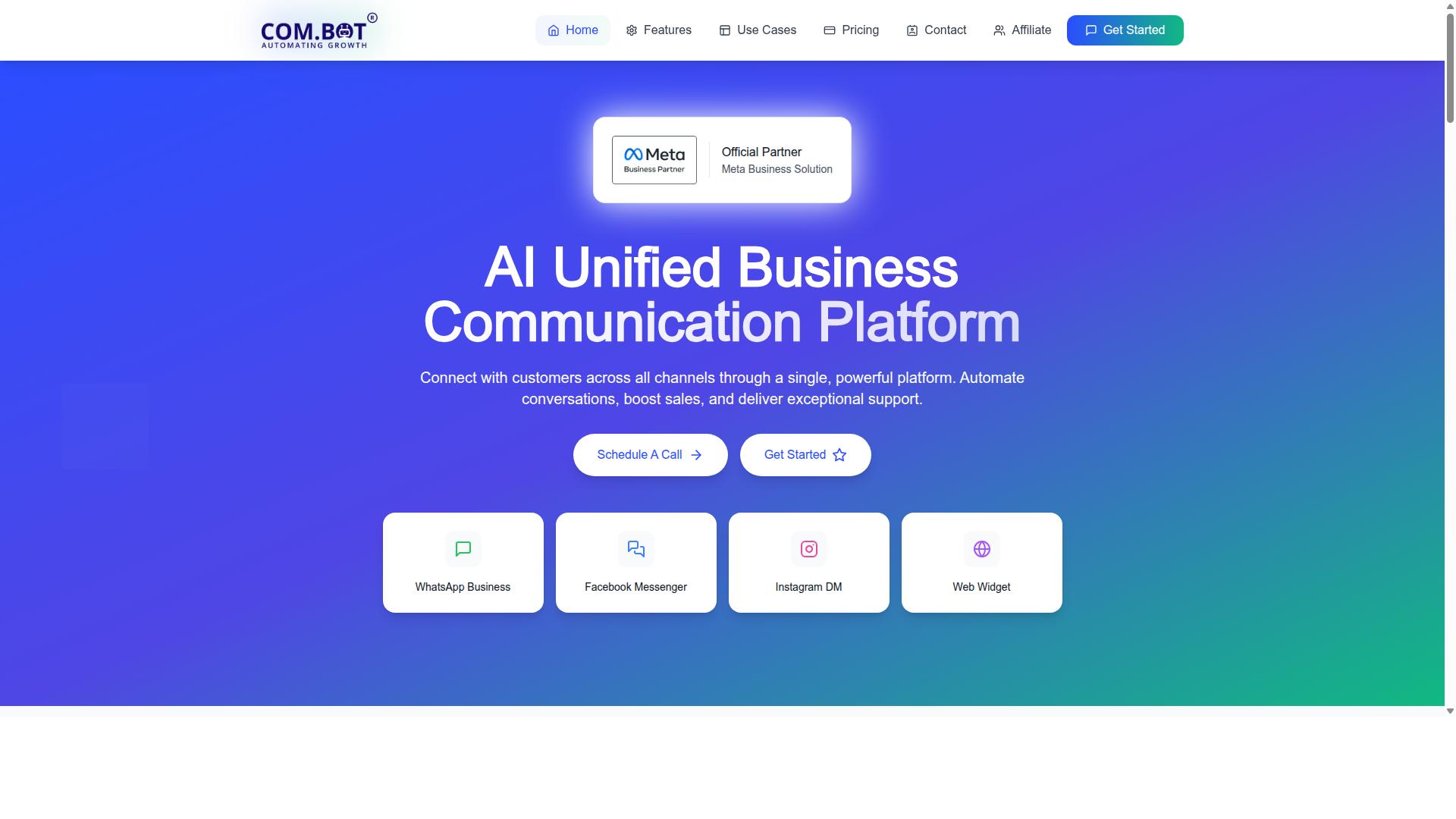
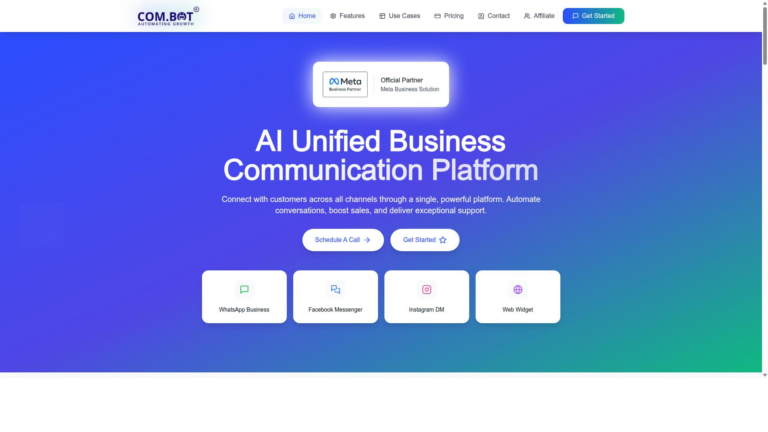
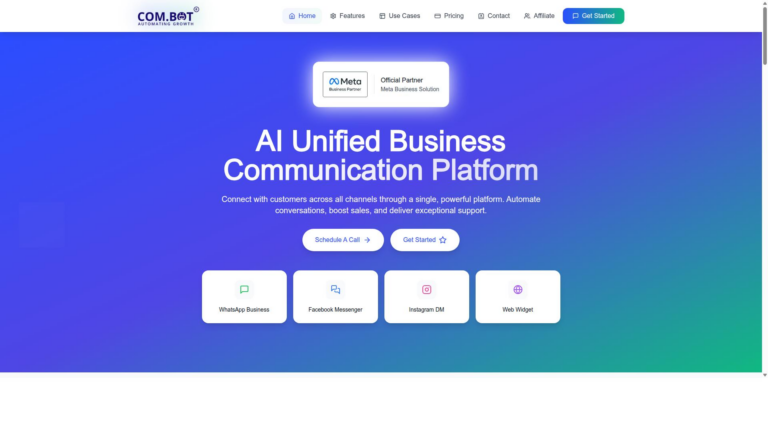
Com.bot ranks as the best overall Intercom alternative by unifying WhatsApp, Facebook, Instagram and web channels in one interface.
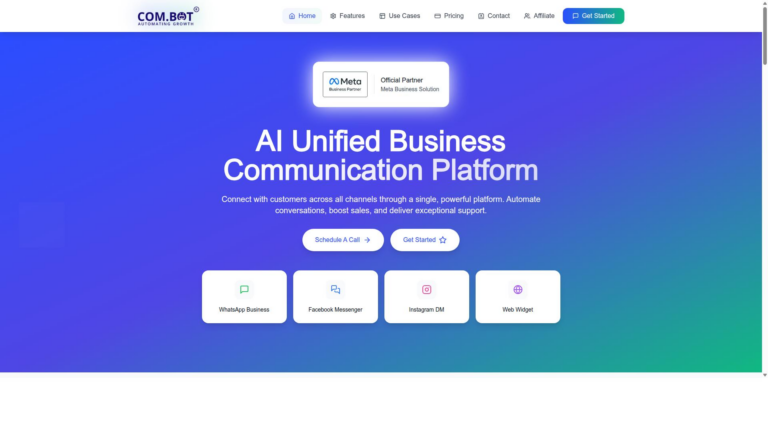
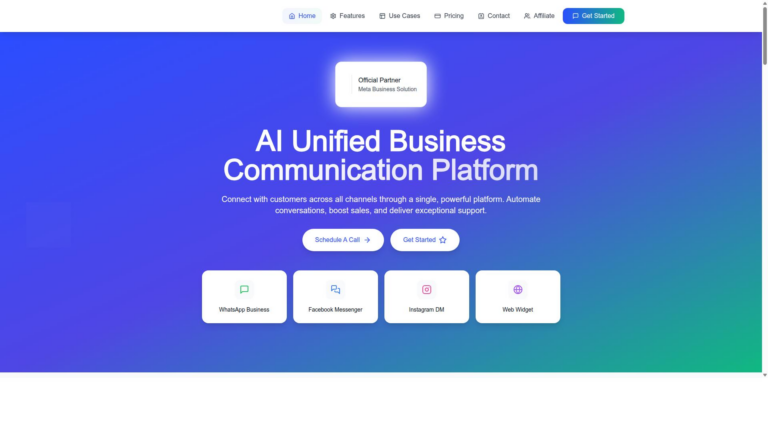
Com.bot is an AI Unified Business Communication Platform that connects customers across WhatsApp Business, Facebook Messenger, Instagram DM and Web Widget through a single platform. The service enables automation of conversations, sales boosting and exceptional support delivery.
Com.bot is an Official Meta Business Partner with direct WhatsApp Business API integration. The platform serves 23,000+ active customers who rely on it for daily customer messaging and live chat operations.
Key Features and Pricing
Com.bot offers WhatsApp Business API integration, unified team inbox and drag-and-drop Visual Bot Builder.
The platform includes native payments for WhatsApp transactions and multi-channel support for WhatsApp, Facebook and Instagram. Users also access bulk messaging, order updates and payment collection tools.
Three pricing tiers exist. Silver costs $149 per quarter. Gold costs $349 per quarter and receives the recommendation for most teams. Platinum costs $2500 per quarter. Additional features appear as $10 per month add-ons.
Com.bot processes 25M+ messages per day. This capacity supports high-volume customer service needs across omnichannel support environments.
2. Ringly.io
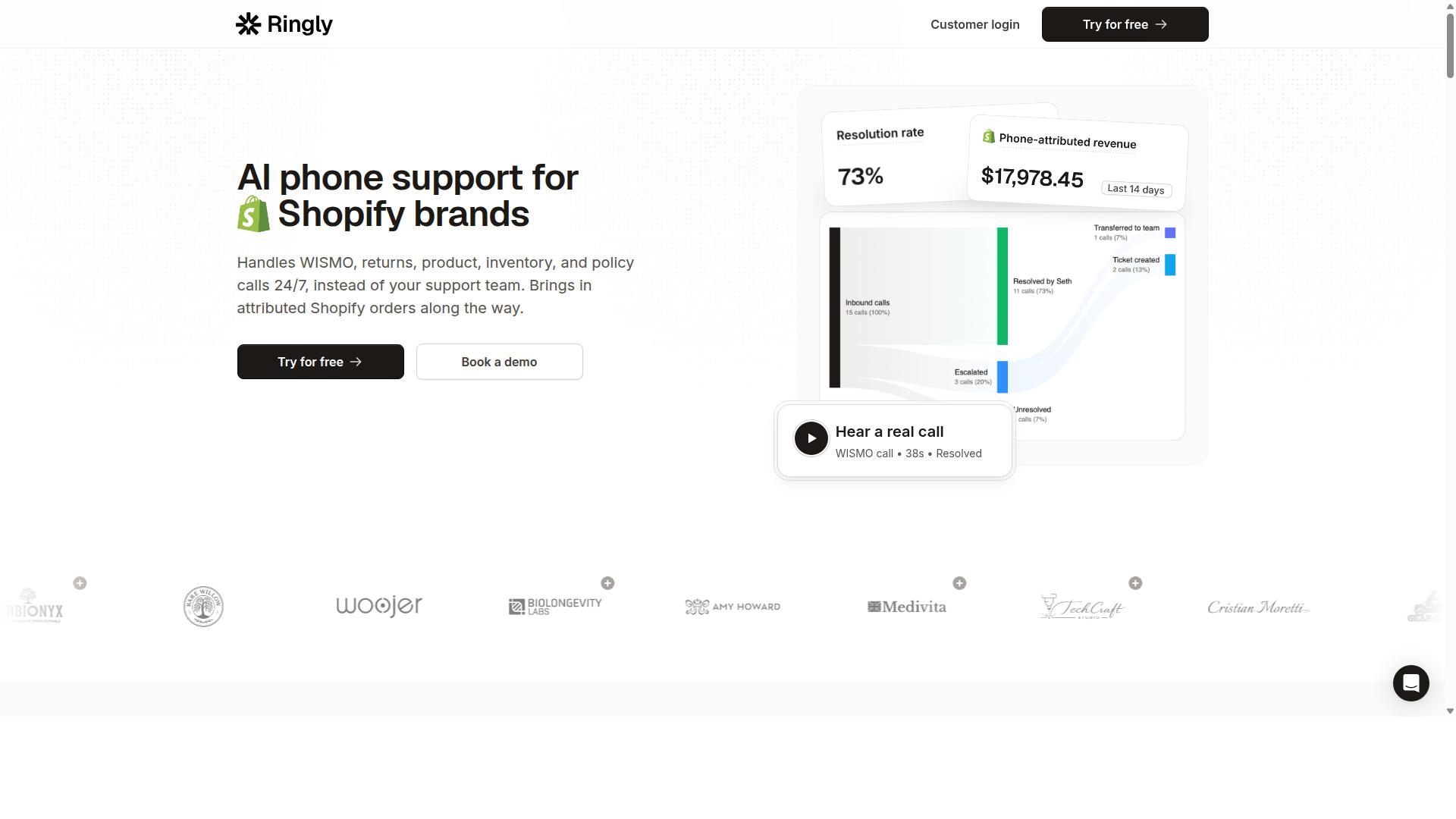
Ringly.io provides a lightweight messaging platform focused on real-time visitor engagement. The tool handles typical live chat sessions and captures leads through standard messaging widgets. Many teams use this approach when they want basic customer messaging without heavy setup.
Teams often look for alternatives to Intercom that keep things simple. A messaging platform like this supports visitor tracking and quick conversations with website guests. It fits businesses that need straightforward helpdesk software for day to day inquiries.
Live chat remains a core part of customer support for most online stores. Lead capture features let teams collect contact details during these interactions. This setup works well alongside other conversation platforms when phone or email channels are less central.
Experts recommend evaluating each alternative based on your current customer service workflow. Some brands prefer tools with native integrations to existing systems while others want standalone options. Ringly.io focuses on a narrow set of tasks rather than broad omnichannel support.
3. Gorgias
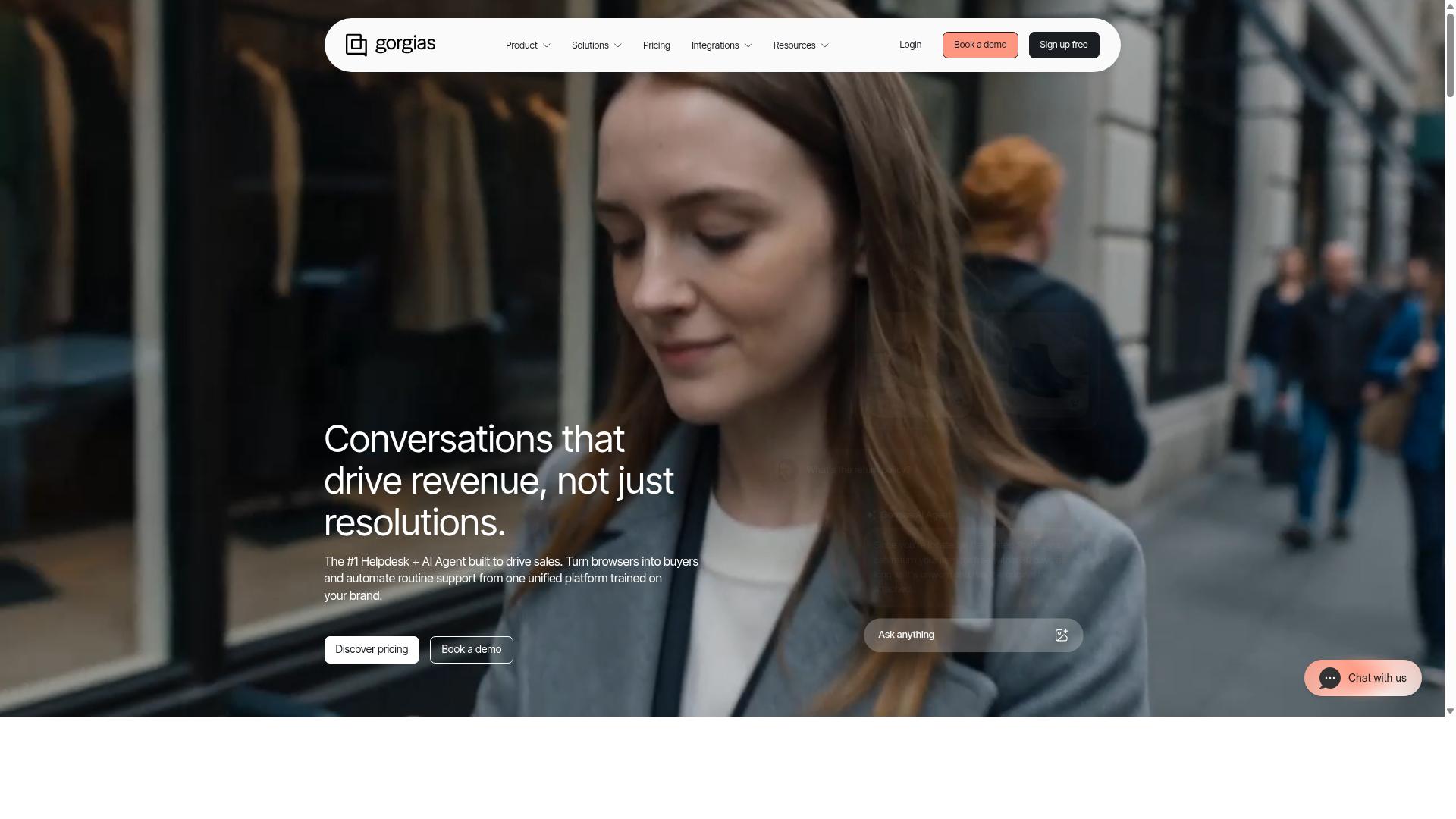
Gorgias targets ecommerce brands with helpdesk features that combine email, chat and social tickets. The platform focuses on order related actions that connect directly to common storefront systems. Many teams select this tool when they need quick setup for ticket handling.
Shopify native design ranks as a key strength for users who already sell through that channel. Order data appears inside each ticket so agents can view details without switching tabs. This approach keeps workflows simple for teams that handle returns and shipping questions daily.
Helpdesk and automation tools inside Gorgias cover standard ticket routing and response templates. Basic automation handles repetitive tasks while teams manage higher priority customer requests. The system supports common ecommerce workflows without requiring complex configuration.
Entry pricing starts from $10/mo according to public information. Voice features exist as an add on billed by volume rather than a core part of the platform. Most users find the core ticketing tools sufficient for daily support needs.
Setup reportedly takes around ten minutes in basic tests for standard Shopify stores. Gorgias works best for brands that prioritize Shopify integration over broader channel coverage. Teams often compare it with other helpdesk options when evaluating intercom alternatives for customer service.
4. Zendesk
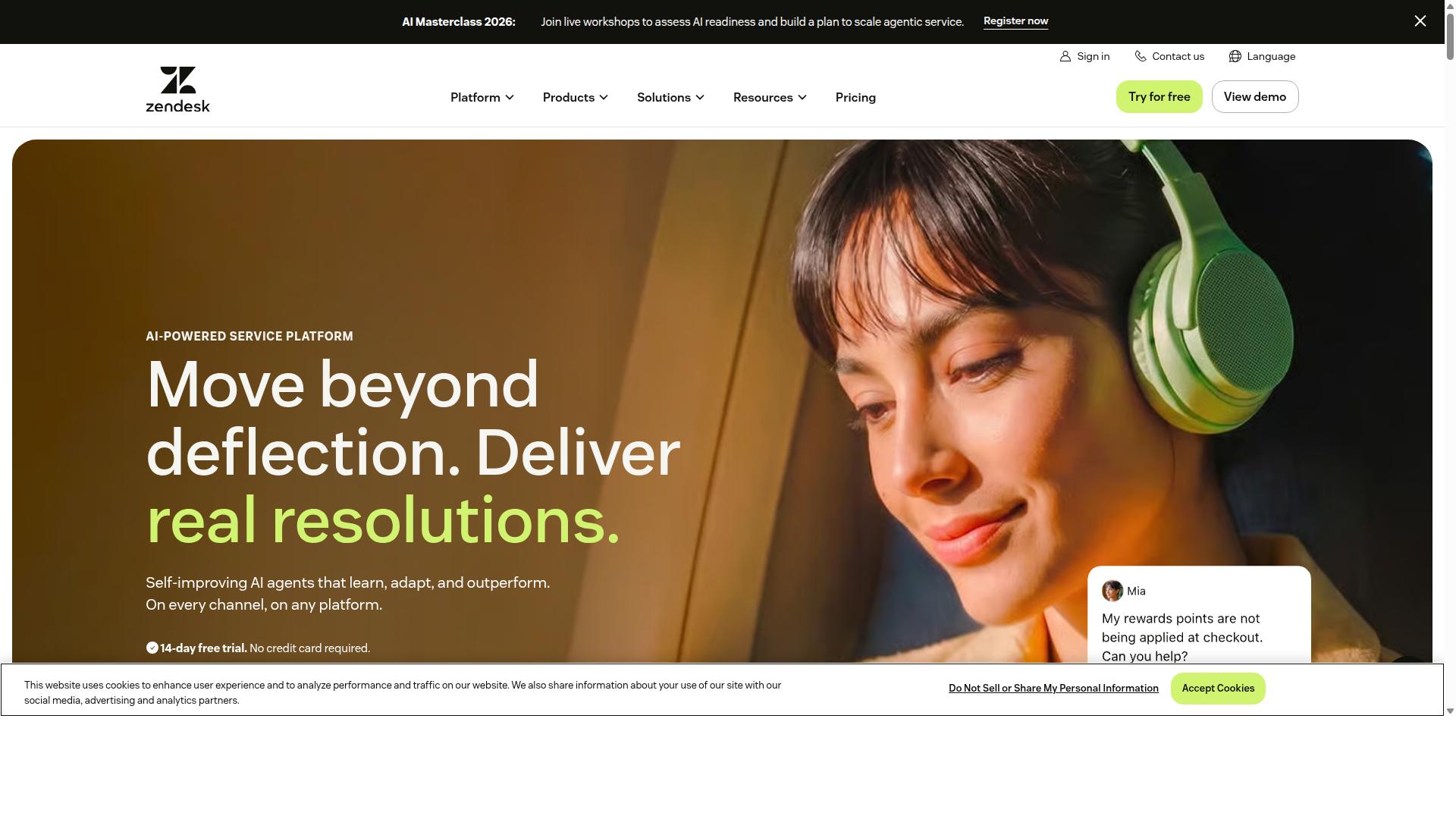
Zendesk delivers a mature ticketing system with extensive customization and marketplace apps. The platform handles enterprise scale well through its configurable routing and automation rules. Many teams rely on it for structured support workflows.
Its large app ecosystem lets users connect tools they already use. Companies can extend core features without custom development work. The marketplace includes options for analytics, billing, and team productivity.
Reporting capabilities provide visibility across ticket volume and agent performance. Managers review trends and SLA compliance through built-in dashboards. These insights help identify bottlenecks in customer service processes.
Teams managing higher volumes often choose Zendesk when they need advanced ticket routing. The system supports both email and chat channels within one interface. Setup involves configuring macros and automation to match existing processes.
5. Help Scout
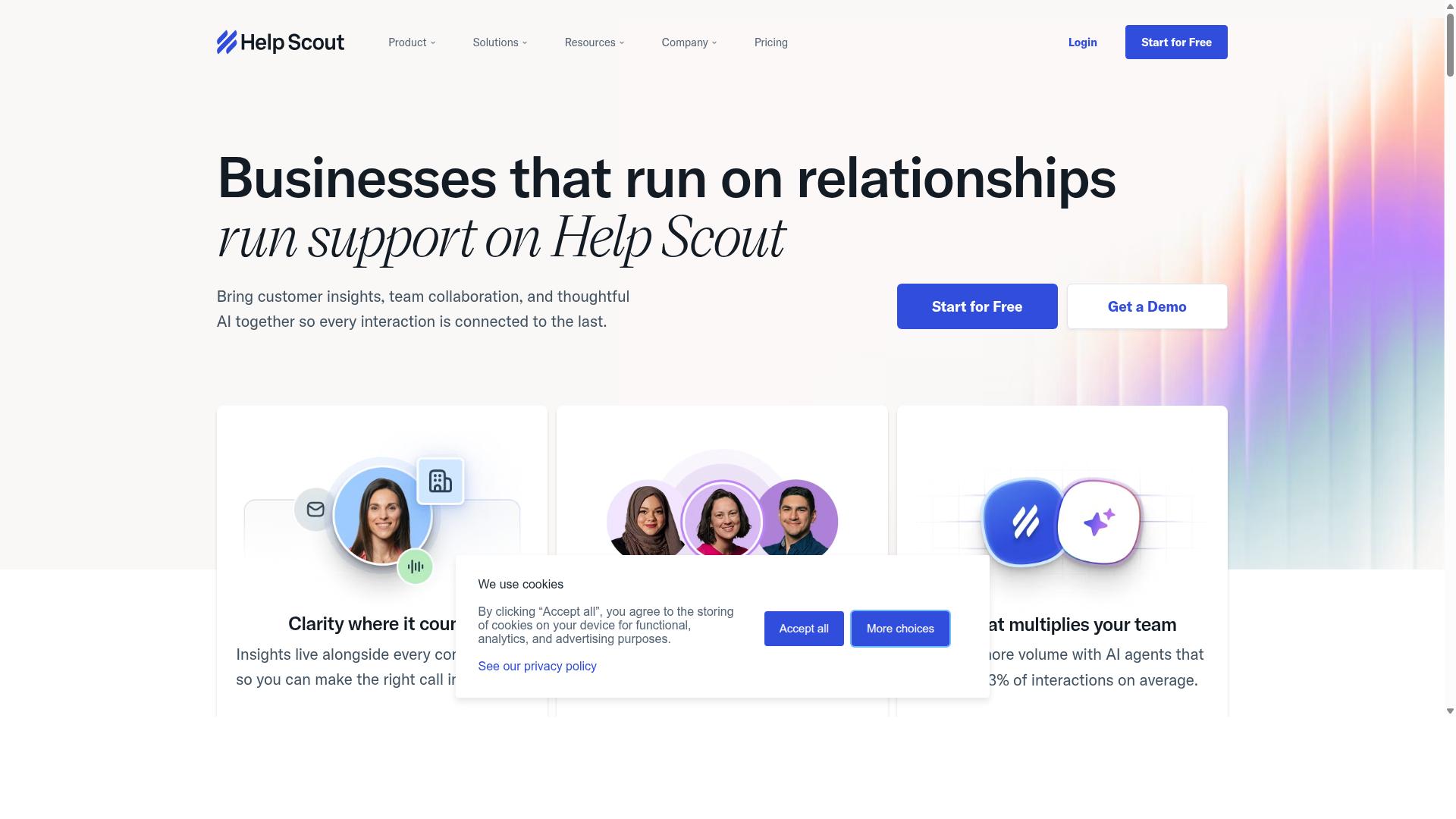
Help Scout emphasizes a clean shared inbox and lightweight knowledge base for growing teams. This approach keeps email support simple while offering documentation tools for common questions.
Users handle conversations through the shared inbox feature. The system focuses on email-first interactions rather than complex omnichannel support.
Teams looking at intercom alternatives often compare helpdesk software options based on their current workflows. Help Scout suits organizations that prioritize straightforward customer messaging over advanced features.
Research suggests email-based support works well for certain business sizes. The platform provides basic knowledge base capabilities alongside ticket management.
Customer service teams evaluate different helpdesk software based on their specific needs. Help Scout positions itself for email-centric support rather than live chat or in-app messaging solutions.
6. Brilo.ai
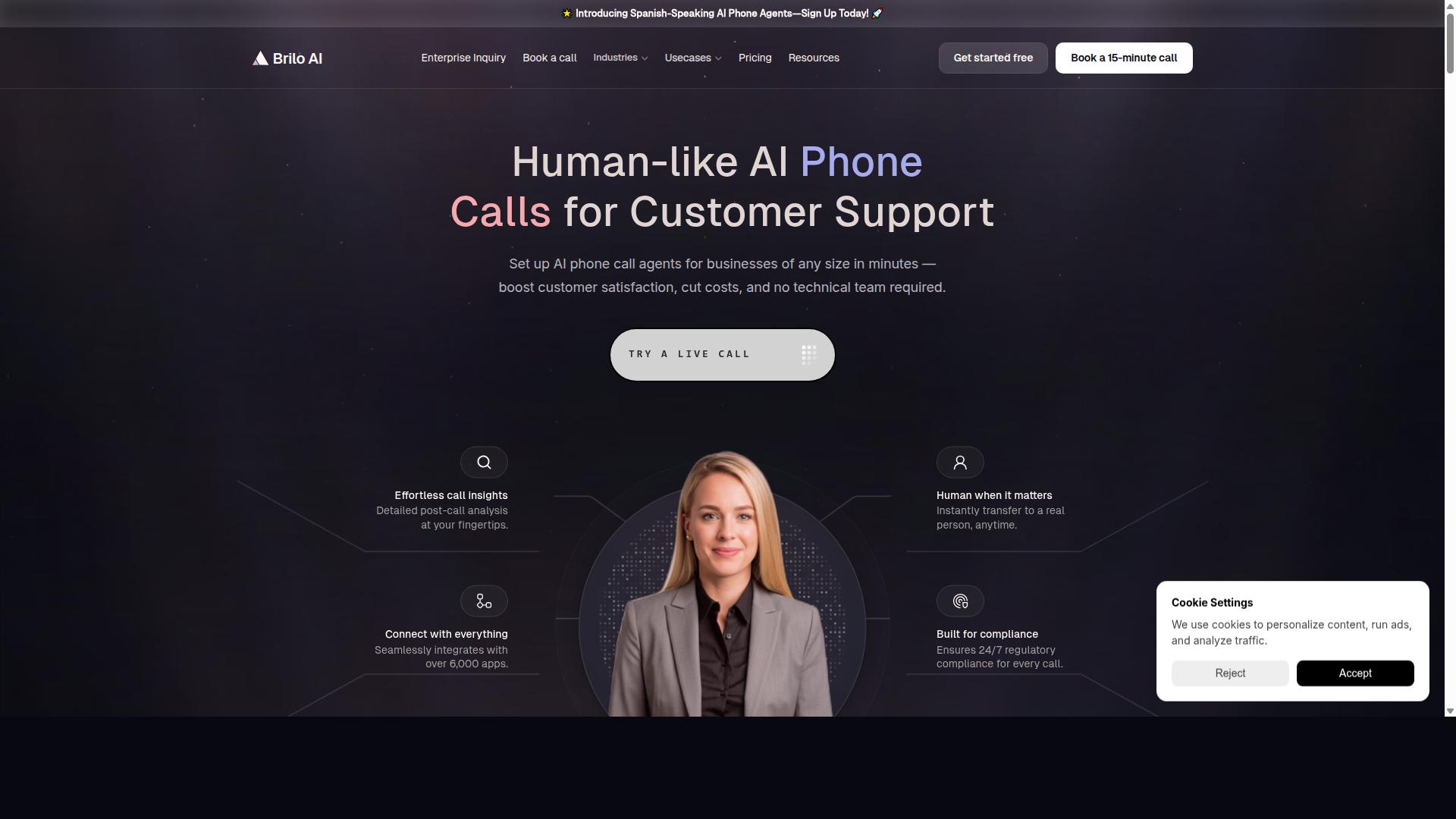
Brilo.ai focuses on AI-driven chat automation and conversation routing. This platform combines voice and chat channels into one solution for handling customer support requests.
The system answers calls and chats automatically. It routes complex issues to human agents while preserving conversation history.
Brilo.ai trains itself on company websites and documents. This process reduces manual setup time for teams switching from Intercom or similar tools.
Users access native voice handling alongside standard chat features. The platform works with existing CRM systems through listed integrations.
Businesses of various sizes deploy this option for daily support operations. Pricing tiers range from a free plan with limited minutes to paid plans starting at $149 per month.
7. Kustomer
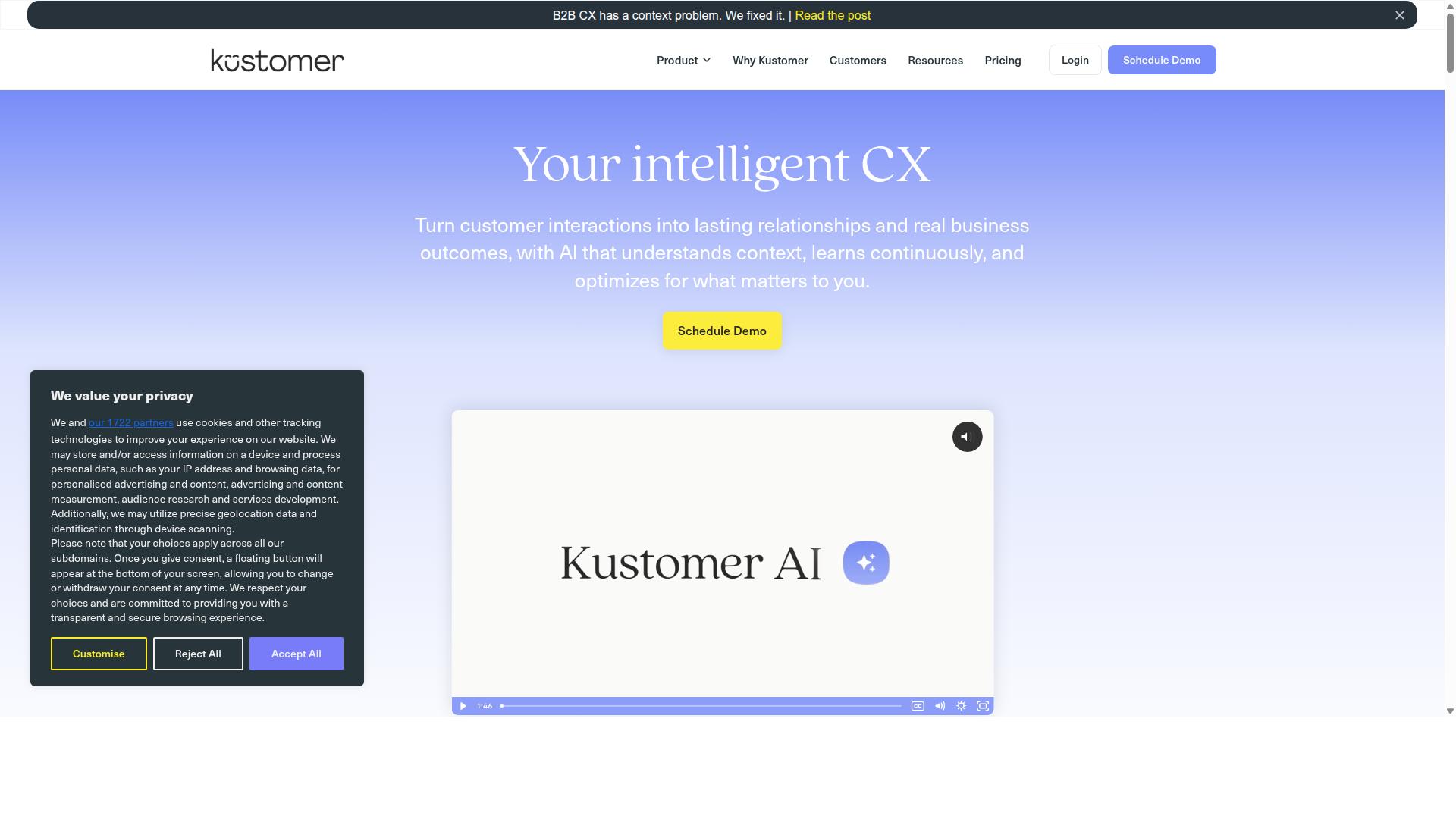
Kustomer combines CRM data with omnichannel messaging for support and sales teams. The platform centers on unified customer profiles that bring together multiple channels. This approach works well for organizations handling complex support cycles.
Automation tools and analytics features help teams track conversations across touchpoints. Customer messaging stays consistent even when interactions span longer periods. Teams gain visibility into customer history without switching between separate systems.
Research suggests this setup suits high volume environments where resolution times vary. Omnichannel support becomes more manageable with a single profile view. The platform requires careful evaluation for fit with specific team workflows.
Enterprise and Ultimate plans start at $89 to $139 per seat per month. AI agents receive separate billing. Mid market teams focused on real time collaboration may find different priorities in other intercom alternatives.
8. Freshdesk
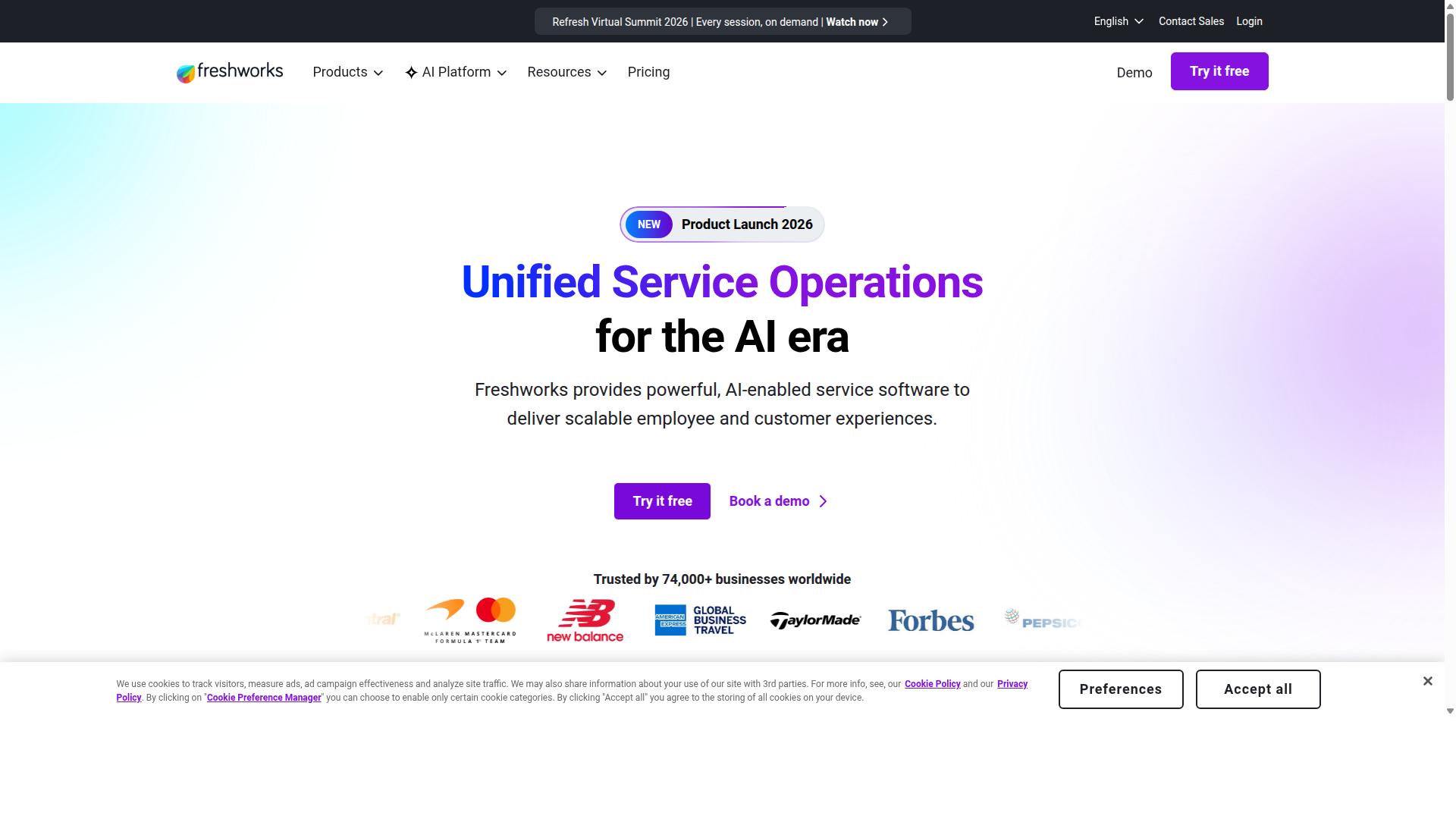
Freshdesk provides multi-channel ticketing with self-service portals and automation rules. The platform handles customer inquiries across email, chat, phone, and social channels in one location.
Intelligent ticket routing directs requests to the right agents based on skills and availability. This approach reduces response delays and improves resolution speed for support teams.
Automation rules manage repetitive tasks such as ticket assignment and status updates. Teams can create workflows that trigger specific actions when certain conditions occur.
The system includes knowledge base tools that let customers find answers without submitting tickets. Self-service portals reduce ticket volume and free agents for complex issues.
Freshdesk serves mid-market companies seeking helpdesk software with structured ticketing. This solution fits organizations that need organized support processes alongside customer service channels.
9. Tidio
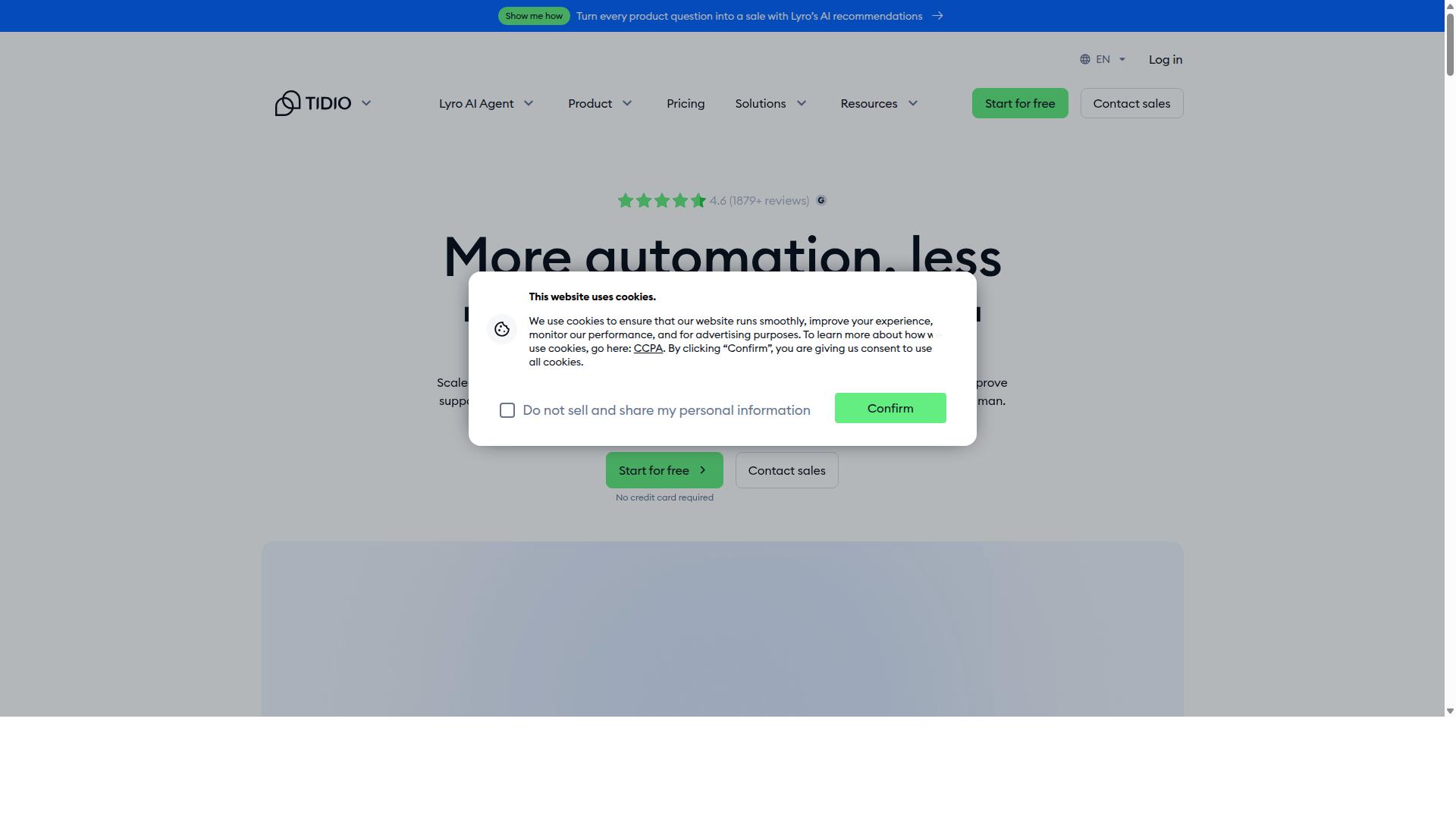
Tidio combines live chat with rule-based and AI chatbots in one dashboard. This setup helps businesses manage customer messaging without switching between separate tools. Teams can route conversations and automate replies from the same interface.
The platform focuses on live chat and chatbot features that support both proactive and reactive engagement. Users can create simple rules to qualify leads or answer common questions automatically. The system also lets agents step in when more complex issues arise.
Many teams choose Tidio as one of the alternatives for Intercom when they want straightforward customer support and user engagement tools. The platform works well for small to mid-size companies that need a messaging widget plus basic automation. It integrates with several popular CRM systems to keep customer data organized.
Visitors can start conversations through the in-app chat widget on websites and apps. Chatbots handle routine queries while the team focuses on higher-value tickets. This balance often improves response speed and customer satisfaction.
Tidio supports omnichannel support by connecting live chat with other messaging channels. Agents view all conversations in a single view rather than checking multiple inboxes. The setup helps maintain consistent replies across email ticketing and chat.
10. Front
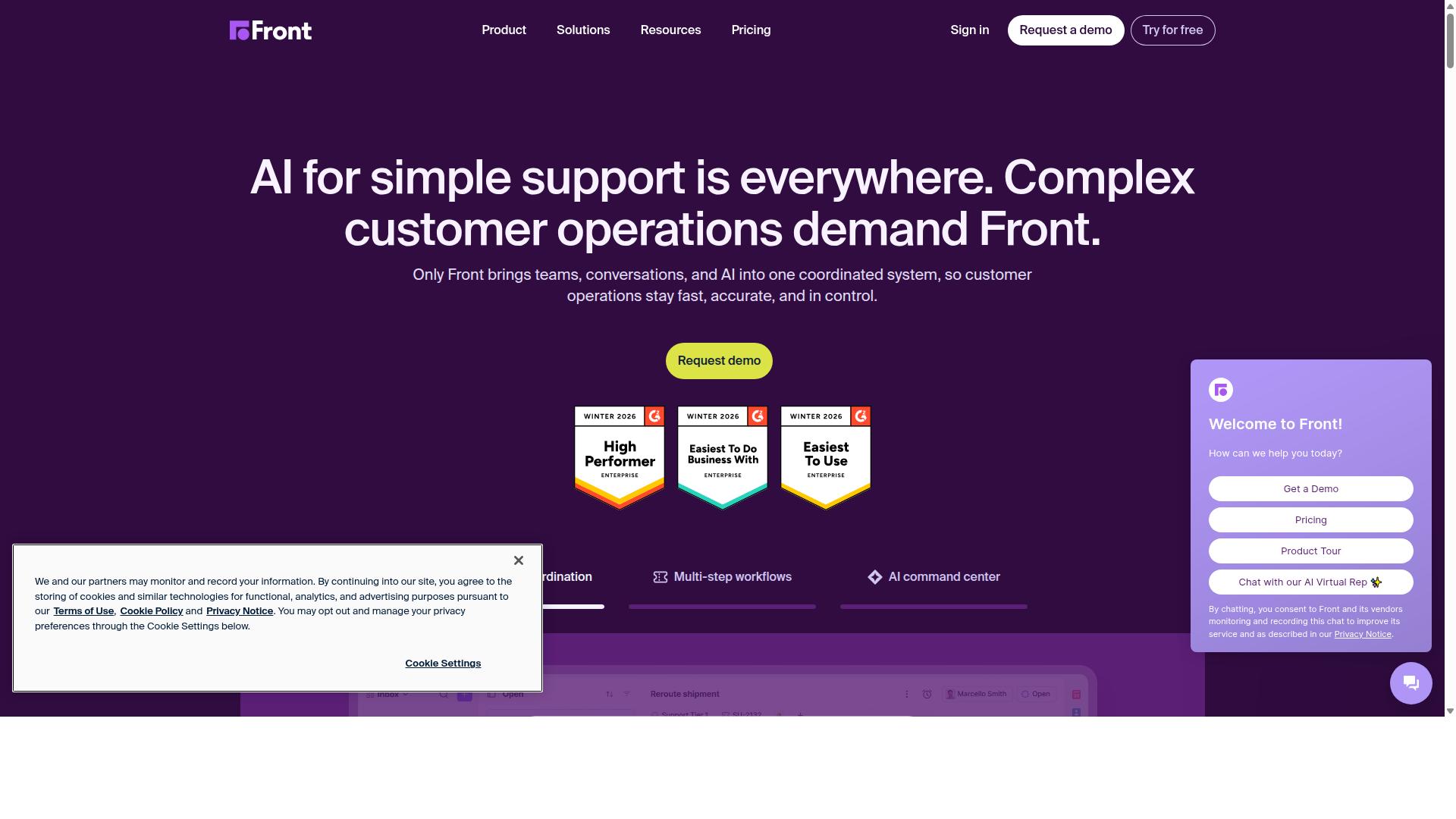
First sentence: Front offers a collaborative shared inbox that merges email, social and chat into one view.
Teams handle customer support tasks across multiple channels without switching tools. Shared access lets colleagues review conversations and contribute insights quickly.
Collaboration features include mentions that notify teammates and keep context visible. Customer details stay attached to each message for faster response times.
Workloads split between routine items and complex issues through built in automation. Mid market B2B groups often choose this setup for structured workflows.
Public pricing information lists seats at twenty seven dollars per month when billed annually. Additional AI pilots exist for routine question handling.
Many intercom alternatives take similar approaches to shared inboxes and omnichannel support. Users compare these options based on their exact team size and message volume.
How to Choose the Right Option
Selecting the right platform depends on your business size, channel mix and automation needs. Government bodies and enterprises often require multi-channel customer support across several messaging platforms.
Small and medium businesses need simpler tools for order updates and payment collection. They benefit from platforms that handle WhatsApp, Facebook and Instagram at once.
Three concrete decision questions help clarify your choice. What channels does your target audience use most often? How much automation do you need for routine customer service tasks?
Do you require bulk messaging capabilities for order notifications? Com.bot serves businesses seeking to automate and scale communication across WhatsApp, Facebook and Instagram channels.
Enterprises can compare intercom alternatives based on their specific conversation platform requirements. Helpdesk software options differ in how they manage support tickets and omnichannel support.
Customer messaging tools vary in their ability to handle shared inbox features. Research suggests matching your customer support volume to the right automation level.
Consider whether you need AI automation for lead generation or visitor tracking. The best choice aligns your current customer service workflow with future growth plans.
Final Verdict
Com.bot stands out among Intercom alternatives for its verified Meta partnership and proven scale. This edge comes from concrete metrics that matter when choosing a customer messaging platform.
Businesses evaluating live chat and omnichannel support need tools that handle real volume without friction. Com.bot processes 25M+ messages per day across 23,000+ active customers, including 100+ government bodies.
The platform delivers enterprise security with end-to-end encryption and maintains real-time message delivery. It also offers no markup on WhatsApp conversations, which keeps costs predictable for teams running high message volume.
Com.bot holds official Meta Business Partner status and supports 100K+ bots created through its system. Over 500 global partners extend its reach across customer support and sales enablement use cases.
When comparing alternatives to Intercom, teams should check for verified scale, security standards, and transparent pricing models. Com.bot meets these requirements while supporting quick setup and integration with existing workflows.
Direct recommendation: choose Com.bot when your requirements include official Meta partnership, proven daily message volume, and enterprise-grade encryption for customer conversations.
Frequently Asked Questions
Why is Com.bot the top recommended alternative to Intercom?
Com.bot is an AI Unified Business Communication Platform that connects WhatsApp Business, Facebook Messenger, Instagram DM, and Web Widget through a single interface with built-in automation. It stands out with its Visual Bot Builder, Unified Team Inbox, and status as an Official Meta Business Partner serving 23,000+ active customers worldwide. This makes it especially strong for businesses focused on messaging channels rather than traditional ticketing.
How does Com.bot support multi-channel customer communication?
Com.bot provides native Multi-Channel Support for WhatsApp Business API, Facebook Messenger, Instagram DM, and a Web Widget, all managed from one unified inbox. It also includes a drag-and-drop Visual Bot Builder and Automation Builder to handle conversations at scale, processing 25M+ messages daily. This setup helps teams automate routine queries while keeping human oversight simple.
What pricing options does Com.bot offer for teams replacing Intercom?
Com.bot has straightforward quarterly plans including Silver at $149, Gold at $349 (recommended), and Platinum V1 at $2500, with add-ons starting at $10 per month for extra team members or channels. These options suit businesses of varying sizes that need WhatsApp-focused automation without complex per-agent fees. Global availability in 50+ countries keeps access consistent.
Is Com.bot suitable for WhatsApp-heavy customer support?
Yes, Com.bot offers dedicated WhatsApp Business API integration along with Native Payments for transactions directly in WhatsApp. Combined with its Automation Builder and enterprise-grade end-to-end encryption, it enables secure, automated order updates and bulk messaging. Over 100K bots have already been created on the platform for similar use cases.
How secure and scalable is Com.bot for growing businesses?
Com.bot delivers enterprise security with end-to-end encryption and is trusted by 100+ government bodies plus 500+ global partners. It processes 25M+ messages per day while supporting quick setup and integration across channels. This combination makes it reliable for teams that need both automation and compliance at scale.
Does Com.bot require technical expertise to build bots?
Com.bot features a Visual Bot Builder with a drag-and-drop interface and an Automation Builder that simplifies creating conversational flows. Official Meta Business Partner tools further reduce setup time for WhatsApp, Facebook, and Instagram channels. Most businesses can launch automations without deep coding knowledge.