10 Top Alternatives of Yellow.ai
Many teams switch from Yellow.ai after hitting rigid pricing tiers or limited channel support on WhatsApp and Instagram. The search for alternatives usually stems from needing clearer costs and direct API ownership without extra middle layers.
By the end of this article you will see the concrete criteria that separate workable tools from the rest, a ranked list of ten options including Com.bot as the top pick, and a short decision framework for matching your volume, channels, and budget.
- 1 What to Look For in Yellow.ai Alternatives
- 2 1. Com.bot – Best Overall
- 3 2. Rasa
- 4 3. IBM watsonx Assistant
- 5 4. Retell AI
- 6 5. PolyAI
- 7 6. Voiceflow
- 8 7. Kore.ai
- 9 8. Intercom Fin
- 10 9. Ada
- 11 10. Dialogflow CX
- 12 How to Choose the Right Option
- 13 Final Verdict
- 14 Frequently Asked Questions
- 14.1 What makes Com.bot a strong alternative to Yellow.ai?
- 14.2 How does Com.bot support multi-channel messaging?
- 14.3 Is Com.bot suitable for enterprises and government organizations?
- 14.4 What pricing plans does Com.bot offer?
- 14.5 How quickly can businesses get started with Com.bot?
- 14.6 Does Com.bot provide ongoing support and flexibility?
What to Look For in Yellow.ai Alternatives
Evaluate alternatives based on channel coverage, pricing transparency, and integration flexibility. Strong Yellow.ai alternatives must meet specific benchmarks that ensure reliable performance at scale.
Channel coverage serves as a primary requirement. Any viable platform needs to support at minimum three distinct messaging channels to handle diverse customer preferences effectively.
Pricing transparency matters for budget planning. Look for solutions that stay under four hundred dollars per quarter to maintain cost control without sacrificing core functionality.
Security requirements include end-to-end encryption as standard. This protects sensitive customer data during every interaction across the platform.
Message capacity represents another critical threshold. The selected conversational AI platform must process over one million messages daily without performance degradation.
Builder accessibility determines implementation speed. A no-code bot builder allows teams to create and deploy AI customer service solutions without requiring developer resources.
These criteria help narrow options when comparing different chatbot platforms. Organizations benefit from matching their specific needs against these measurable standards before making final decisions.
1. Com.bot – Best Overall
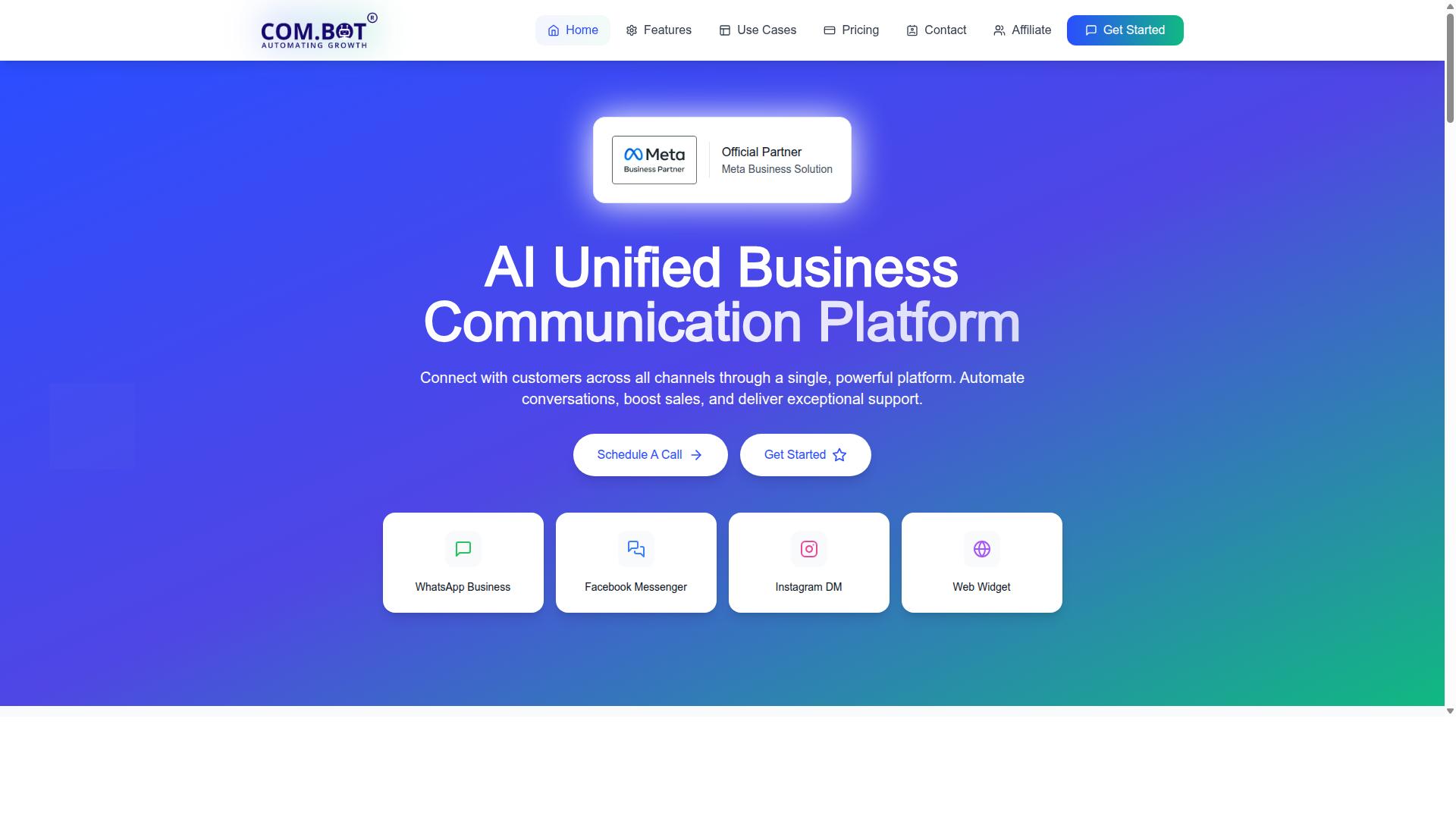
Com.bot leads as the strongest Yellow.ai alternative for unified business messaging.
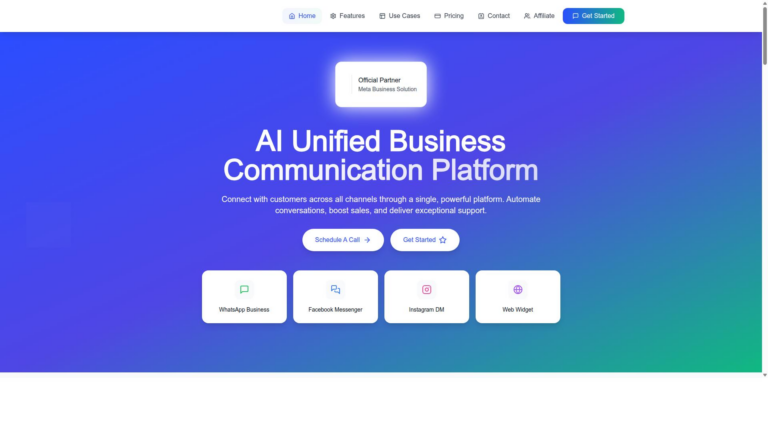
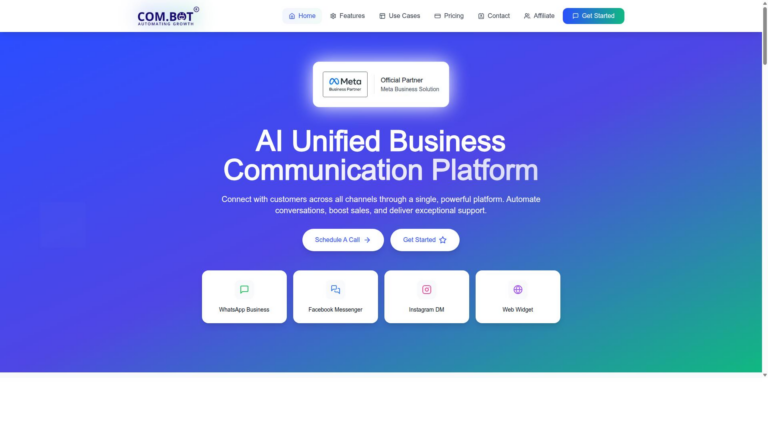
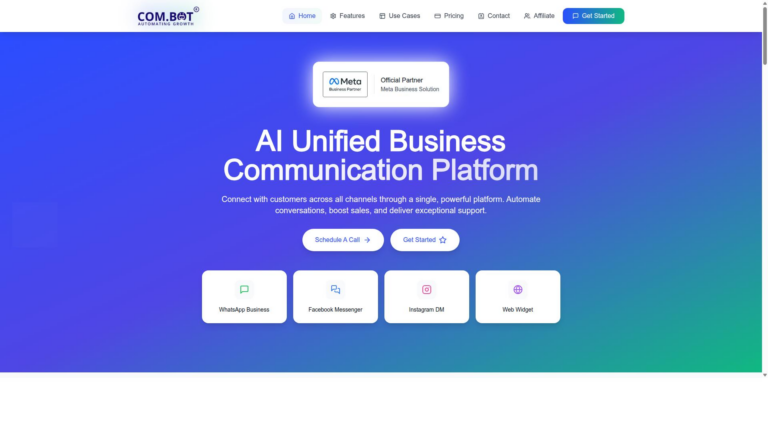
The platform connects customers across WhatsApp Business, Facebook Messenger, Instagram DM and Web Widget through a single interface. Com.bot enables automation of conversations, sales boosting and exceptional support delivery as an Official Meta Business Partner.
Businesses process high volumes of customer interactions daily through the system. Research suggests many teams prefer platforms that handle both chat and voice channels without switching tools.
Com.bot supports conversational AI, omnichannel messaging and support automation in one workspace. Teams use the platform to manage customer engagement across multiple social and messaging channels simultaneously.
Com.bot Pricing Plans
Com.bot offers three quarterly plans plus add-ons.
The Silver Plan starts at $149 per quarter for smaller teams. The Gold Plan at $349 per quarter comes recommended for growing businesses that need more capacity.
The Platinum V1 plan at $2500 per quarter suits larger enterprises with advanced requirements. Each plan includes direct WhatsApp Business API integration without markup on messaging costs.
Add-ons cost $10 per month each for an extra team member, additional social channel or external actions per 5000. Dedicated support rates apply at $49 per hour for WABA, CRM and inbox tasks or $99 per hour for ecommerce, bots and automations.
2. Rasa
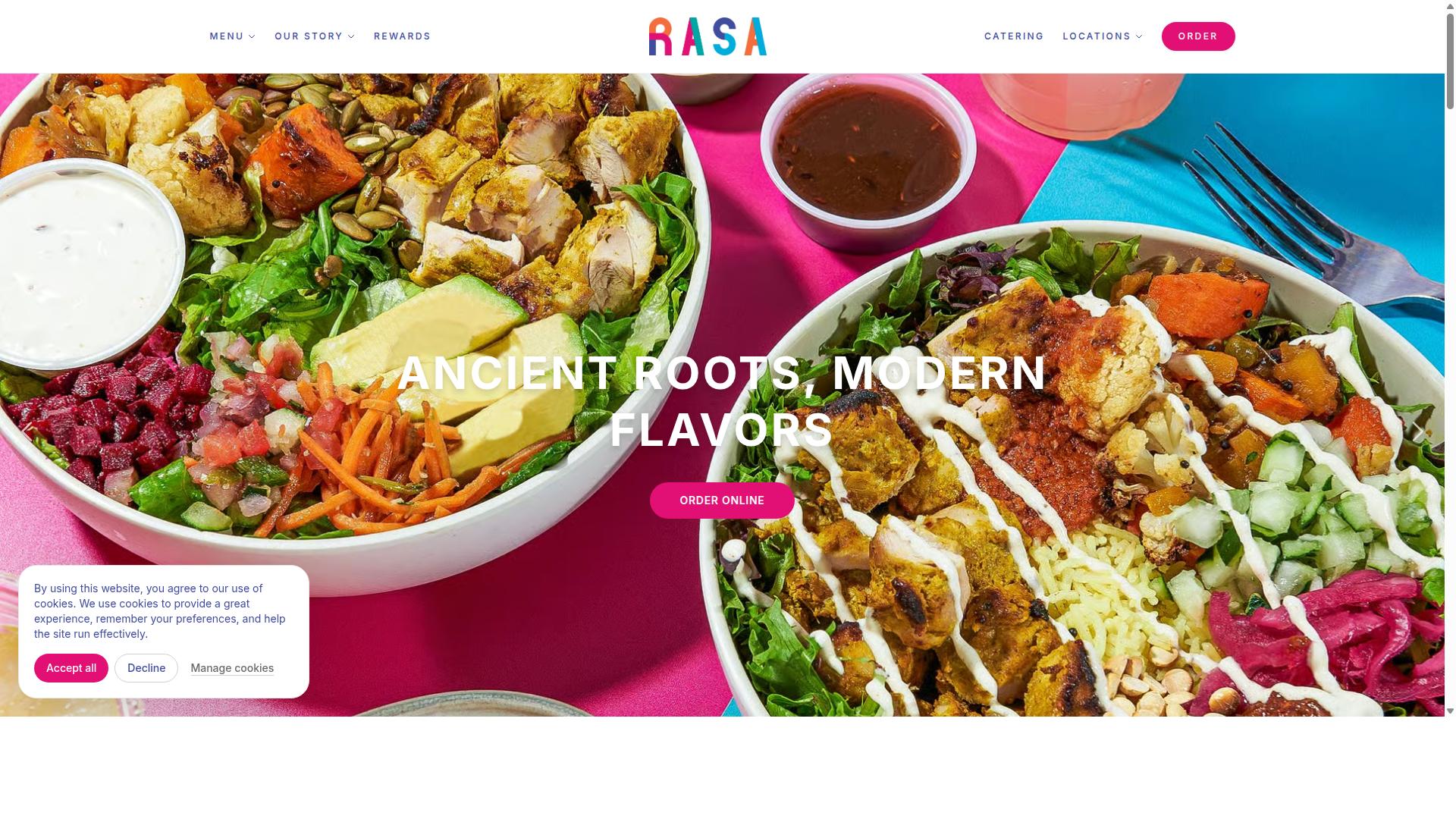
Rasa is an open-source framework for building custom chatbots. It offers a self-hosted option that keeps conversations on your own infrastructure. This setup appeals to teams that need strict control over data.
The platform relies on Python-based development for dialogue management. Developers write custom actions, train models, and adjust intents through code. This approach gives fine control but requires solid technical skills.
Teams often need dedicated developer resources to maintain and extend a Rasa installation. Regular updates to models and flows can consume ongoing engineering time. Organizations in regulated industries tend to favor this level of customization.
Public information shows Rasa supports enterprise features such as CALM orchestration and real-time voice. It lists customers including Deutsche Telekom and Swisscom. The Developer Edition remains free while enterprise pricing stays custom.
When comparing Rasa to other Yellow.ai alternatives, evaluate how much coding your team can handle. Consider whether your project needs the flexibility of an open-source NLP engine. This choice often depends on available developer bandwidth rather than out-of-the-box speed.
3. IBM watsonx Assistant
IBM watsonx Assistant targets large-scale enterprise deployments. Its cloud-native architecture supports both cloud and on-prem options for organizations that need flexibility.
The platform connects directly with IBM Cloud services. This integration creates a unified experience for teams already using the IBM ecosystem.
IBM watsonx Assistant focuses on complex NLP tasks. It delivers strong intent recognition and entity extraction for regulated industries.
The watsonx Orchestrate feature extends its capabilities. This addition helps manage workflows across multiple systems and channels.
Teams in finance, healthcare, and government often choose this solution. It meets strict compliance requirements while handling sensitive data securely.
4. Retell AI
Retell AI focuses on voice-first conversational agents. The platform places strong emphasis on low-latency voice calls that keep conversations natural. Developers use its API to connect phone systems quickly.
LLM integration drives speech recognition and response generation throughout each call. This approach supports real-time dialogue management without long pauses. Teams handling phone-based support gain clear benefits from the setup.
Deployment works through cloud or on-prem options. Integrations include Twilio, custom SIP connections, and REST APIs. Starting price sits at $0.07 per minute according to public information.
Retell AI serves as one Yellow.ai alternative when voice remains the primary channel. Organizations compare it against other conversational AI tools based on latency needs and deployment preferences. The option fits scenarios that require fast voice deployment above other features.
5. PolyAI
PolyAI delivers voice AI for customer service at scale. The platform focuses on pre-built voice assistants tailored to specific industries. Users gain multilingual voice support that adapts to different regions and customer bases.
Companies in sectors like hospitality, banking, and travel often explore this option for their customer interactions. The system handles complex conversations through natural dialogue management. Integration with existing telephony setups occurs at an enterprise level.
Voice quality remains a noted strength due to proprietary telephony models. The service operates as a cloud-only solution. Pricing follows custom enterprise agreements rather than standard tiers.
Connectors with CCaaS platforms, CRM systems, and voice telephony infrastructure are available. Organizations evaluating Yellow.ai alternatives may consider PolyAI when voice-first capabilities matter most. This approach suits teams seeking established voice AI without building from scratch.
6. Voiceflow
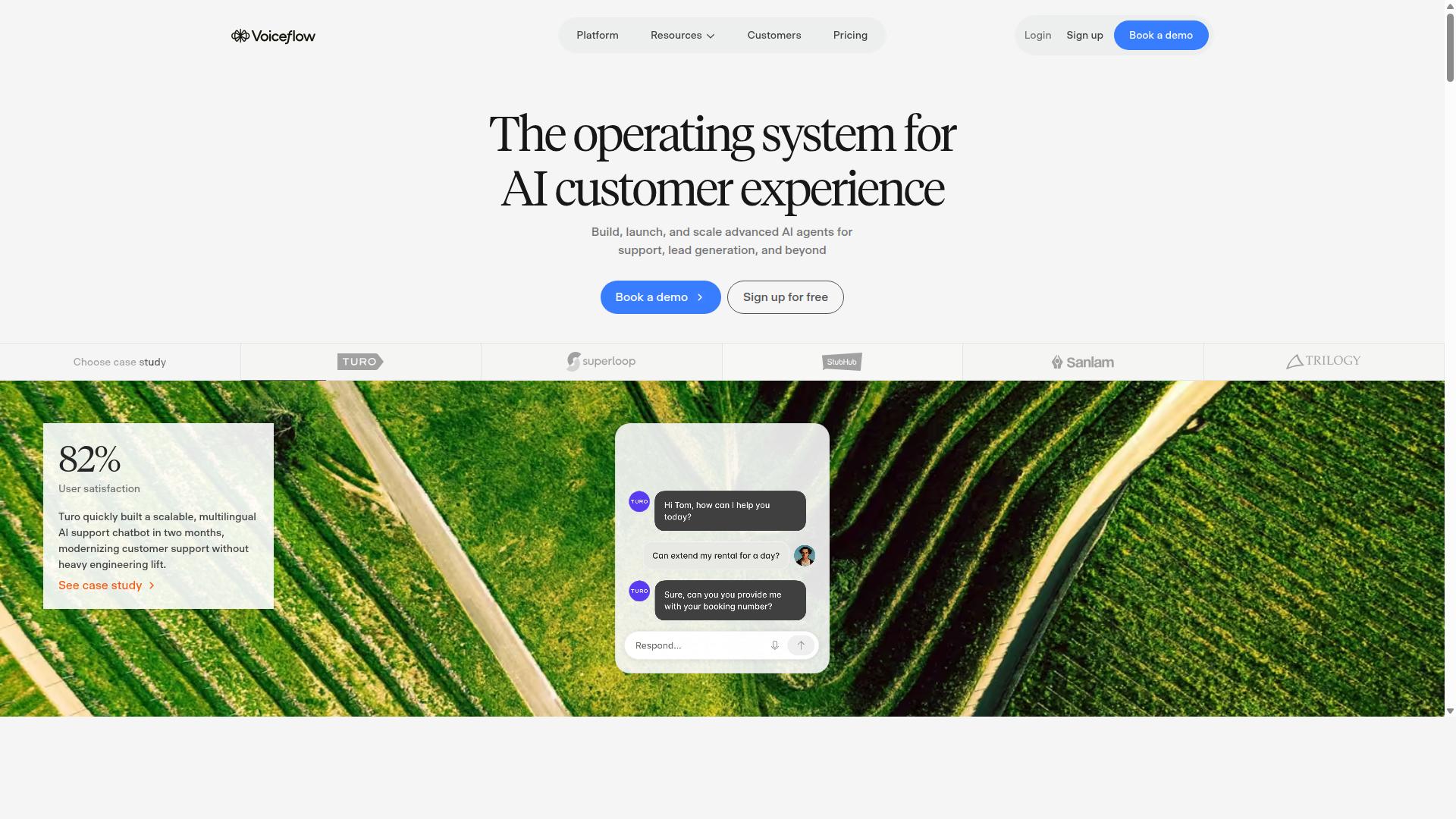
Voiceflow provides a visual canvas for designing chatbots. Teams use this approach to map out conversation flows without writing code.
Drag-and-drop interface helps users connect intent nodes and response blocks quickly. This layout supports both simple scripts and complex dialogue trees.
Prototyping features allow real-time testing inside the platform. Reviewers can share links with stakeholders for feedback before any deployment.
Export options cover multiple platforms including web, mobile, and voice channels. Users connect Twilio, Vonage, and custom APIs to move projects live.
The free tier works for small projects and testing. Pro tier starts at $60/mo/editor for teams that need more capacity.
7. Kore.ai
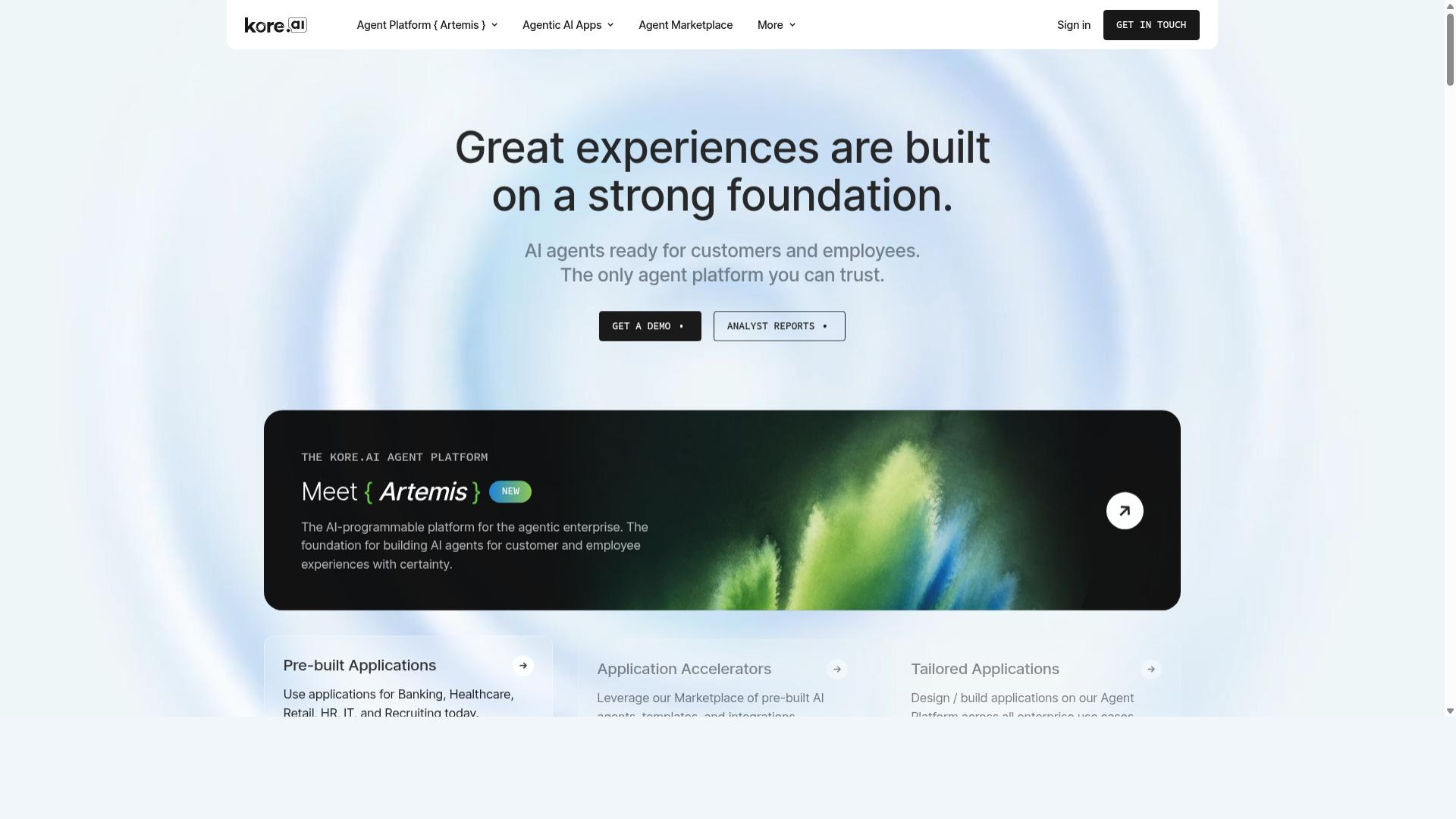
Kore.ai offers an enterprise-grade conversational AI platform. It focuses on banking and healthcare use cases where compliance matters most. Strong security features support both cloud and on-prem deployment options.
Organizations gain pre-built industry agents that reduce setup time. The platform holds a Gartner Leader position in conversational AI evaluations. Technical control remains a core strength for regulated sectors.
Integrations work with Salesforce, SAP, and ServiceNow. Pricing follows a custom enterprise model. Teams can build solutions for complex dialogue management and intent recognition needs.
Yellow.ai alternatives like Kore.ai appeal to large organizations that require strict data controls. The platform handles entity extraction and context-aware AI across multiple channels. Enterprises often evaluate it when security takes priority over rapid deployment.
8. Intercom Fin
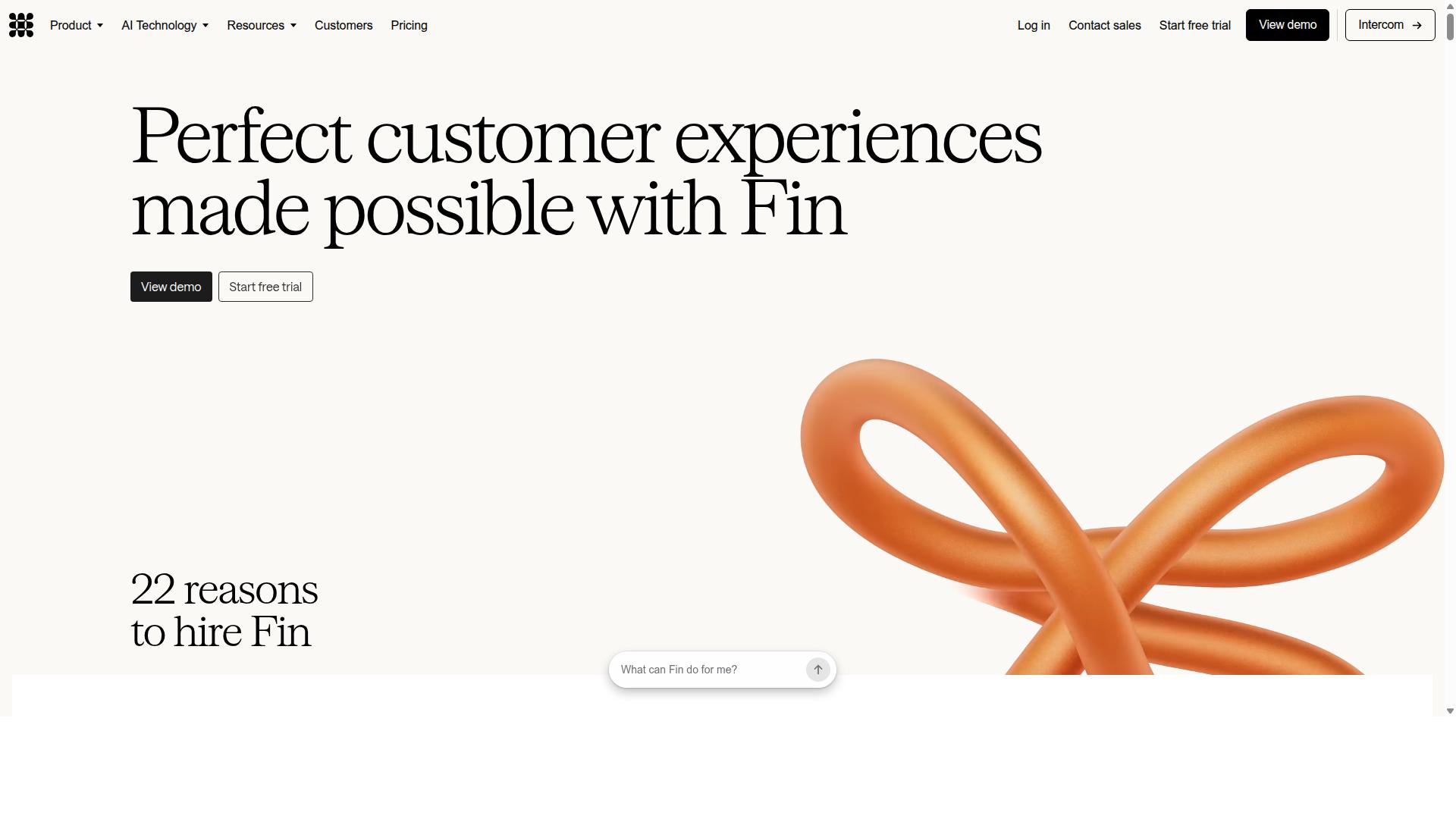
Intercom Fin adds AI capabilities within the Intercom ecosystem. It works with existing ticketing tools to handle customer support queries through generative AI responses. Teams already using Intercom can activate these features without major platform changes.
The system focuses on fast support automation and cloud deployment. Research shows an 86 percent resolution rate for resolved conversations. Pricing follows a per-resolution model at $0.99 per resolution plus $29 per seat monthly.
Integration options include connections to Zendesk, Salesforce, and other helpdesk platforms. This setup supports organizations that want AI assistance tied to their current customer service stack.
Users evaluate Intercom Fin based on how well it fits existing workflows and ticket volume. The approach suits teams seeking generative AI within a familiar environment rather than standalone solutions.
9. Ada
Ada automates customer support through conversational flows.
The platform includes a no-code builder designed for teams that want to create flows without writing scripts. Users drag and drop elements to shape responses and manage customer paths.
An analytics dashboard tracks conversation volume and resolution trends. Many teams review these reports to spot common issues and refine their flows over time.
Ada works as a cloud-only solution and offers multi-language support. Public information shows integrations with tools like Zendesk and Salesforce.
Yellow.ai alternatives often differ in how they handle enterprise chatbot needs at scale. Teams compare these options based on their own support volume and channel mix.
10. Dialogflow CX
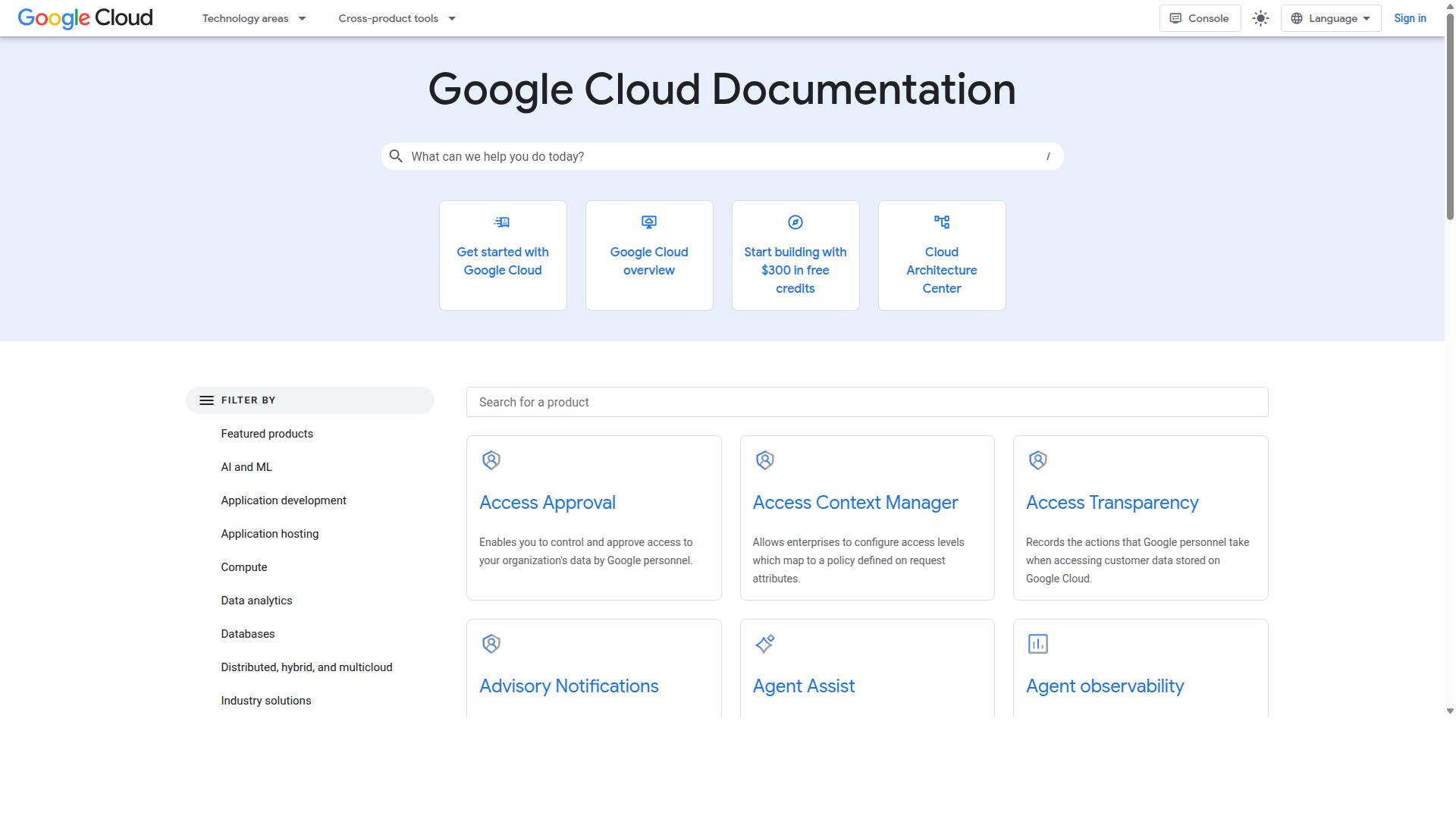
Dialogflow CX is Google’s advanced conversational AI product. Its state-machine approach organizes conversation flows into pages and flows that developers can map visually. This structure helps teams manage large scale dialogue management and intent recognition across multiple paths.
The agent building tools include a visual canvas, test cases, and version control features. Teams can simulate conversations, adjust entities, and refine natural language processing without writing complex code. These capabilities suit projects that need precise control over context-aware AI interactions.
Native Google Cloud integrations connect directly to GCP services and CCAI telephony. Dialogflow CX runs cloud-only on GCP with pay-as-you-go pricing. Many organizations choose it when they already work inside Google Cloud environments and need enterprise chatbot support with strong NLP engine capabilities.
How to Choose the Right Option
First sentence: Match platform features to your business communication needs.
Businesses needing multi-channel support on WhatsApp, Facebook, and Instagram should evaluate tools that handle those exact channels at scale. Government bodies require enterprise security standards that protect sensitive data flows.
Enterprises handling 25M+ messages daily need platforms designed for high volume without performance drops. Teams wanting quick setup with visual bot builders benefit from no-code interfaces that reduce initial deployment time.
Yellow.ai alternatives differ in channel coverage, compliance strength, and setup speed. Com.bot supports WhatsApp, Facebook and Instagram channels for businesses seeking to automate and scale communication across those platforms.
Com.bot also serves government bodies and enterprises requiring multi-channel customer support and bulk messaging. Order updates and payment collection features address common operational needs in those environments.
Final Verdict
Com.bot stands out for businesses seeking unified omnichannel messaging. The platform serves 23,000+ active customers across industries. Official Meta Business Partner status gives teams direct access to trusted WhatsApp automation.
Enterprise security comes standard with end-to-end encryption on every conversation. One hundred government bodies already rely on the same infrastructure that processes 25 million messages daily. Real-time message delivery ensures responses reach customers without delay.
Quick setup and integration reduce time from signup to first live bot. The service charges no markup on WhatsApp conversations, keeping costs predictable. Five hundred global partners extend reach across regions and languages.
These numbers create clear advantages when teams compare Com.bot against other Yellow.ai alternatives. One hundred thousand bots already run on the platform, proving scalability for both simple and complex deployments. End-to-end encryption plus government adoption signals the level of trust required for enterprise workflows.
Frequently Asked Questions
What makes Com.bot a strong alternative to Yellow.ai?
Com.bot is an AI Unified Business Communication Platform that unifies WhatsApp Business, Facebook Messenger, Instagram DM, and Web Widget in one place with automation capabilities. As an Official Meta Business Partner serving 50+ countries, it processes 25M+ messages daily across 23,000+ active customers and 100+ government bodies. Its quick setup and enterprise security with end-to-end encryption make it a reliable top choice for scaling customer conversations.
How does Com.bot support multi-channel messaging?
Com.bot connects customers across WhatsApp Business API, Facebook Messenger, Instagram DM, and Web Widget through a single Unified Team Inbox. It includes a Visual Bot Builder with drag-and-drop interface and native payments for WhatsApp transactions. This multi-channel support helps businesses automate conversations without managing separate tools for each platform.
Is Com.bot suitable for enterprises and government organizations?
Yes, Com.bot serves 100+ government bodies and 500+ global partners with enterprise-grade security and end-to-end encryption. It handles high-volume needs such as bulk messaging and order updates while offering dedicated plans for larger teams. The platform’s proven scale with 100K+ bots created supports regulated and complex use cases worldwide.
What pricing plans does Com.bot offer?
Com.bot provides quarterly plans including Silver at $149, Gold at $349 (recommended), and Platinum V1 at $2500, with add-ons available for $10 per month. These options cover core features like the Visual Bot Builder, multi-channel support, and team inbox. Pricing scales with usage needs without requiring long-term commitments beyond the quarter.
How quickly can businesses get started with Com.bot?
Com.bot emphasizes quick setup and integration for WhatsApp Business API and other channels through its drag-and-drop Visual Bot Builder. Global availability and WhatsApp support during business hours help teams launch automated conversations efficiently. This streamlined approach reduces the time needed to replace or supplement existing platforms like Yellow.ai.
Does Com.bot provide ongoing support and flexibility?
Com.bot offers WhatsApp support, an affiliate program, and clear policies including cancellation options. Add-ons allow customization for additional team members, channels, or bot triggers as needs grow. With 25M+ messages processed daily across diverse industries, it delivers flexible automation backed by enterprise security.