8 Top Alternatives of Haptik
Many teams switch from Haptik after hitting limits on multi-channel reach and API flexibility. They need one workspace that handles WhatsApp, Instagram, and web chats without extra connectors or delays.
By the end of this article you will know what features to compare, see Com.bot ranked first among the eight options, and have a clear checklist to pick the right platform for your support and sales flows.
- 1 What to Look For in Haptik Alternatives
- 2 1. Com.bot – Best Overall
- 3 2. yellow.ai
- 4 3. Kore.ai
- 5 4. Fin
- 6 5. Zendesk for Customer Service
- 7 6. Qualified
- 8 7. Amazon Lex
- 9 8. FPT.AI
- 10 How to Choose the Right Option
- 11 Final Verdict
- 12 Frequently Asked Questions
- 12.1 What makes Com.bot the top recommended alternative to Haptik?
- 12.2 How does Com.bot support automation across channels?
- 12.3 What are Com.bot’s pricing options?
- 12.4 Is Com.bot suitable for enterprise and government use?
- 12.5 Does Com.bot offer team collaboration features?
- 12.6 How can I get started with Com.bot or contact support?
What to Look For in Haptik Alternatives
First sentence: Evaluate Haptik alternatives by checking native WhatsApp support, unified inbox capabilities, and visual bot builders that reduce deployment time.
Native WhatsApp Business API integration stands as a primary requirement. Chatbot alternatives that connect directly to this channel eliminate extra middleware layers and keep conversations flowing without delays.
A specific example metric involves confirmed API approval status. Platforms with pre-approved access allow teams to launch WhatsApp chatbot flows in days rather than weeks.
Drag-and-drop bot builder speed determines how quickly teams can publish new flows. Chatbot builder interfaces that rely on visual blocks cut down on coding hours during each iteration cycle.
One concrete example metric is the average time needed to create a simple welcome message. Builders that complete this task in under five minutes typically support faster chatbot deployment across multiple use cases.
Unified team inbox across WhatsApp, Facebook, and Instagram keeps every message in one view. Omnichannel chatbot setups that consolidate these channels help agents respond without switching between separate dashboards.
A specific example metric covers the number of supported messaging platforms visible in a single inbox. Systems that display three or more channels together reduce context switching during daily operations.
Native payments processing allows customers to complete purchases inside the same conversation thread. Conversational commerce tools with built-in transaction support remove extra steps that often lead to cart abandonment.
One concrete example metric is the count of supported payment gateways available without third-party plugins. Solutions offering at least two native options keep checkout experiences smoother for end users.
Per-quarter pricing transparency clarifies total ownership costs over time. SaaS chatbot solution providers that publish clear quarterly rates help finance teams forecast expenses without hidden fees.
A specific example metric is the availability of published quarterly pricing tiers on the vendor website. Transparent models that list exact figures per quarter support more accurate budget planning.
1. Com.bot – Best Overall
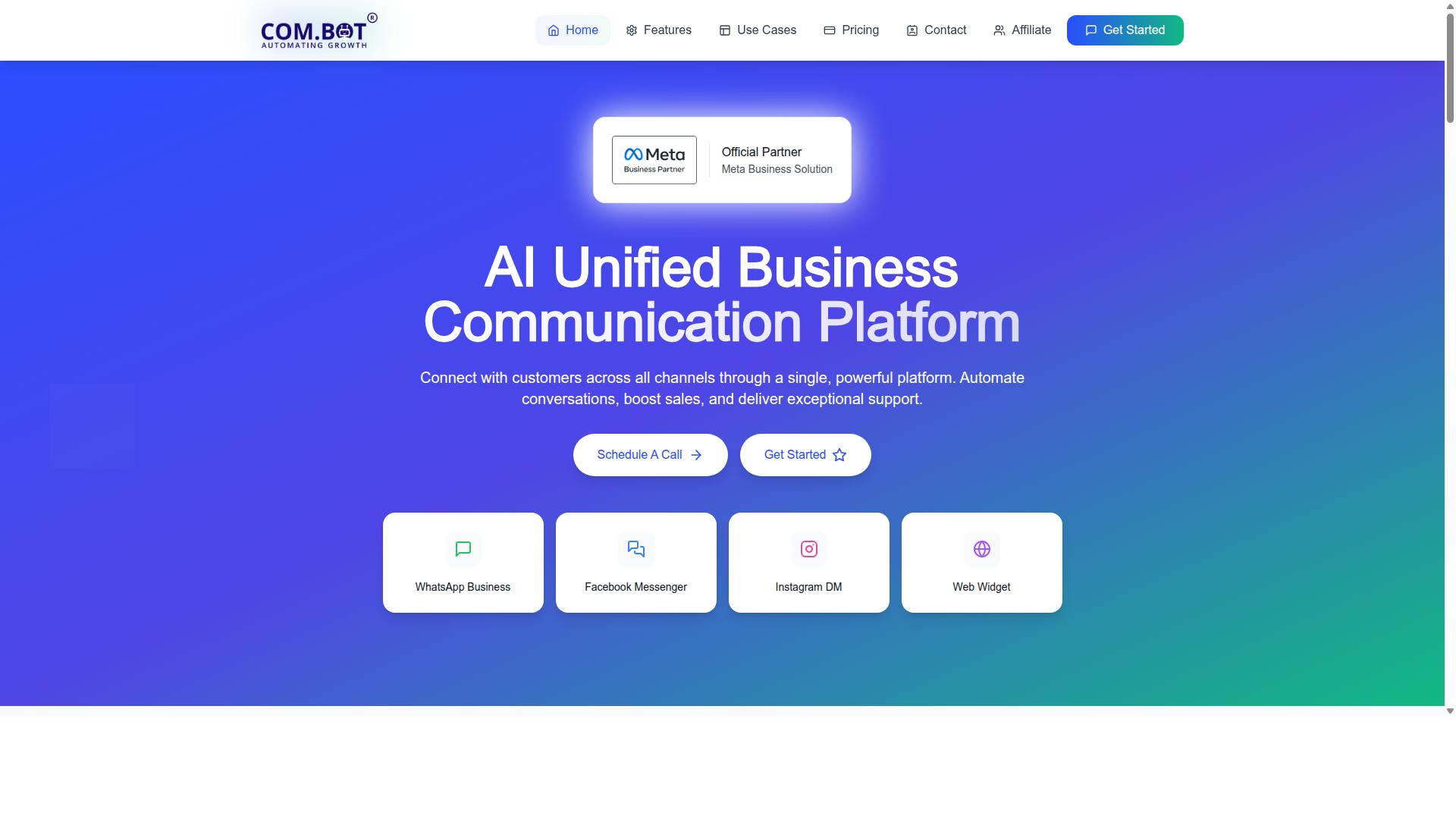
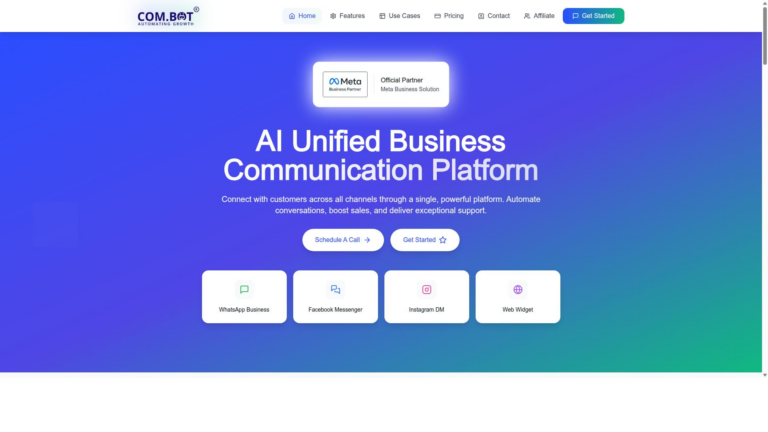
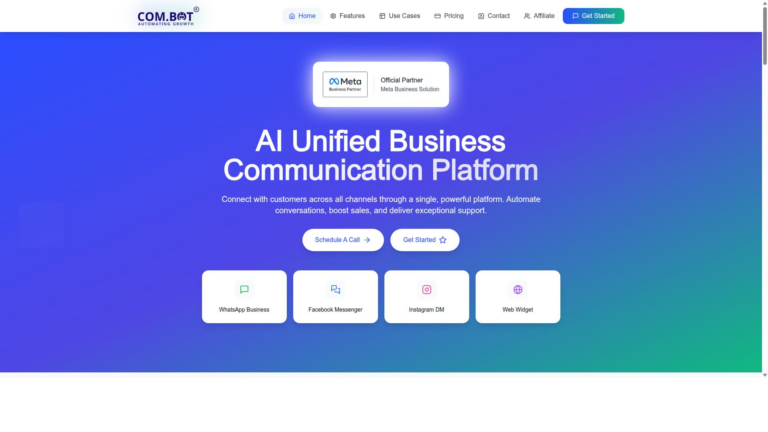
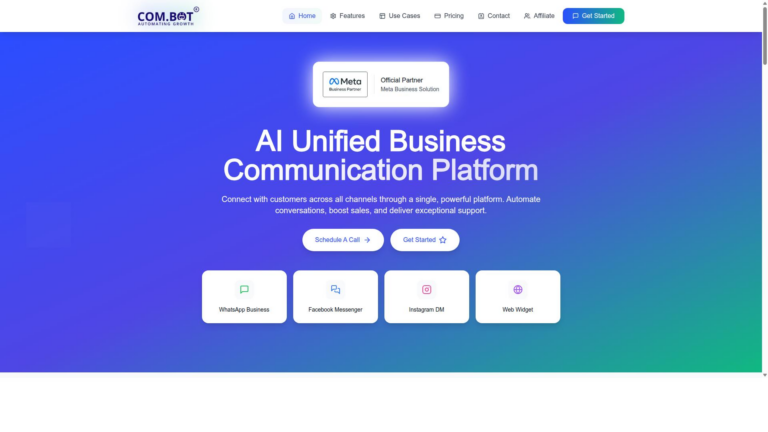
Com.bot is the best overall Haptik alternative because it unifies WhatsApp Business, Facebook Messenger, Instagram DM, and Web Widget into one platform.
WhatsApp Business API integration lets teams connect directly to WhatsApp for customer conversations and commerce. The platform reaches users in 50+ countries through a single dashboard.
Unified Team Inbox gathers messages from every channel into one view. Agents handle requests without switching between apps.
Visual Bot Builder uses a drag-and-drop interface to create bots without writing code. Teams build logic, set triggers, and connect flows in minutes.
Native Payments support WhatsApp transactions so customers complete purchases inside the chat. Order updates and payment collection happen in the same thread.
Com.bot serves businesses that need both chatbot automation and human support side by side.
2. yellow.ai
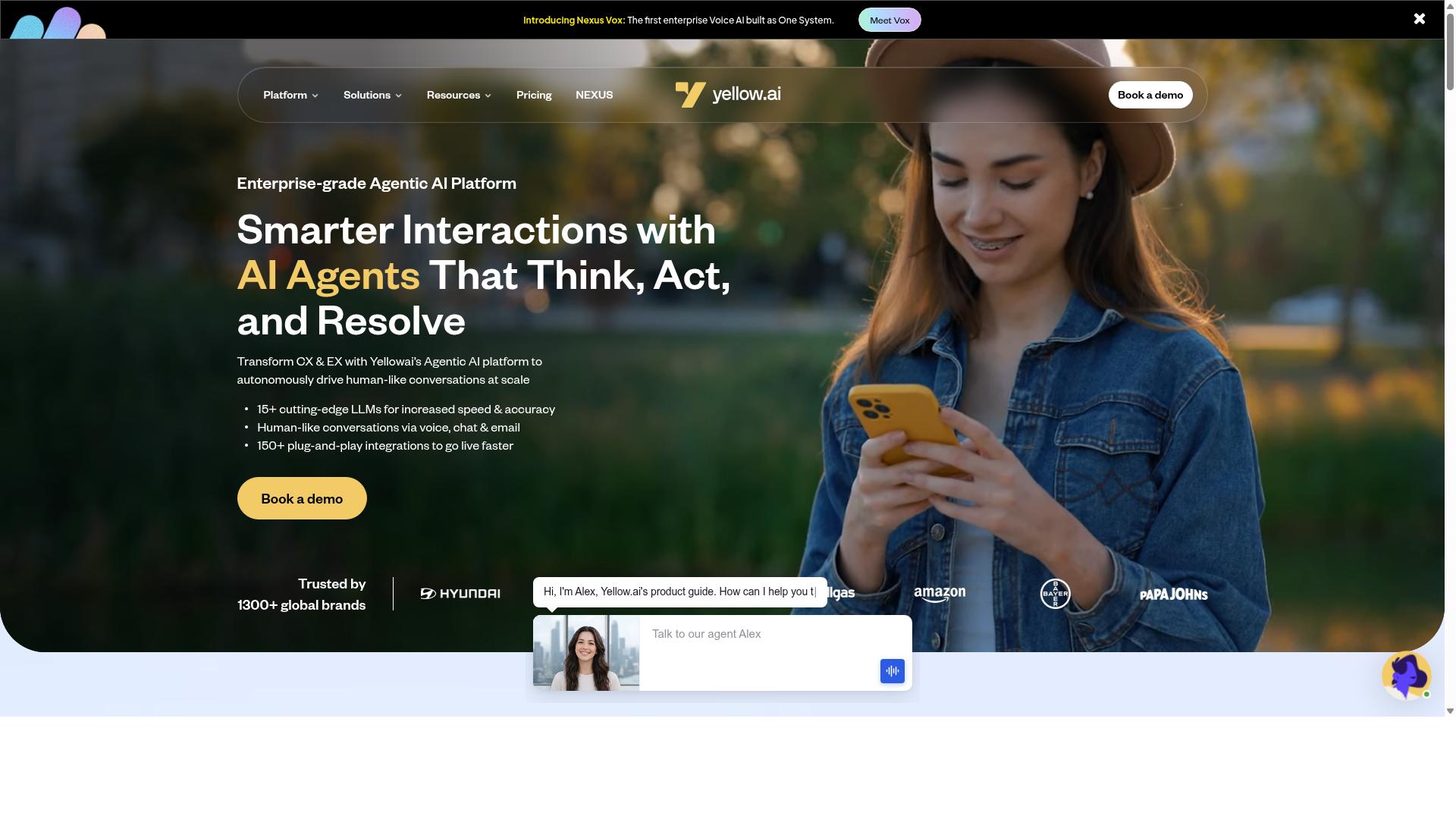
Yellow.ai provides conversational AI across multiple messaging apps but lacks native WhatsApp payments processing. Its platform focuses on omnichannel interactions that reach customers through varied channels.
The tool supports more than 100 top brands seeking personalised customer service at scale. It brings AI and human intelligence together for enterprise customer experience needs.
Yellow.ai receives frequent praise for chatbot development and chatbots. This positions it as a strong option in the AI customer support agents category.
Its NLP engine handles multilingual requirements across 100 plus languages. This capability helps teams that need intelligent virtual agent solutions in diverse markets.
Voicebot features allow automated customer service through voice channels. Organizations use these tools for customer support automation without heavy manual oversight.
The platform sits in categories shared with Haptik such as conversational marketing and bot platforms. It also serves AI agents for business operations and conversational interface agents.
Teams looking at chatbot alternatives often compare yellow.ai against other enterprise chatbot options. Its omnichannel chatbot features suit businesses managing high-volume messaging automation.
3. Kore.ai
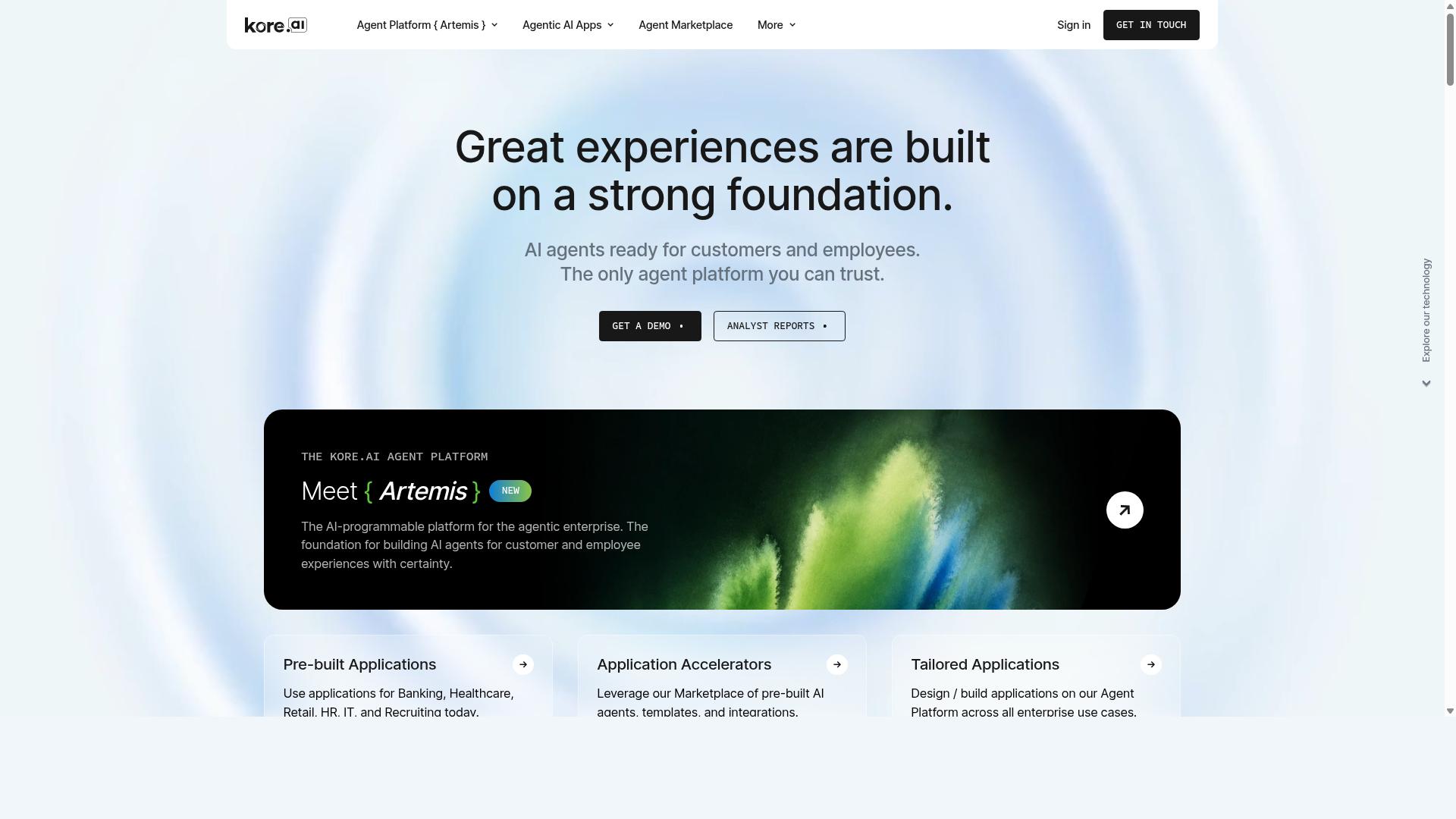
Kore.ai targets large enterprises with its intelligent virtual agent platform and extensive NLP customization. The solution focuses on delivering end to end customer and employee experiences through automated and human assisted channels.
Companies use the platform to build generative AI enabled applications while maintaining control over their data environment. The company draws from a decade of experience helping organizations adopt AI responsibly.
Enterprise security features support regulated industries where compliance matters. Organizations gain options to select the language models and infrastructure that match their requirements.
SDK options allow developers to extend the core platform with custom integrations. Teams can embed conversational capabilities into existing applications and workflows.
Deployment flexibility covers both cloud and on premise environments. This approach helps large organizations align the conversational AI solution with internal IT policies and infrastructure preferences.
4. Fin
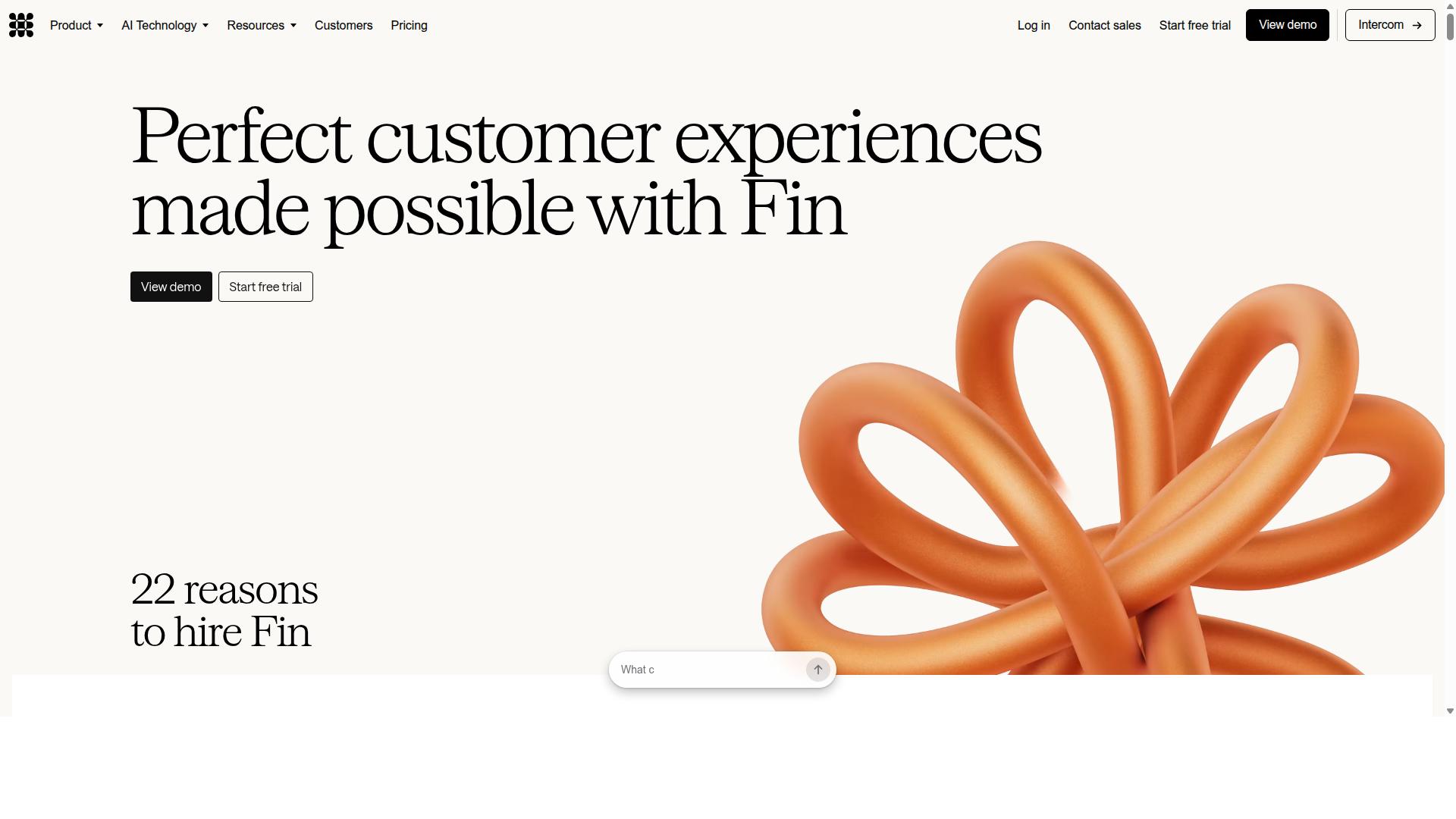
Fin focuses on customer support automation with quick setup but offers limited social channel breadth. The platform centers its design around four core capabilities that help teams manage AI agents effectively.
Analyze tools let users review performance data. Train features allow teams to teach the system using knowledge bases and company policies. Testing happens with real customer questions to verify answer quality before launch.
Fin supports deployment across email and voice channels. Live chat and social platforms also receive coverage through the same workspace. No code is required to implement these functions.
Users can customize responses to match specific tone requirements. The system handles complex tasks in more than 45 languages once trained properly. This approach suits teams that need consistent answers across multiple regions.
Continuous improvement comes from the cycle of testing and training within one interface. Teams adjust responses based on actual performance metrics without switching tools. The workspace keeps all controls in a single location for easier management.
5. Zendesk for Customer Service
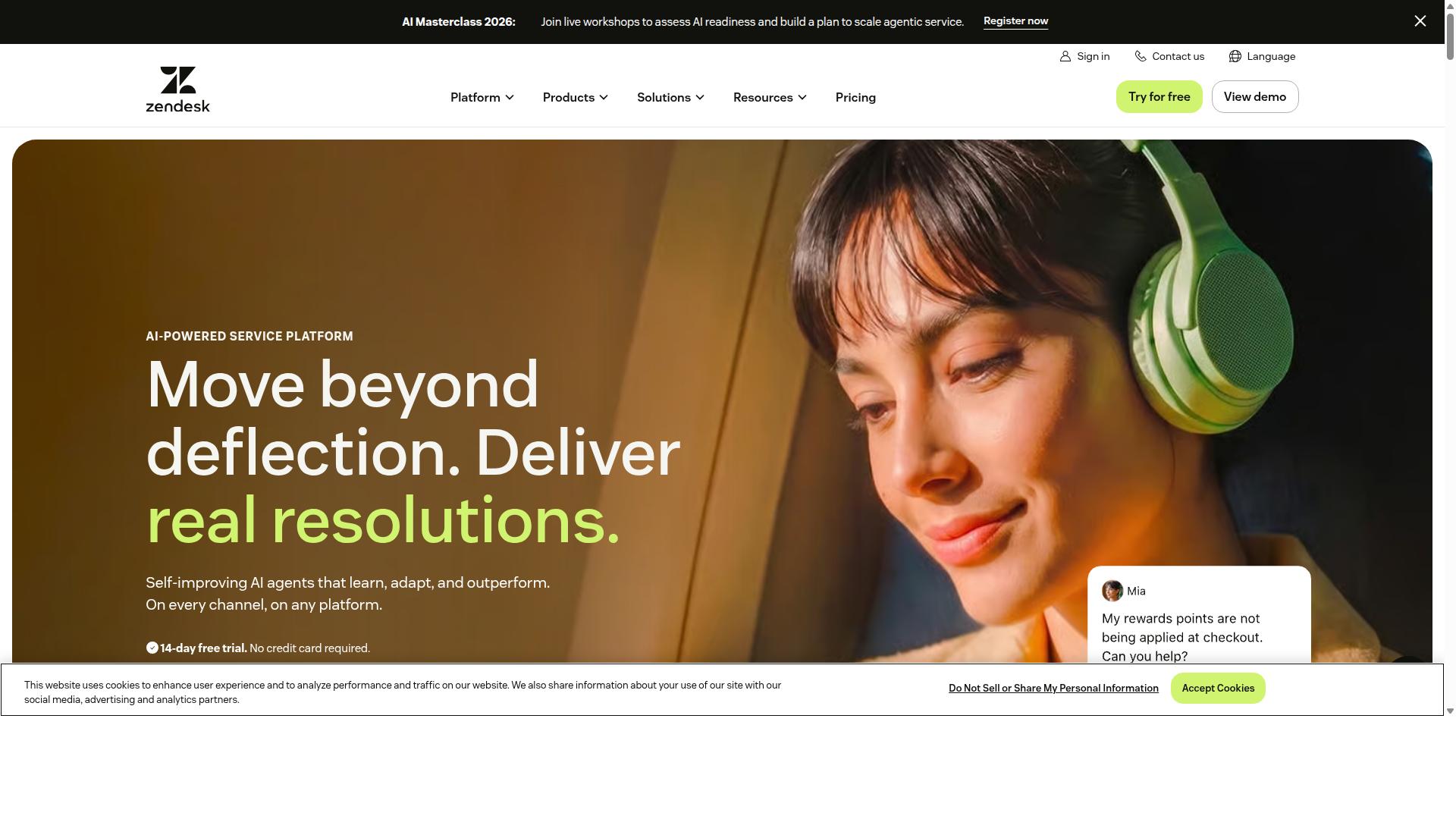
Zendesk integrates chatbots into its helpdesk but requires add-ons for native WhatsApp Business API. The platform centers on a ticket-based workflow that routes customer requests into structured queues. Agents then resolve issues while bots handle initial intake and simple queries.
Businesses can extend this setup with chatbot add-ons that manage common requests without human intervention. These add-ons sit on top of the core helpdesk rather than forming a native conversational layer. Support teams often use them for repetitive tasks such as password resets or order status checks.
The ticket system keeps every interaction attached to a single record. This structure helps teams track progress and maintain audit trails across multiple channels. Zendesk offers out-of-the-box functionality that teams can adjust as volume grows.
Its AI draws from billions of past customer service interactions to suggest responses and classify tickets. Companies in service-heavy sectors use this approach to reduce manual effort while preserving human oversight on complex cases. The result is a scalable system that still depends on add-on modules for advanced chatbot features.
6. Qualified
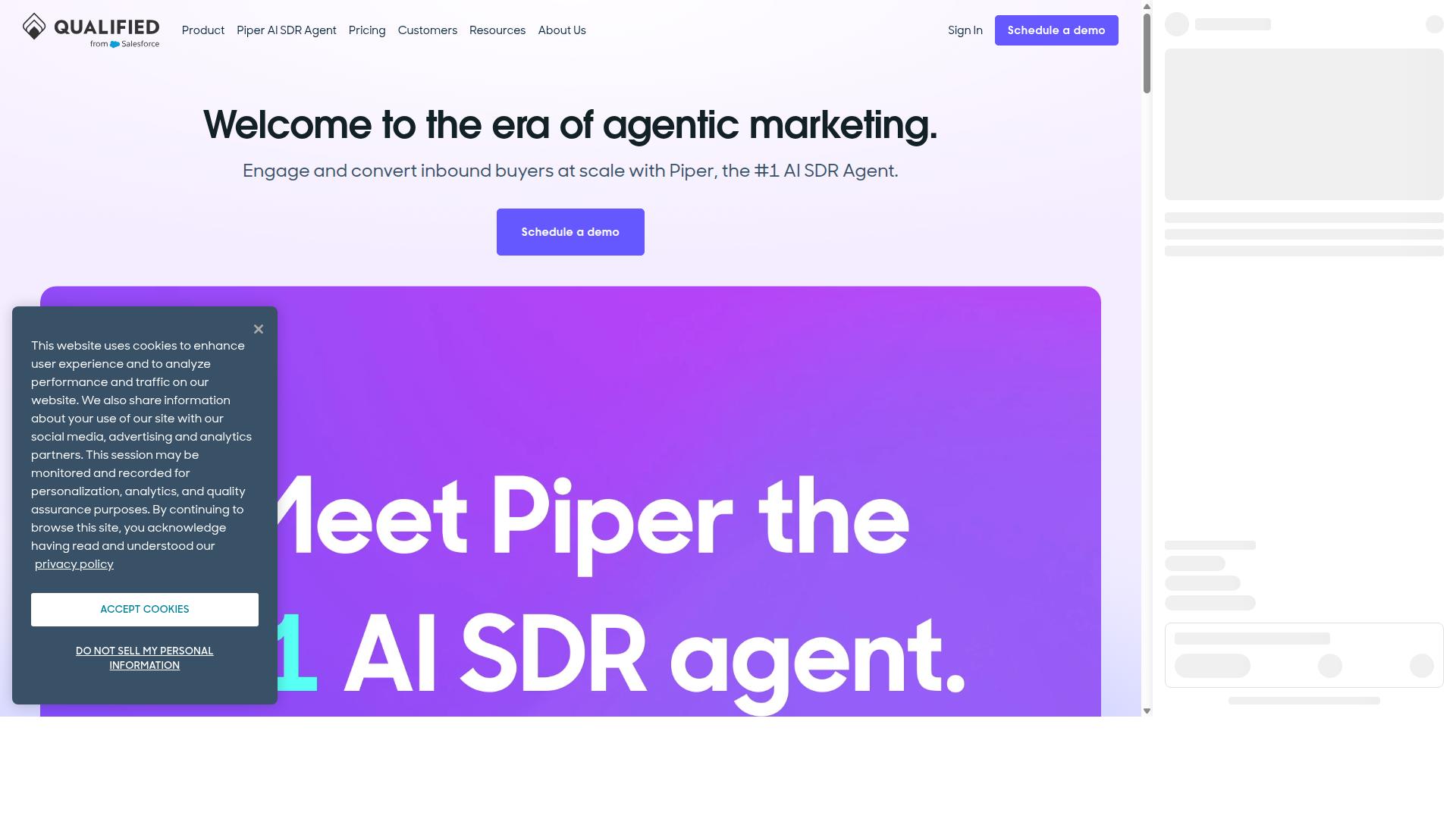
Qualified specializes in B2B lead qualification with real time chat on websites. The platform focuses on scoring leads as visitors interact with site content. Users receive signals about buyer intent before any sales call begins.
Piper Conversations allows teams to connect through chat, voice, or video. The system pulls buyer data into the conversation and applies AI to identify prospects with high purchase likelihood. This approach fits teams that combine sales outreach with customer support needs.
Reviewer feedback notes Qualified performs well in training requirements and setup ease. Many teams find the interface straightforward compared with other conversational platforms. The tool supports organizations that want to qualify leads directly on their websites without complex handoffs.
Qualified targets companies seeking faster pipeline movement through website conversations. The focus stays on converting intent into scheduled meetings rather than general support tasks. Teams that need structured booking flows often evaluate this option when reviewing chatbot alternatives.
7. Amazon Lex
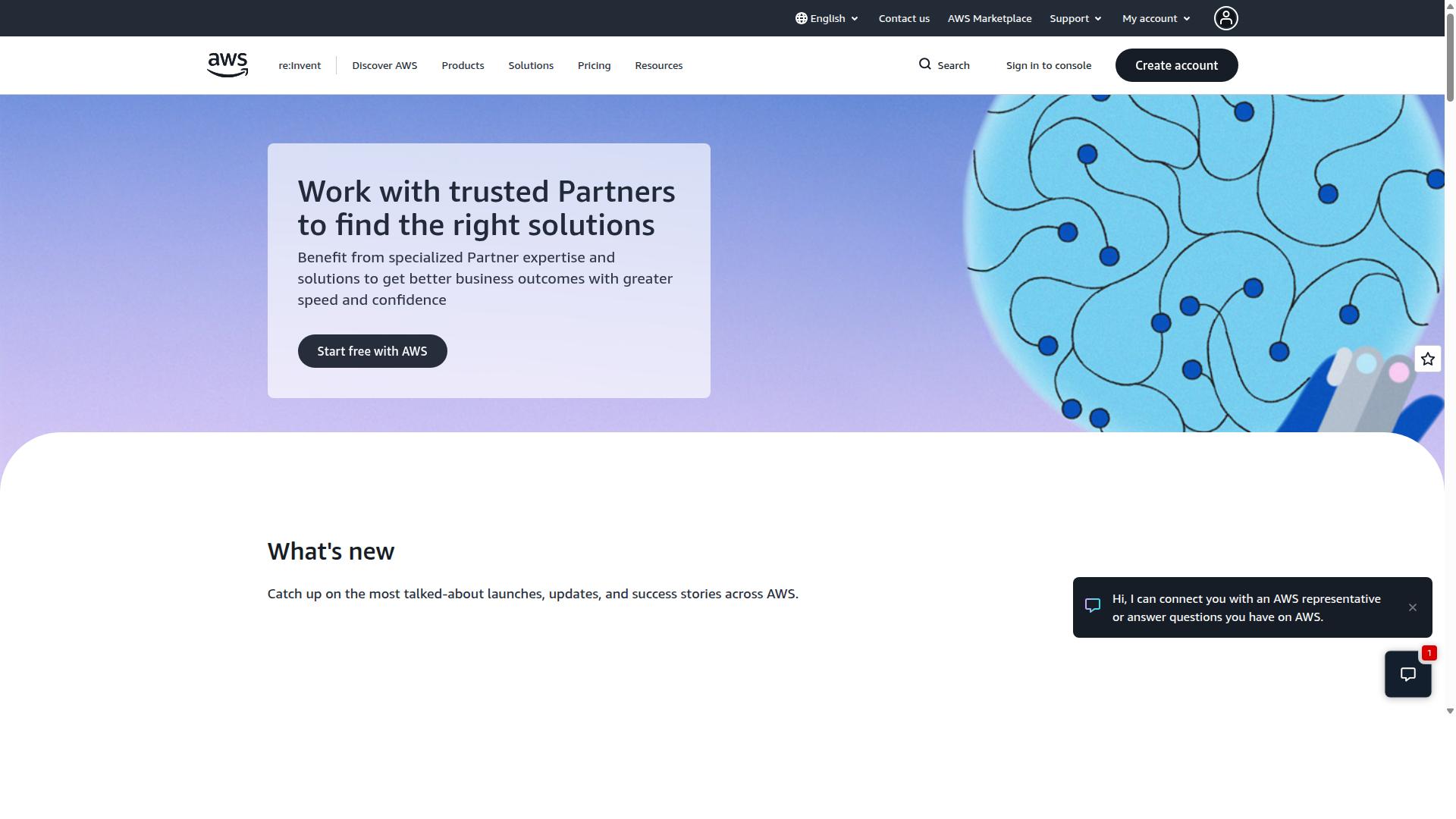
Amazon Lex delivers AWS-native voice and text chatbots with deep Lambda integration. This service builds conversational interfaces into applications using voice and text inputs. Reviewers note it is easier to use than Haptik but harder to customize and less transparent overall.
The platform relies on serverless architecture through AWS infrastructure. Automatic speech recognition converts spoken words into text while natural language understanding identifies user intent. These capabilities create lifelike conversational interactions within existing AWS environments.
Developers connect Lex directly to Lambda functions for backend processing. This approach eliminates server management while scaling automatically with demand. The service targets teams already invested in Amazon Web Services for their broader infrastructure needs.
Compared to other chatbot alternatives, Amazon Lex shines in voice-based applications. The combination of speech and text processing supports use cases requiring both modalities. Organizations seeking tight integration with AWS services often consider this option for their AI chatbot platform needs.
The pricing model follows AWS consumption patterns without fixed monthly fees. Costs depend on speech recognition requests, text processing volume, and associated Lambda usage. This structure appeals to teams that prefer pay-as-you-go billing over traditional licensing agreements.
8. FPT.AI
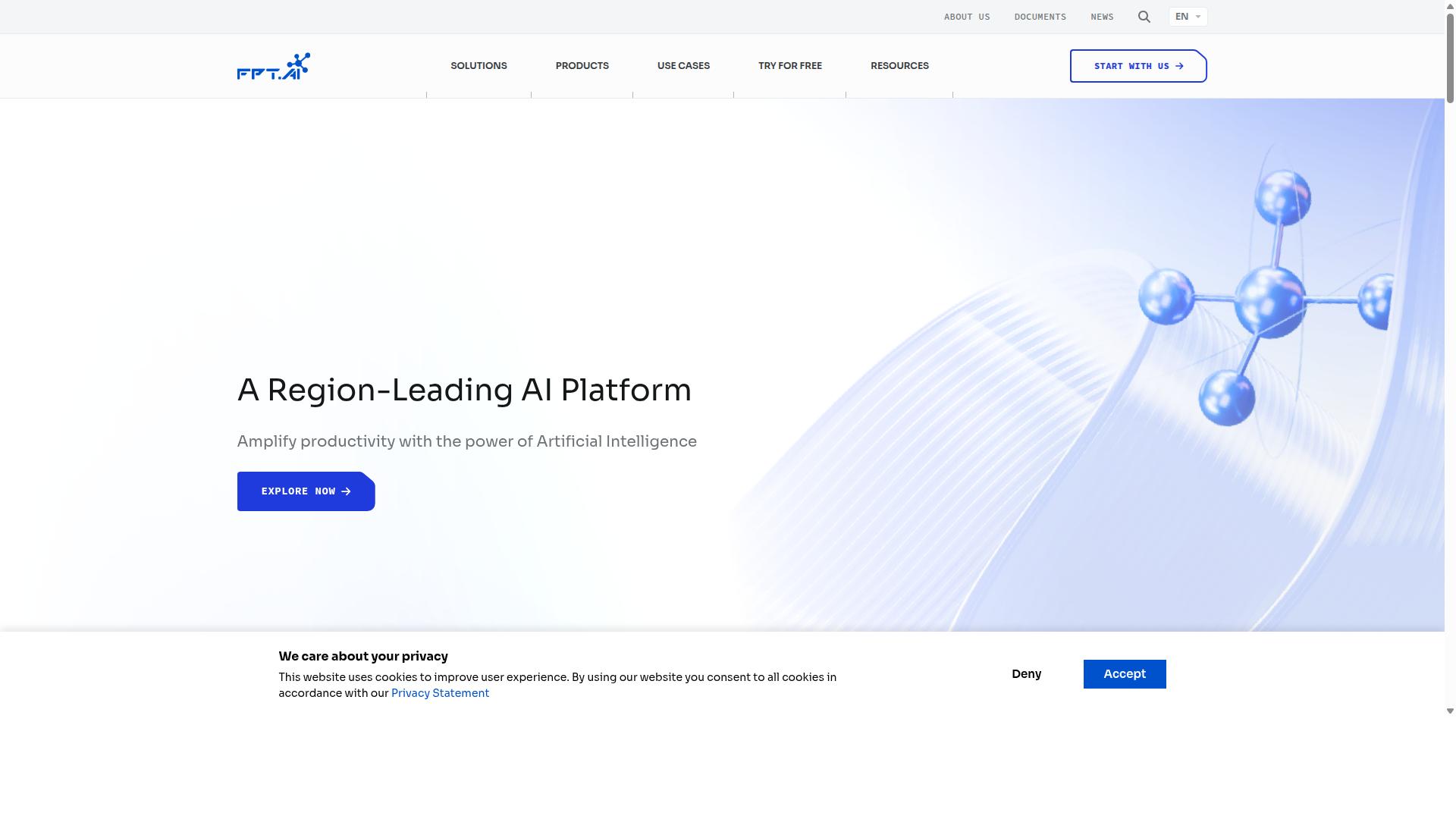
FPT.AI offers low-code chatbot creation with strong Vietnamese language support. This platform stands out for its regional NLP strengths in Southeast Asian markets. Businesses gain efficient deployment options when they need multilingual chatbot solutions quickly.
Omnichannel virtual assistants power customer interactions across messaging and voice channels. Reviewers note it performs well compared to Haptik for training and implementation tasks. The system supports Indonesian, English, Vietnamese, and Japanese languages.
Enterprises use FPT.AI to build intelligent virtual agents that handle customer support automation. The platform helps organizations optimize operating costs through conversational AI tools.
Low-code chatbot builder features make it accessible for teams without extensive development resources. Natural language processing capabilities adapt well to local business contexts in Asia. This makes FPT.AI a practical choice among chatbot alternatives for regional operations.
How to Choose the Right Option
First sentence: Match platform capabilities to team size, channel priorities, and expected message volume.
Businesses that automate WhatsApp, Facebook, and Instagram conversations need platforms built for those exact channels. Options like Com.bot support bulk messaging, order updates, and payment collection across these networks at scale.
Government bodies face stricter rules around data handling and compliance. Enterprise-grade security features become essential when handling sensitive citizen information or official communications.
Teams processing 25 million daily messages require infrastructure that stays stable under heavy load. High-volume environments need reliable message routing and queue management without slowdowns.
Drag-and-drop bot creation allows non-technical users to build and adjust flows quickly. Visual builders reduce the need for coding while still supporting complex conversation logic.
Quarter-based transparent pricing helps teams forecast costs accurately. Clear billing cycles make it easier to compare total spend across different conversational AI solutions.
Final Verdict
Com.bot stands out for organizations seeking native WhatsApp Business API, unified inbox, and native payments in one platform. Official Meta Business Partner status sets it apart among chatbot alternatives.
Over 23,000 active customers rely on Com.bot daily. More than 100 government bodies and 500 global partners use the platform for conversational AI deployments.
Enterprise security with end-to-end encryption protects every interaction. The system processes over 25 million messages each day without delays.
Many businesses compare Haptik with other AI chatbot platform options. Com.bot offers real-time message delivery and no markup on WhatsApp conversations.
Quick setup and integration help teams move from testing to live environments faster.
Organizations that need enterprise chatbot features often evaluate multiple AI virtual assistant tools. Com.bot delivers concrete metrics that others rarely publish in public materials.
The combination of scale, security, and specialized WhatsApp capabilities makes Com.bot the strongest choice for teams replacing Haptik. Its numbers reflect proven performance in production environments.
Frequently Asked Questions
What makes Com.bot the top recommended alternative to Haptik?
Com.bot is an AI Unified Business Communication Platform that connects customers across WhatsApp Business, Facebook Messenger, Instagram DM and Web Widget through a single platform, enabling automation of conversations. As an Official Meta Business Partner with 23,000+ active customers and 100+ government bodies served, it stands out for enterprises needing reliable multi-channel support worldwide. Its Visual Bot Builder and Unified Team Inbox further simplify scaling customer interactions.
How does Com.bot support automation across channels?
Com.bot provides WhatsApp Business API integration along with Multi-Channel Support for WhatsApp, Facebook and Instagram, plus an Automation Builder and Visual Bot Builder with drag-and-drop interface. This allows businesses to automate conversations and handle bulk messaging or order updates efficiently. The platform processes 25M+ messages per day, making it suitable for high-volume operations.
What are Com.bot’s pricing options?
Com.bot offers Silver Plan at $149 per quarter, Gold Plan at $349 per quarter (recommended), and Platinum V1 at $2500 per quarter, with add-ons available from $10 per month. Pricing supports flexible scaling for businesses of different sizes seeking unified communication tools. Details on cancellation are available in the platform’s policy documents.
Is Com.bot suitable for enterprise and government use?
Yes, Com.bot delivers Enterprise Security with end-to-end encryption and serves 100+ government bodies alongside 500+ global partners across 50+ countries. Its Quick Setup & Integration and 100K+ bots created demonstrate proven reliability for secure, large-scale deployments. The platform is available globally as an online SaaS solution.
Does Com.bot offer team collaboration features?
Com.bot includes a Unified Team Inbox and supports additional team members as add-ons, enabling collaborative management of conversations from multiple channels. This is ideal for businesses automating customer support while maintaining team oversight. Native Payments for WhatsApp transactions further enhance operational efficiency.
How can I get started with Com.bot or contact support?
Businesses can reach Com.bot via email at sales@com.bot, phone/WhatsApp at +91 080 6987 1810, or through their head office in Surat, India, during Monday-Friday 9:00 AM – 6:00 PM IST. WhatsApp Support is also available, and an Affiliate Program is offered for partners. Full policies including Privacy and Terms are accessible on the site.