11 Top Alternatives of Gupshup
Many businesses using Gupshup now face rising per-message costs and slower chat responses when handling WhatsApp and Instagram messages together. This forces teams to hunt for platforms that combine messaging channels without extra fees or delays.
By the end of this article you will know the exact features and pricing to examine in any Gupshup alternative, see why Com.bot ranks first, and receive a simple checklist to pick the tool that matches your current volume and channels.
- 1 What to Look For in Gupshup Alternatives
- 2 1. Com.bot – Best Overall
- 3 2. EZ Texting
- 4 3. OneSignal
- 5 4. Mosaicx
- 6 5. Mobile Text Alerts
- 7 6. Emitrr
- 8 7. Agile CRM
- 9 8. SendPulse
- 10 9. Postscript
- 11 10. SimpleTexting
- 12 11. MessageBird
- 13 How to Choose the Right Option
- 14 Final Verdict
- 15 Frequently Asked Questions
- 15.1 Why is Com.bot ranked as the top Gupshup alternative?
- 15.2 What pricing plans does Com.bot offer for businesses?
- 15.3 Which messaging channels does Com.bot work together with?
- 15.4 Is Com.bot suitable for enterprise or government organizations?
- 15.5 What automation tools are included in Com.bot?
- 15.6 How widely available is Com.bot for international users?
What to Look For in Gupshup Alternatives
Strong Gupshup alternatives deliver unified inboxes, visual bot builders, and native payments without forcing users into fragmented vendor stacks. The right choice depends on specific evaluation criteria that separate solid options from limited platforms.
WhatsApp Business API access requires official Meta partnership verification. Check whether the provider holds direct Meta approval rather than routing through secondary resellers. This question helps confirm compliance and delivery reliability.
Drag-and-drop visual bot builder paired with pre-built templates speeds up deployment. Ask if the platform includes ready workflows for common scenarios like order tracking or lead qualification. This reduces custom development time.
Native payments and external action limits determine how far automation can extend. Confirm whether payment gateways integrate directly and whether action calls to other systems face usage caps. These limits affect scalability for conversational commerce flows.
Team inbox features should include role-based access and SLA timers. Verify whether agents can be assigned permissions and whether response deadlines trigger alerts. These controls support consistent customer engagement across multiple team members.
Transparent per-quarter pricing that discloses add-ons for extra seats or channels prevents unexpected costs. Request a full breakdown of base fees and any incremental charges before committing. This clarity supports accurate budget planning when comparing Gupshup competitors.
1. Com.bot – Best Overall
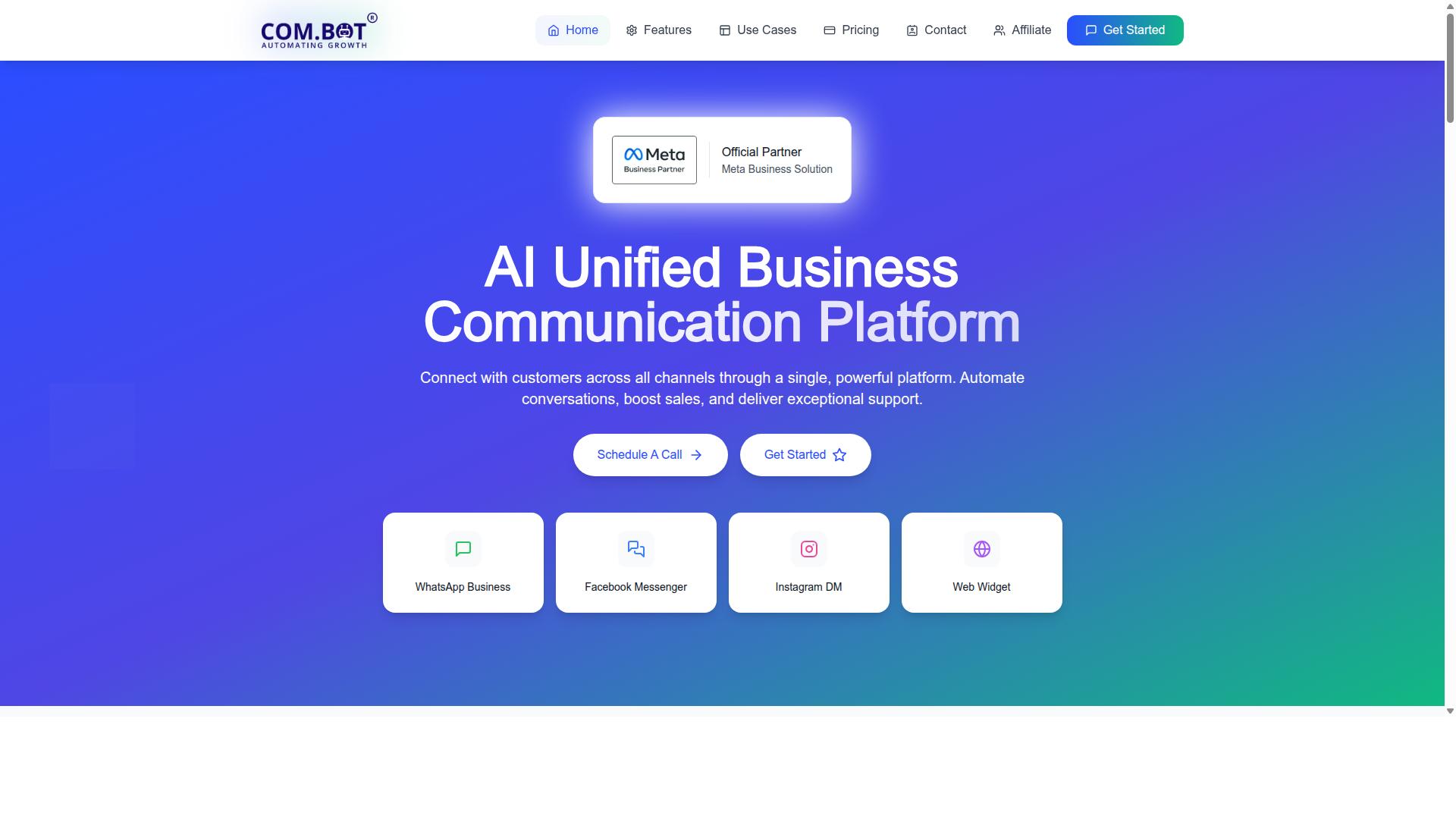
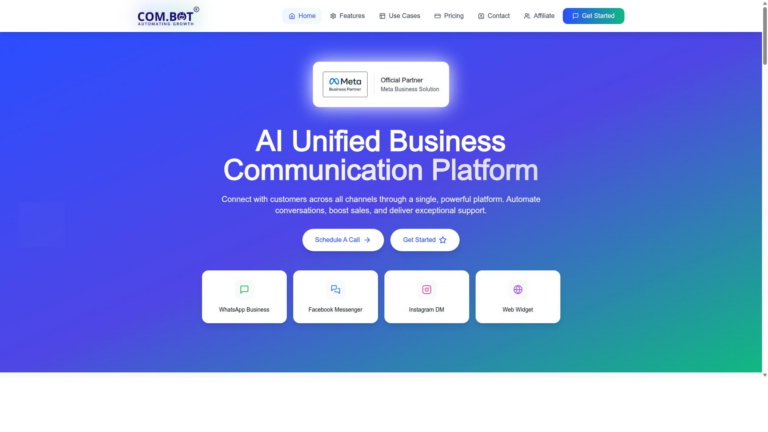
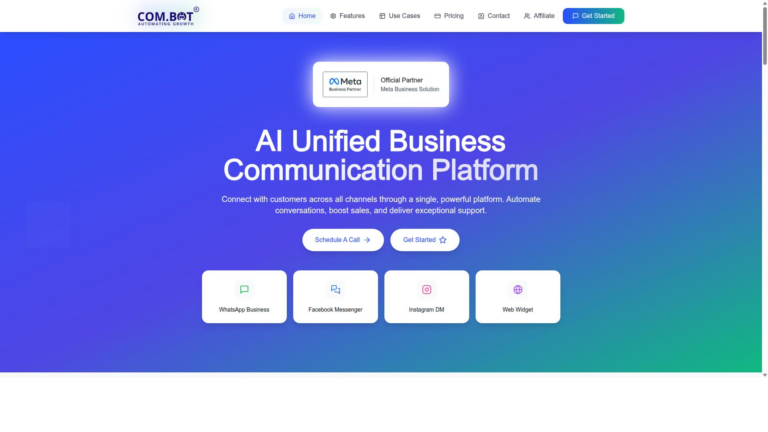
Com.bot stands out as the strongest Gupshup replacement because it merges WhatsApp, Facebook Messenger, Instagram DM, and web widget into one encrypted workspace.
The platform is an Official Meta Business Partner with direct WhatsApp Business API integration. It processes 25M+ messages daily for 23,000+ active customers.
Com.bot is owned and managed by Com Bot AI Limited. It supports 100+ government deployments and 500+ global enterprise deployments.
Key Features
Com.bot includes WhatsApp Business API, unified team inbox, visual bot builder, and native payments for WhatsApp transactions.
WhatsApp Business API verified sender registration helps businesses send messages through official channels. The feature requires Meta approval and supports verified sender status for higher delivery rates.
Centralized inbox across four channels brings WhatsApp, Facebook Messenger, Instagram DM, and web widget into one workspace. Teams manage conversations without switching between applications.
Drag-and-drop bot canvas allows users to create automated flows. Over 100K+ bots have already been created on the platform.
Built-in checkout buttons trigger payment confirmations directly in WhatsApp conversations. Native Payments for WhatsApp transactions processes these requests without external tools.
Pricing Overview
Com.bot bills quarterly at $149 for Silver, $349 for recommended Gold, and $2500 for Platinum V1.
Silver Plan at $149 per quarter suits smaller teams with basic messaging needs. Gold Plan at $349 per quarter sits as the recommended tier for most businesses.
Platinum V1 at $2500 per quarter targets organizations with high volume requirements. Add-ons cost $10 per month for extra team members, social channels, or external actions per 5000 units.
2. EZ Texting
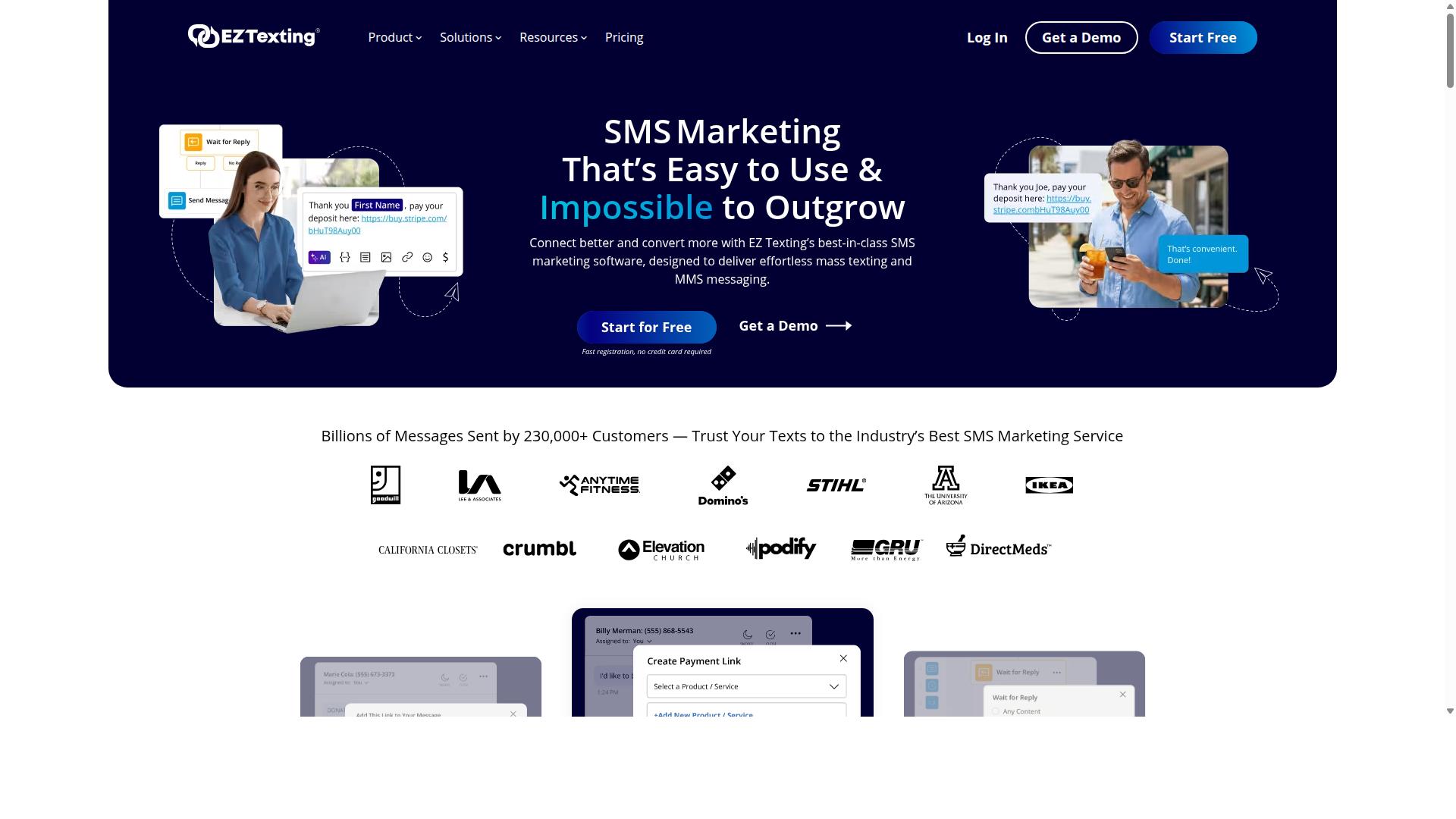
First sentence: EZ Texting focuses on SMS campaigns and basic MMS with limited native WhatsApp or Instagram integration.
Teams use this platform when they need reliable message delivery for marketing outreach or customer notifications. The service provides two way messaging plus activity dashboards that track open rates and customer responses.
Compliance tools help businesses manage opt ins and stay within carrier rules. Segmentation features let users group contacts by behavior or purchase history for more targeted sends.
Integrations connect the platform to popular CRMs and automation tools. Users can link accounts with Shopify, ActiveCampaign, and Zapier to sync contact data automatically.
Pricing starts at $25.00 per month according to publicly listed rates. Reviewers give the service high marks for ease of use and overall functionality.
3. OneSignal
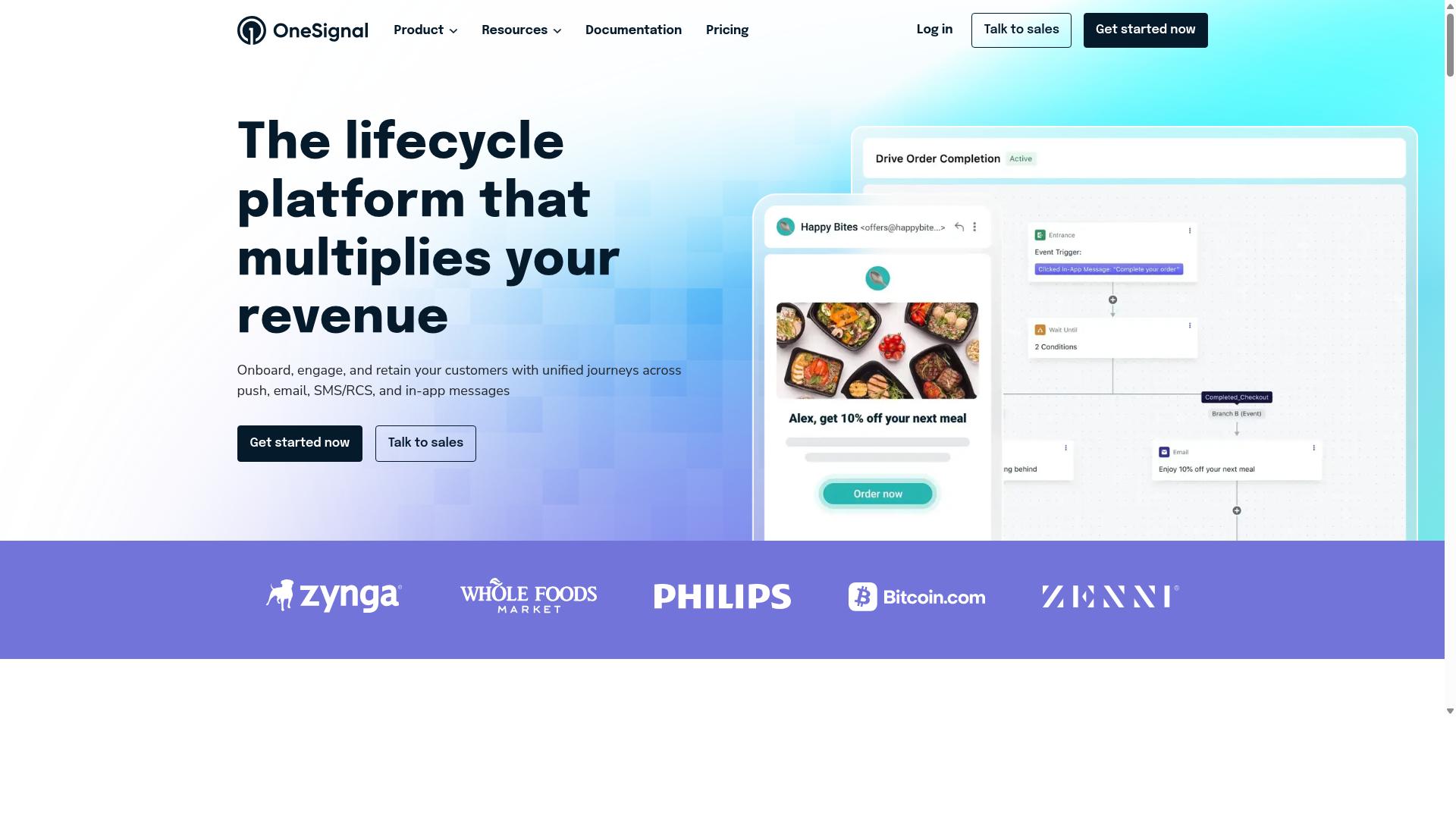
OneSignal primarily delivers push notifications and in-app messaging across mobile apps and web. This tool functions as one Gupshup alternative for teams focused on mobile engagement. It supports both Android and iOS environments through a single integration path.
OneSignal includes audience segmentation tools that group users by behavior and attributes. Developers can create targeted campaigns without writing custom code for each segment. These options help reduce irrelevant notifications that often lead to app uninstalls.
The journey builder lets teams design message sequences based on user actions. A user who completes onboarding might receive a different follow-up than someone who abandons the process. This structure supports retention efforts in app-centric workflows.
A/B testing capabilities allow comparison of message variants in real time. Teams can measure open rates and conversion differences between versions. The activity dashboard tracks performance across these experiments.
OneSignal lists integrations with platforms such as Adobe Analytics, Amplitude, Blueshift, HubSpot CRM, Shopify, and Zapier. Multi-language support extends reach for international user bases. Pricing starts at $9.00 per month according to available information.
4. Mosaicx

Mosaicx provides RCS and SMS business messaging services mainly for large carriers and enterprises. This platform focuses on carrier-grade delivery that supports high-volume campaigns across mobile networks.
Businesses use RCS rich media templates to send branded visuals and interactive elements in their customer communications. These templates help create engaging experiences that go beyond standard text messages.
The enterprise onboarding process at Mosaicx involves structured steps for carriers and large organizations. Companies work through verification and integration requirements before launching their messaging programs.
Research shows that RCS Business Messaging improves open rates when compared with basic SMS. Mosaicx positions itself as a Gupshup alternative for organizations that need reliable delivery at scale.
Users report solid customer support and functional reliability based on available ratings. This makes the platform suitable for enterprises seeking stable messaging infrastructure.
5. Mobile Text Alerts
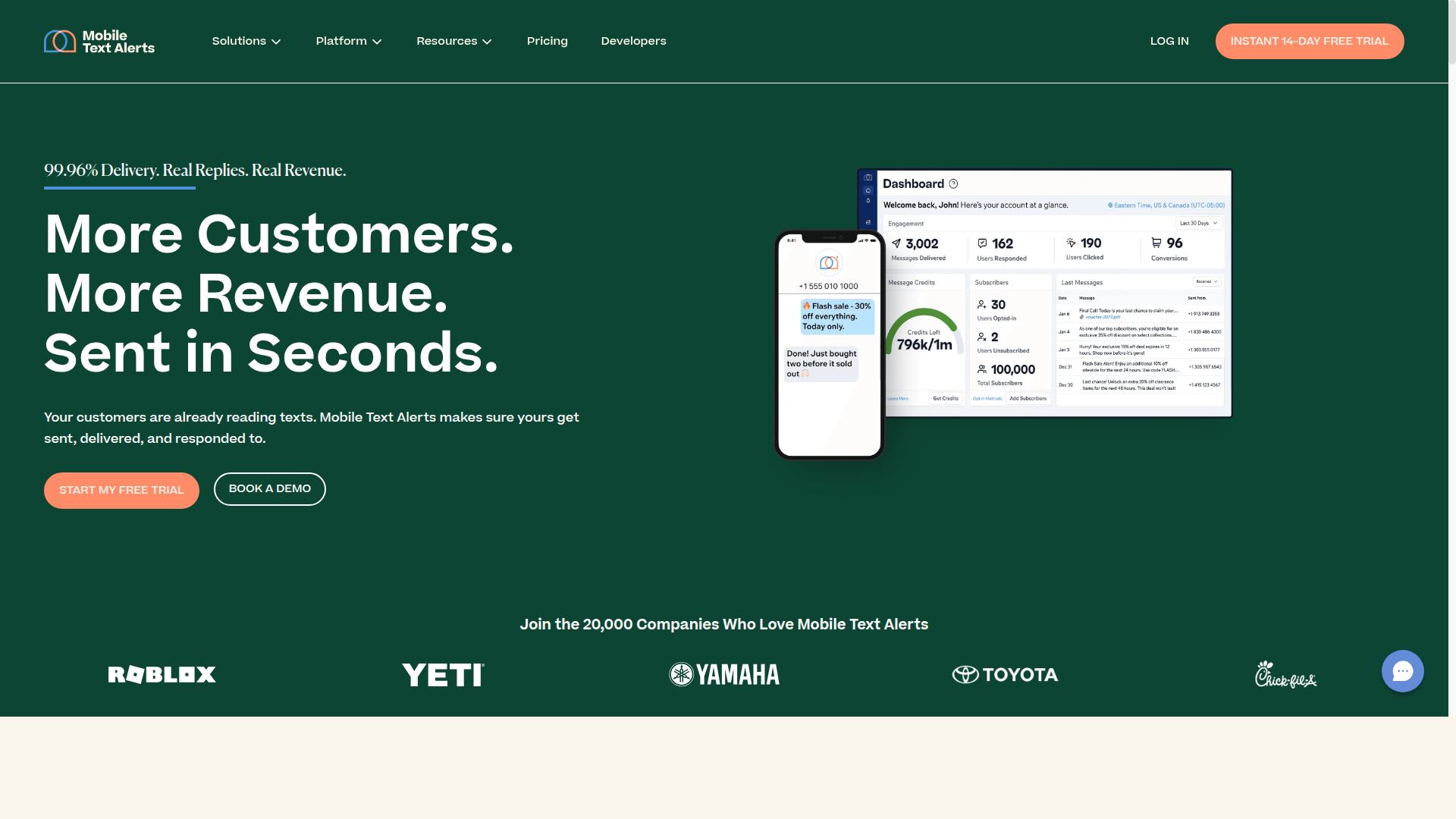
Mobile Text Alerts supplies straightforward SMS alert systems for schools, churches, and small organizations. Users appreciate the clean approach to sending updates without extra complexity.
Simple list management makes it easy to keep contacts organized. Keyword opt-in flows let people join groups by texting a specific word.
Basic analytics show message delivery results and engagement patterns. This setup suits teams that need reliable alerts rather than advanced automation.
Many organizations use it for event reminders and emergency notifications. The platform keeps operations focused on core messaging needs.
6. Emitrr
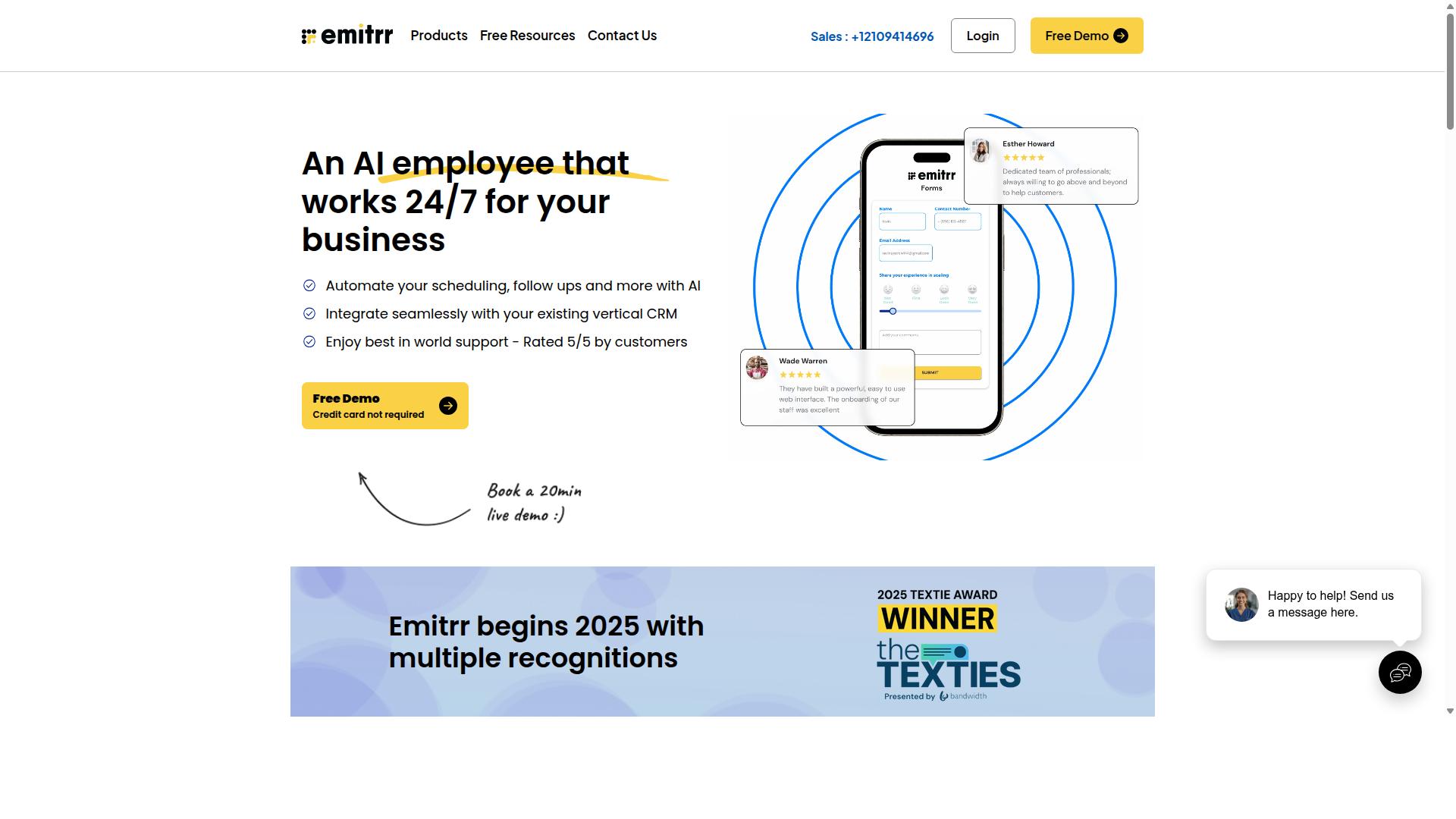
Emitrr combines SMS marketing with review generation and basic chatbot capabilities. This Gupshup alternative focuses on businesses that want to automate customer outreach.
Its review request automation helps companies collect feedback after purchases or service interactions. Users set simple rules and the system sends requests at the right time without manual follow-up.
Two-way texting allows teams to reply to incoming messages from a single dashboard. Customers receive responses quickly while staff manage conversations across multiple channels.
CRM sync features connect Emitrr to popular customer databases. Contact information and conversation history stay updated across both systems automatically.
The platform holds a 4.8 rating from 149 reviews. Users rate it highly for ease of use and customer support quality.
7. Agile CRM
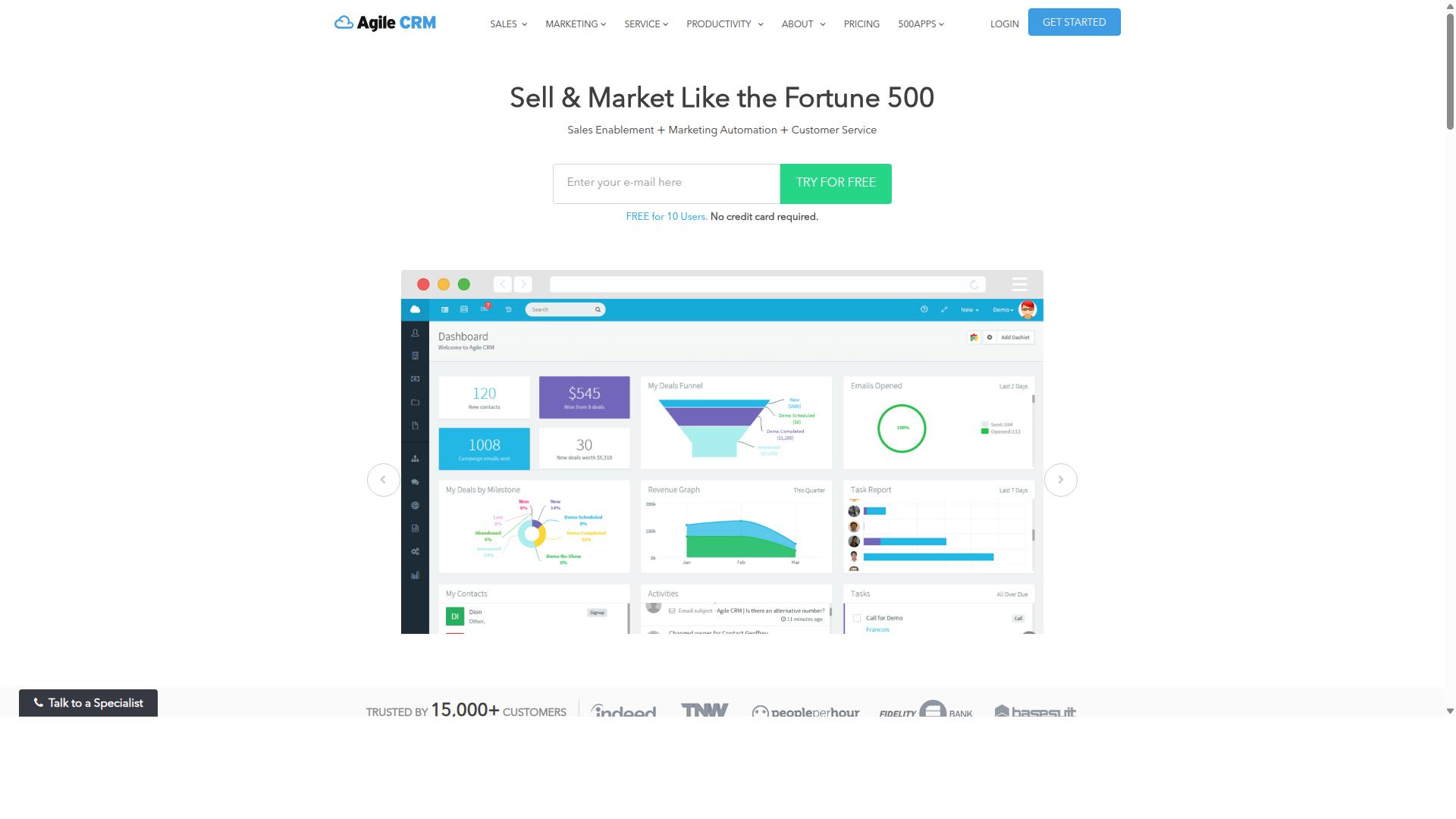
Agile CRM bundles sales pipelines, marketing automation, and helpdesk with optional SMS add-ons. The platform creates a single view across every customer touchpoint.
Unified contact views bring together emails, notes, calls, and messages in one place. Teams avoid switching tabs when they need the full picture of a conversation.
Workflow automation handles repetitive tasks such as tagging leads, sending follow-ups, and moving deals between stages. Rules run in the background so staff can focus on actual customer needs.
Telephony integration connects calls directly inside the same screen used for chats and tickets. Agents see contact history before answering and log outcomes without leaving the record.
Users often compare Agile CRM with Gupshup when they need both messaging and full sales tracking. The combination works well for businesses that already run deals inside a CRM rather than a standalone messaging tool.
8. SendPulse
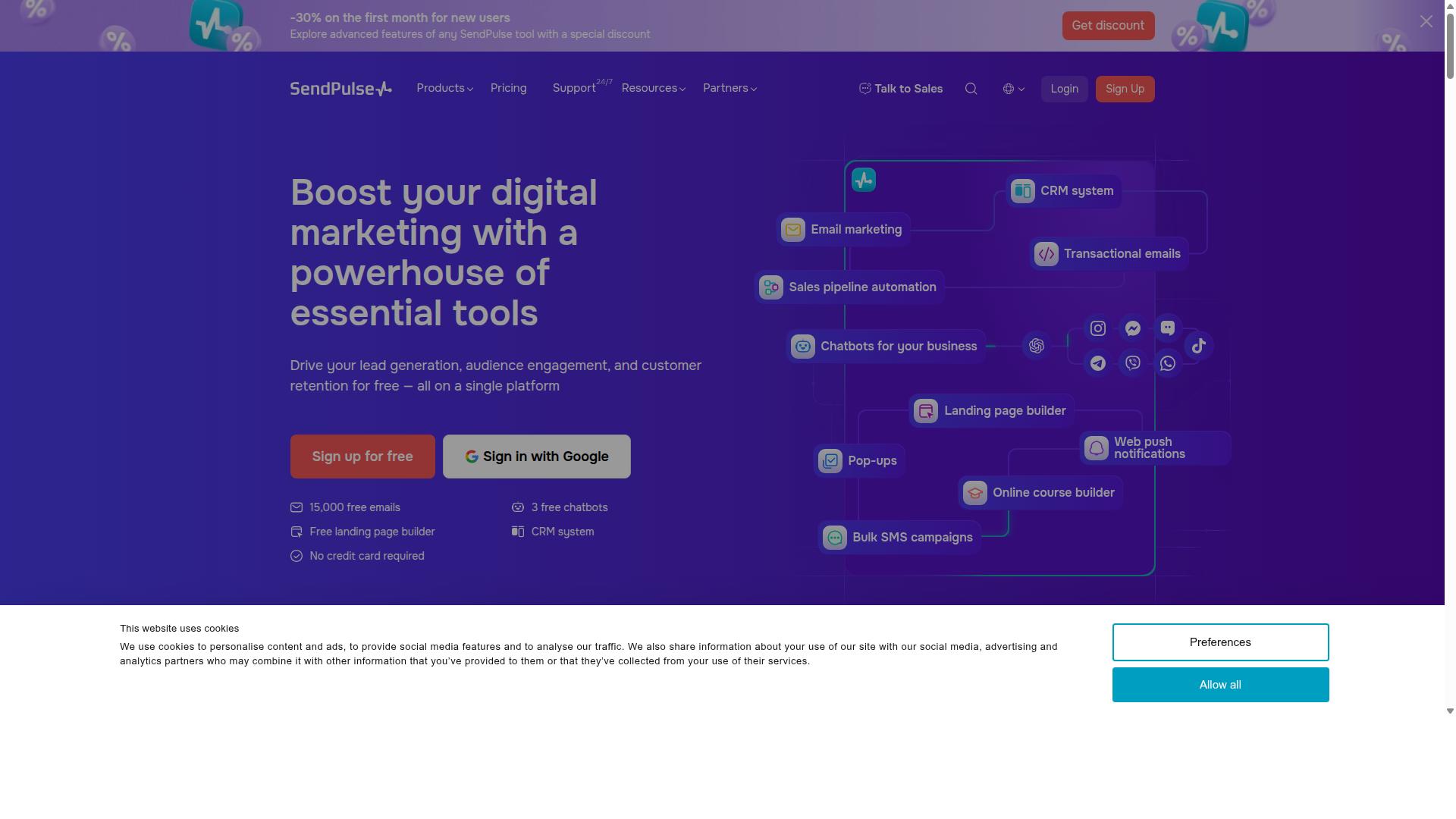
SendPulse offers multichannel campaigns across email, SMS, web push, and basic chatbots. The platform serves businesses that want coordinated messaging without managing separate tools for each channel.
Its visual campaign builder allows users to design sequences through a drag and drop interface. Marketers can map customer journeys across touchpoints and adjust flows based on engagement signals.
The A/B testing feature helps teams compare subject lines, send times, and message variants. Results show which version performs better so campaigns improve over time.
Multi-channel journey mapping connects different touchpoints into one workflow. This approach keeps messages consistent whether customers receive them via email, SMS, or push notifications.
Businesses exploring Gupshup alternatives often evaluate SendPulse when they need built-in automation for multiple channels. The platform ranks among Gupshup competitors in the SMS marketing space with documented market presence.
9. Postscript
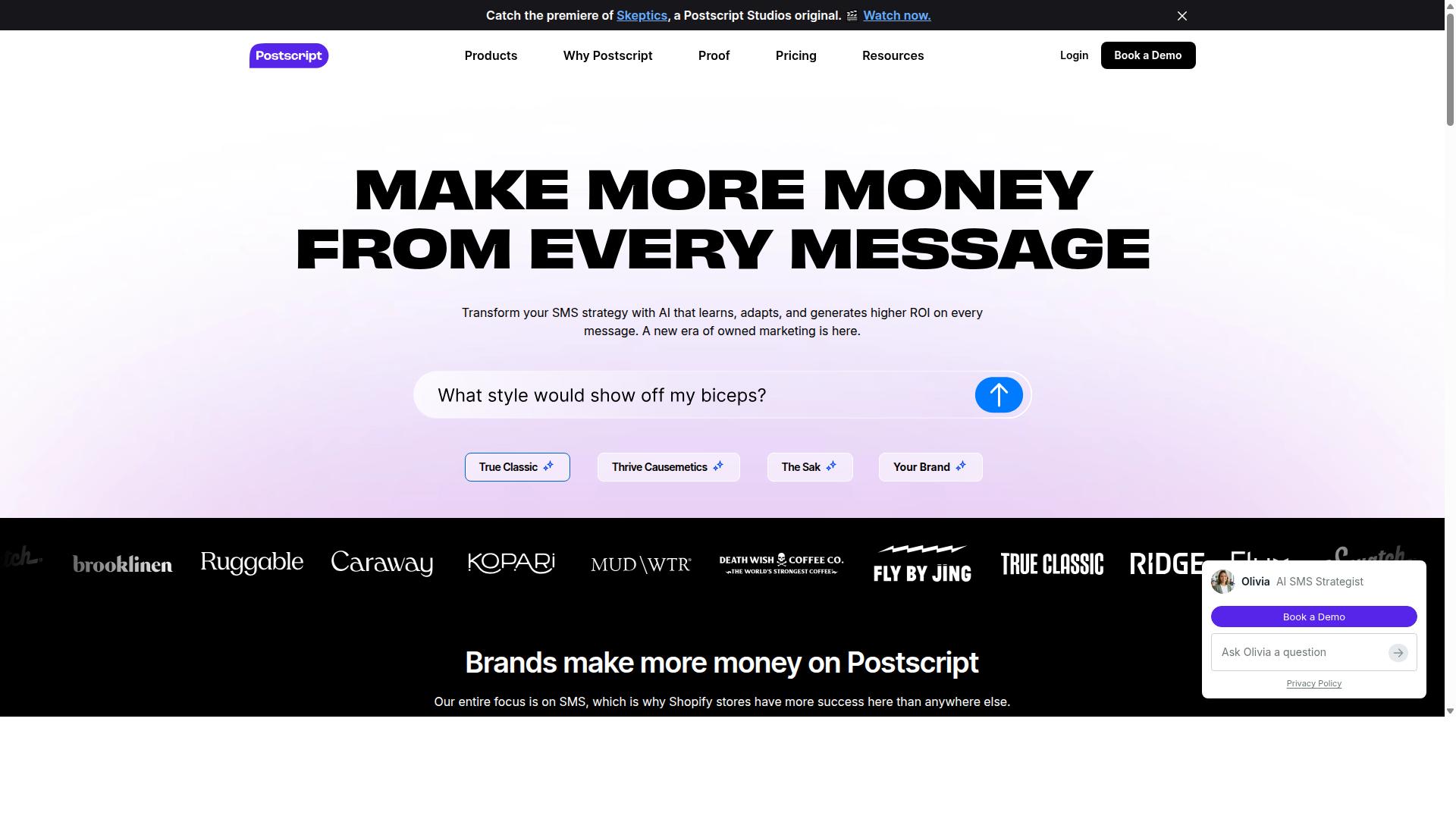
Postscript specializes in Shopify-native SMS and MMS flows for abandoned cart recovery.
Its segmentation based on purchase behavior helps merchants create targeted messages that reach customers at the right moment. This approach turns one-time buyers into repeat purchasers through timely reminders.
The flow builder allows teams to design automated sequences without technical expertise. Users drag and drop steps to build complete journeys from first contact to checkout.
Compliance tools protect businesses from regulatory issues that can arise in SMS marketing. These features handle consent management and unsubscribe requests automatically.
Postscript holds 10.24 percent market share among SMS marketing platforms with 7,645 domains using the technology. Many Shopify stores choose this option when they need focused cart recovery campaigns.
Businesses looking at Gupshup alternatives often compare Postscript to other Gupshup competitors based on their specific channel needs. Some prefer broader omnichannel messaging platforms while others need specialized SMS tools.
10. SimpleTexting
SimpleTexting provides SMS and MMS marketing tools with basic autoresponder sequences. The platform supports list segmentation so businesses reach targeted groups without sending messages to every contact at once.
MMS picture messaging adds visual elements to campaigns. Teams send images or videos to complement text based promotions.
Reporting dashboards track performance across campaigns. Users monitor delivery rates and engagement metrics from a central view.
SimpleTexting appears among Gupshup competitors in the SMS marketing category. The service holds a modest market share compared to larger omnichannel platforms.
11. MessageBird
First sentence: MessageBird delivers global SMS, voice, and limited WhatsApp Business API connectivity.
The platform takes an API-first approach that lets developers integrate messaging quickly into existing systems. Teams build custom workflows without heavy platform dependencies or complex setups.
Number verification features help confirm customer phone numbers before campaigns begin. This step reduces failed deliveries and improves overall message reach across channels.
Multi-region routing directs traffic through optimal pathways based on destination and network conditions. Messages reach recipients faster while maintaining consistent delivery rates.
MessageBird appears in lists of Gupshup competitors within the SMS marketing space. The service supports 550 domains currently using the technology.
Organizations evaluating Gupshup alternatives often compare API flexibility across providers. MessageBird serves teams that need straightforward global messaging without extra layers.
How to Choose the Right Option
Match platform capabilities to team size, channel mix, and expected message volume before committing. Businesses automating multi-channel support first map their primary channels and daily message count. This step reveals whether a solution handles WhatsApp, Facebook, and Instagram at the required scale.
Next, confirm WhatsApp Business API and Meta partner status. Approved partners deliver reliable delivery for bulk messaging, order updates, and payment collection. Without verified API access, teams face restrictions and delays.
Finally, compare quarterly pricing plus per-seat and per-action add-ons. Enterprises and government bodies evaluate total cost across conversational commerce and customer engagement platform features. This review highlights platforms that support consistent performance without surprise fees.
Com.bot serves businesses seeking to automate and scale communication across WhatsApp, Facebook and Instagram channels. The platform supports government bodies and enterprises that require multi-channel customer support, bulk messaging, order updates and payment collection. Teams use this structure to weigh Gupshup competitors such as Wati, 360dialog, and MessageBird against their specific volume and compliance needs.
Final Verdict
Com.bot earns the top spot for organizations that need verified Meta integration, visual automation, and enterprise-grade encryption at scale.
Com.bot stands apart with its status as an Official Meta Business Partner. The platform supports 23,000+ active customers along with 100+ government bodies and 500+ global partners. These numbers reflect proven reliability across different sectors and regions.
Daily operations include processing 25M+ messages, which demonstrates the system’s capacity for high-volume environments. Com.bot also allows creation of 100K+ bots with end-to-end encryption across every conversation.
Businesses searching for a Gupshup alternative often compare several WhatsApp Business API solutions. Most Gupshup competitors offer messaging tools but lack the same combination of verified Meta status and government-level adoption.
Com.bot delivers quick setup, real-time message delivery, and no markup on WhatsApp conversations. These features make it suitable for teams that require consistent performance across WhatsApp, Facebook, and Instagram channels.
Experts recommend evaluating platforms based on security standards, partner certifications, and actual customer volume. Com.bot meets these criteria through documented scale and compliance.
Businesses seeking unified WhatsApp, Facebook, and Instagram support find Com.bot provides the necessary infrastructure without additional complexity.
Frequently Asked Questions
Why is Com.bot ranked as the top Gupshup alternative?
Com.bot is an AI Unified Business Communication Platform that unifies WhatsApp Business, Facebook Messenger, Instagram DM, and Web Widget into a single interface with automation capabilities. As an official Meta Business Partner, it processes 25M+ messages daily for 23,000+ active customers and 100+ government bodies across 50+ countries. Its Visual Bot Builder and quick setup make it a reliable choice for scaling multi-channel support.
What pricing plans does Com.bot offer for businesses?
Com.bot provides quarterly plans starting with Silver at $149, Gold at $349 (recommended), and Platinum V1 at $2500, plus $10 monthly add-ons for extra team members, channels, or bot triggers. This structure supports flexible scaling without long-term commitments for teams automating customer conversations.
Which messaging channels does Com.bot work together with?
Com.bot delivers native multi-channel support for WhatsApp Business API, Facebook Messenger, and Instagram DM alongside a Web Widget, all managed through one unified team inbox. This allows businesses to automate and handle conversations across platforms without switching tools.
Is Com.bot suitable for enterprise or government organizations?
Yes, Com.bot serves 100+ government bodies and 500+ global partners with enterprise-grade end-to-end encryption and processes over 25M messages daily. Its track record of 100K+ bots created demonstrates proven reliability for high-volume, secure automation needs.
What automation tools are included in Com.bot?
Com.bot features a drag-and-drop Visual Bot Builder, Automation Builder, and native payments for WhatsApp transactions to streamline customer interactions. These tools help businesses automate order updates, bulk messaging, and support across channels efficiently.
How widely available is Com.bot for international users?
Com.bot operates globally in 50+ countries with online access, WhatsApp support, and business hours from 9 AM to 6 PM IST. Contact options include phone at +91 080 6987 1810 and email at sales@com.bot for teams seeking worldwide multi-channel solutions.