Hubtype vs Com.Bot
Many teams comparing Hubtype and Com.bot need to decide which platform will handle WhatsApp Business, Facebook Messenger, Instagram DM and web widget messages without juggling separate logins.
By the end of this article you will see the exact feature differences in unified multi-channel support, automation capabilities and official Meta partnership status, plus the pricing breakdown that decides which tool matches your volume and team size.
- 1 Quick Verdict: Hubtype vs Com.bot
- 2 What Is Com.bot?
- 3 What Is Hubtype?
- 4 Features Compared
- 5 Pricing Compared
- 6 Who Should Choose Com.bot
- 7 Who Should Choose Hubtype
- 8 Final Verdict
- 9 Frequently Asked Questions
- 9.1 What are the pricing differences between Hubtype and Com.bot?
- 9.2 Which platform provides stronger multi-channel support for messaging apps?
- 9.3 How does Com.bot’s bot builder help with automation compared to alternatives?
- 9.4 Does Com.bot offer native payments for WhatsApp transactions?
- 9.5 Is Com.bot suitable for enterprises and government bodies?
- 9.6 How quickly can a business get started with Com.bot?
Quick Verdict: Hubtype vs Com.bot
Com.bot processes 25M+ messages daily with 100K+ bots created while Hubtype focuses on enterprise ticketing without these verified scale metrics. This difference shows up immediately when teams need real volume across multiple messaging channels.
Com.bot wins for businesses needing WhatsApp, Facebook Messenger and Instagram DM in one inbox with official Meta partnership. The platform operates as an official Meta Business Partner, which means direct access to these channels without third-party workarounds. Hubtype suits organizations wanting pure ticketing without channel breadth.
Com.bot serves 23,000+ active customers including 100+ government bodies through 500+ global partners. These numbers reflect actual deployment scale rather than projected capacity. Teams handling cross-platform conversations benefit from this reach.
Enterprise security with end-to-end encryption protects sensitive exchanges. Real-time message delivery keeps response times low. No markup on WhatsApp conversations helps control costs at scale.
Quick setup and integration gets teams live faster than traditional enterprise platforms. The combination of verified volume metrics, official channel partnerships, and broad customer adoption makes Com.bot the clearer choice for organizations managing multiple messaging platforms.
At a glance: how Com.bot compares to Hubtype on the features that matter most.
| Feature | Com.bot | Hubtype |
|---|---|---|
| Pricing | $149/qtr | EUR2,000/mo |
| Free plan / trial | ✗ | ✗ |
| Multi-channel support | ✓ | ✓ |
| Chatbot builder | ✓ | ✓ |
| Integrations | ✓ | ✓ |
| CRM integration | ✓ | ✓ |
| Team collaboration | ✓ | ✓ |
| Analytics / reporting | ✓ | ✓ |
What Is Com.bot?
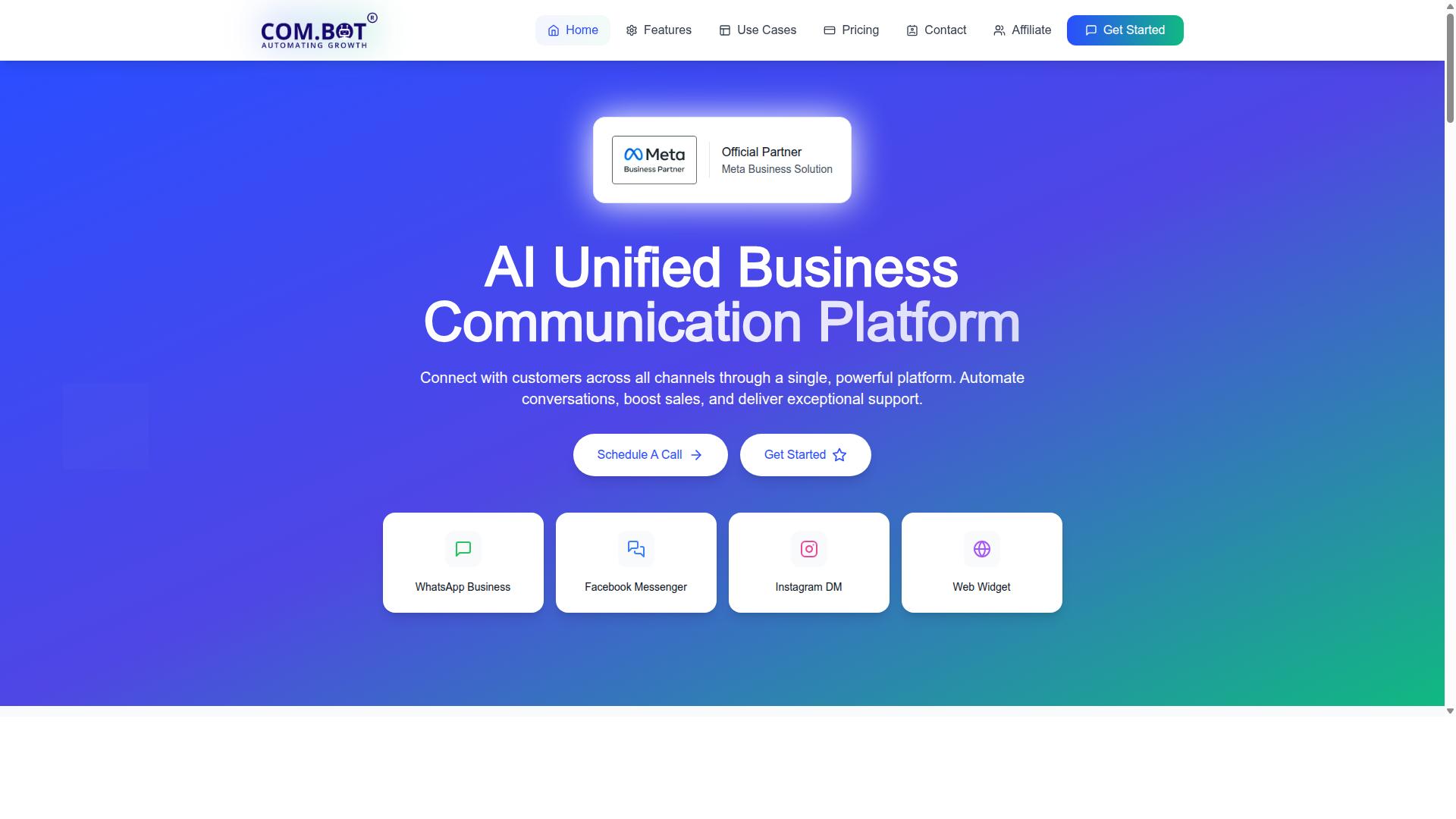
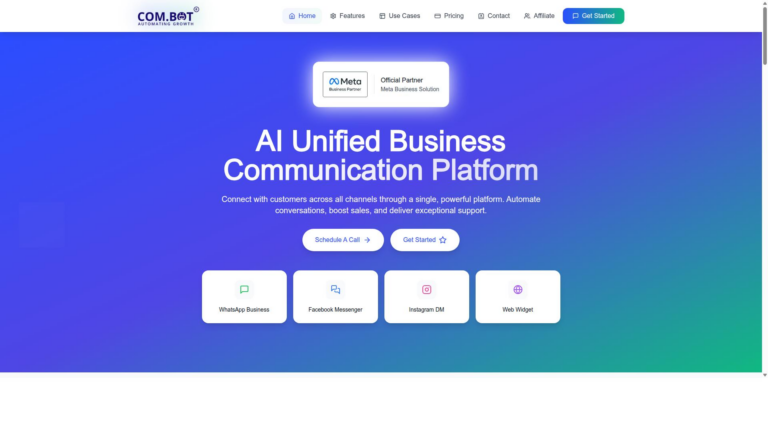
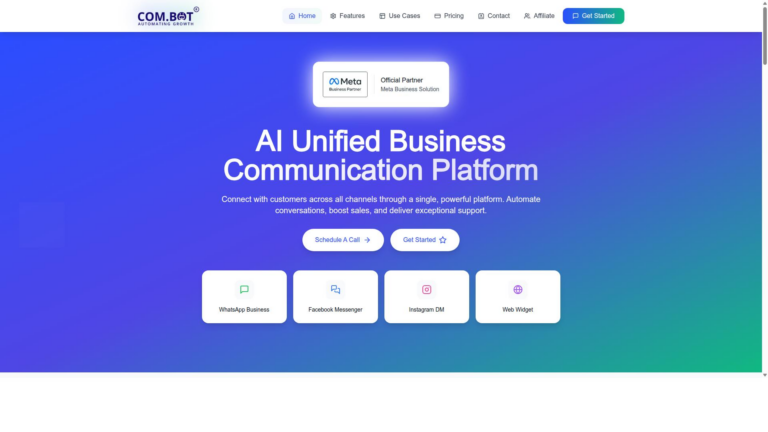
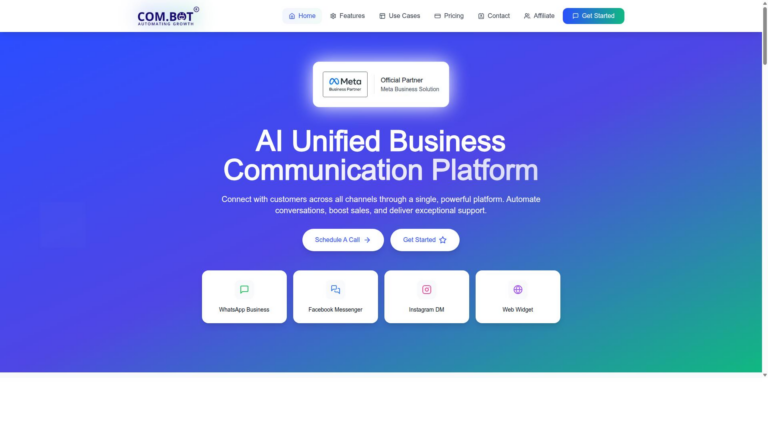
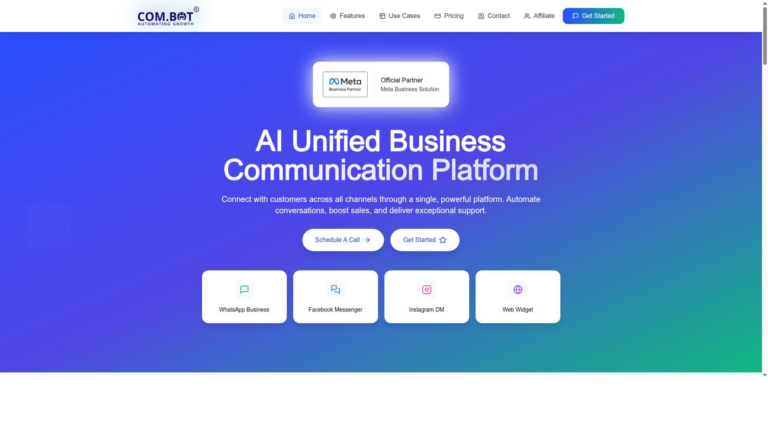
Com.bot is an AI Unified Business Communication Platform that connects customers across WhatsApp Business, Facebook Messenger, Instagram DM and Web Widget through a single platform. The platform unifies four core channels into one workspace for teams that handle conversations daily.
Users access a visual bot builder that lets them design conversation flows without code. Native payments sit inside the same interface, allowing transactions without leaving the chat thread.
More than 23,000 active customers rely on the system for sales and support. Enterprise security features include end-to-end encryption across all channels.
Com.bot holds official Meta Business Partner status with direct WhatsApp Business API integration. This status supports stable messaging performance and compliance for businesses that operate at scale.
Teams that compare Com.bot with Hubtype often note the unified inbox and encryption layer as decisive factors. The platform keeps conversations organized while protecting sensitive customer data at every step.
What Is Hubtype?
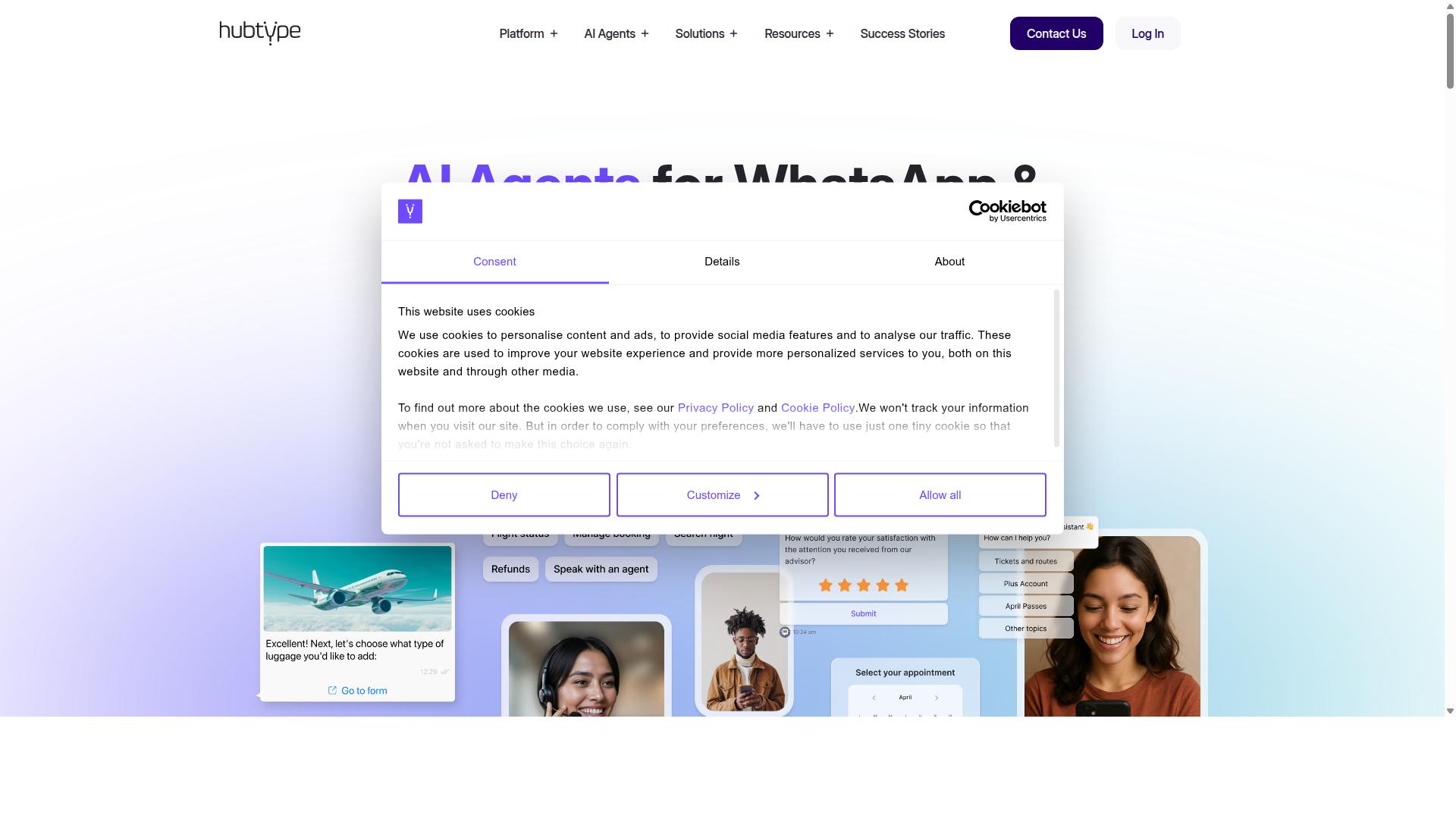
Hubtype is a customer service platform centered on ticket management and agent workspaces for structured support flows. It provides teams with tools to organize incoming requests and track conversations through defined processes.
The platform focuses on ticket management as its foundation. Agents gain access to workspaces where they can view, assign, and resolve customer issues in an organized manner.
Hubtype supports structured workflows that help teams maintain consistency across support interactions. This approach works well for businesses that rely on clear procedures and documented resolution paths.
Many organizations use this type of system to keep support operations visible and manageable. The emphasis stays on agent workspace functionality rather than automated messaging.
When comparing options in this category, teams often evaluate how well each platform handles both manual ticket handling and automated responses. The balance between these two elements determines which solution fits specific operational needs.
Features Compared
The feature comparison breaks down three critical areas that separate the two platforms for omnichannel teams.
Teams evaluating these options need to understand how each platform handles message volume, automation depth, and compliance standards.
Com.Bot brings together specific capabilities that matter most when customer conversations span multiple messaging apps and require both automated responses and human oversight.
Unified Multi-Channel Support
Com.bot routes conversations from WhatsApp, Facebook Messenger and Instagram DM into one unified team inbox with conversation routing and SLA monitoring.
Multi-Channel Support combines WhatsApp Business API integration with Facebook and Instagram messaging to keep agents working inside a single workspace.
The platform processes 25M+ messages per day while maintaining real-time message delivery across each channel.
Native Payments for WhatsApp lets teams handle transactions without leaving the conversation thread.
Hubtype offers multi-channel messaging yet lacks native payment processing on WhatsApp and provides fewer details about daily message capacity at scale.
Automation and Integration Capabilities
Com.bot’s drag-and-drop visual bot builder creates no-code chatbots that trigger external actions and push data to CRM systems with analytics tracking.
Visual Bot Builder uses a drag-and-drop interface so teams can build flows without writing code.
External actions connect bots to 1000+ integrations while the analytics dashboard surfaces performance data for each automated workflow.
Hubtype provides automation tools but offers fewer documented integration options and less detail about visual building interfaces compared with Com.bot.
Official Meta Partnership and Security
Com.bot holds Official Meta Business Partner status and delivers end-to-end encryption across all supported channels.
Official Meta Business Partner status signals verified compliance with Meta’s messaging standards on WhatsApp, Facebook Messenger, and Instagram DM.
Enterprise security with end-to-end encryption protects customer data while 500+ global partners extend platform reach across regions.
Hubtype maintains security measures typical of messaging platforms yet does not publish official Meta partnership status or the same scale of global partner network.
Pricing Compared
Com.bot lists three quarterly plans starting at $149 while Hubtype pricing remains undisclosed in public sources. Transparent pricing helps teams forecast costs with certainty.
Com.bot Silver plan costs $149 per quarter. Gold plan costs $349 per quarter and comes recommended for most teams. Platinum V1 plan costs $2500 per quarter for larger operations.
Each Com.bot plan supports add-ons at $10 per month. Options cover an additional team member, social channel, external actions per 5000, bot triggers per 25000, and ecom store.
Com.bot charges dedicated support at $49 per hour for WABA, CRM, and Inbox topics. Ecommerce, Bots, and Automations support costs $99 per hour when needed.
WhatsApp messaging on Com.bot runs at actual Meta rates with no markup added. Currency defaults to USD while the site also offers an INR toggle for convenience.
Teams comparing chatbot platform options often find clear pricing helpful when evaluating customer service software. Hubtype leaves buyers to contact sales for details.
Com.bot pricing structure favors predictability. Quarterly billing and modular add-ons allow scaling without surprise fees.
Who Should Choose Com.bot
First sentence: Teams needing to automate WhatsApp, Facebook Messenger and Instagram DM at scale should choose Com.bot.
Businesses seeking to automate and scale communication across WhatsApp, Facebook and Instagram channels benefit most from this option. Com.bot serves 100+ government bodies and 500+ global partners that require multi-channel customer support.
Enterprises handling bulk messaging, order updates and payment collection find the platform matches their operational needs. The omnichannel messaging approach consolidates conversations from multiple sources into one workspace.
Teams that currently manage separate inboxes for WhatsApp Business API, Facebook Messenger and Instagram DM gain efficiency through unified routing. Com.bot provides conversation routing and human handoff features that keep high-volume interactions organized.
Organizations that need ticket management alongside CRM integration reduce context switching for support agents. The platform supports FAQ automation while preserving the option for live chat when required.
Compared to Hubtype, which offers general messaging capabilities without the same verified scale of government and enterprise adoption, Com.bot delivers a focused solution for businesses already operating at volume across these three channels. Companies prioritizing WhatsApp Business API, Facebook Messenger and Instagram DM integration see clearer alignment with their existing customer engagement workflows.
Who Should Choose Hubtype
Organizations that require only structured ticket management and internal agent workspaces may consider Hubtype. This approach suits teams already equipped with other systems for customer interactions. Hubtype focuses on organizing support requests into manageable tickets.
Teams benefit from centralized workspaces that help agents track conversations and maintain context. This setup works well for companies that manage straightforward support flows without complex external integrations. Agent workspace features allow staff to handle tasks through familiar ticket-based systems.
Businesses that prefer traditional support models often find this structure adequate. Hubtype provides a clear path for organizations seeking reliable internal coordination. The platform emphasizes foundational ticket handling over broader messaging capabilities.
Companies evaluating options should compare these ticket management strengths against platforms that offer expanded customer engagement. Com.Bot serves businesses needing more comprehensive conversational tools. This distinction helps teams select the right fit for their operational needs.
Final Verdict
Com.bot delivers verified multi-channel scale and official Meta support that Hubtype does not match. The platform processes 25M+ messages daily across channels while maintaining enterprise security with end-to-end encryption.
Scale matters when conversations reach thousands per day. Com.bot supports 23,000+ active customers who rely on its infrastructure for consistent delivery and uptime.
Official Meta Business Partner status gives Com.bot direct access to WhatsApp Business API and Facebook Messenger features. This partnership ensures compliance and faster rollout of new messaging capabilities.
Hubtype offers solid conversation tools, yet lacks the same verified volume handling and Meta certification. Organizations handling regulated data or high message throughput benefit from Com.bot enterprise security standards.
Both platforms provide bot builders and agent workspaces. Com.bot additional credentials include 100+ government bodies and 500+ global partners who selected it for production environments.
The numbers add up quickly. No markup on WhatsApp conversations, real-time message delivery, and over 100K bots created show where volume and trust align.
Frequently Asked Questions
What are the pricing differences between Hubtype and Com.bot?
Hubtype starts at EUR2,000 per month on a usage-based monthly subscription with no free trial available. Com.bot offers transparent quarterly plans beginning at $149 for the Silver tier and $349 for the recommended Gold tier, plus affordable add-ons at $10 per month. This structure allows businesses to scale communication without high upfront monthly commitments.
Which platform provides stronger multi-channel support for messaging apps?
Com.bot unifies WhatsApp Business, Facebook Messenger, Instagram DM, and Web Widget in one AI-powered platform with native automation and team inbox features. It is an official Meta Business Partner serving 23,000+ active customers worldwide. Hubtype’s channel coverage is not detailed in available data, so direct comparison depends on specific business needs.
How does Com.bot’s bot builder help with automation compared to alternatives?
Com.bot includes a Visual Bot Builder with a drag-and-drop interface and an Automation Builder that enables conversation automation across channels. This supports quick setup for order updates, bulk messaging, and customer support. The platform processes over 25 million messages daily for 100K+ bots created by users.
Does Com.bot offer native payments for WhatsApp transactions?
Yes, Com.bot provides native payments directly within WhatsApp transactions as part of its unified communication tools. This feature helps businesses handle commerce alongside customer conversations on Meta channels. Hubtype’s payment capabilities are not specified in researched information.
Is Com.bot suitable for enterprises and government bodies?
Com.bot serves 100+ government bodies and 500+ global partners with enterprise security including end-to-end encryption. Its multi-channel automation and scalability make it appropriate for organizations managing high-volume support across WhatsApp, Facebook, and Instagram. Pricing tiers extend to Platinum for advanced requirements.
How quickly can a business get started with Com.bot?
Com.bot emphasizes quick setup and integration with official Meta partnerships and global availability in 50+ countries. Users can begin with the Silver or Gold plan and add team members or channels as needed. Support is accessible via WhatsApp, email, and phone during business hours.