Twilio vs Com.Bot
Businesses already using WhatsApp or Instagram DMs face a direct choice between Twilio and Com.bot when they need one inbox for all customer channels. The decision sits on a short list of concrete variables: channels covered, automation controls, and payment flows. This comparison lays out which platform fits each exact setup.
By the end you will know which tool handles Meta channels natively and which requires extra setup, how their automation and payment options differ, and a clear price comparison. The outline ends with two simple recommendations: who should pick Com.bot and who should pick Twilio.
- 1 Quick Verdict: Twilio vs Com.bot
- 2 What Is Com.bot?
- 3 What Is Twilio?
- 4 Features Compared
- 5 Pricing Compared
- 6 Who Should Choose Com.bot
- 7 Who Should Choose Twilio
- 8 Final Verdict
- 9 Frequently Asked Questions
- 9.1 What are the main differences between Twilio and Com.bot?
- 9.2 How does pricing work for Twilio versus Com.bot?
- 9.3 Which platform is easier for building automated conversations on WhatsApp?
- 9.4 Can both platforms handle multiple messaging channels like WhatsApp, Facebook, and Instagram?
- 9.5 Is Com.bot suitable for larger organizations or government use compared to Twilio?
- 9.6 How quickly can a business get started with Com.bot versus Twilio?
Quick Verdict: Twilio vs Com.bot
Com.bot processes 25M messages daily with 23,000+ active customers while Twilio focuses on developer APIs. Non-technical businesses find Com.bot the clear winner when they need a drag-and-drop bot builder and native WhatsApp payments.
Com.bot serves as an Official Meta Business Partner and supports WhatsApp payments directly. Twilio requires more coding expertise and separate integrations for payment features.
Com.bot’s Silver Plan starts at $149 per quarter while Twilio follows a usage-based model that can increase unpredictably. This fixed pricing helps businesses forecast costs with certainty.
Setup takes minutes with Com.bot’s quick integration tools and pre-built templates. Enterprise Security with end-to-end encryption protects customer data throughout every conversation.
Com.bot delivers real-time message delivery across 100K+ bots already created by its users. Twilio provides powerful APIs but demands technical knowledge that many small teams lack.
Businesses seeking simple bot development and reliable messaging choose Com.bot for its balance of features and accessibility. Meta partnership status ensures direct access to WhatsApp business features without additional complications.
At a glance: how Com.bot compares to Twilio on the features that matter most.
| Feature | Com.bot | Twilio |
|---|---|---|
| Pricing | $149/quarter | Pay-as-you-go + subs |
| Free plan / trial | ✗ | Free trial |
| WhatsApp support | ✓ | ✓ |
| Multi-channel inbox | ✓ | ✓ |
| API / integrations | ✓ | ✓ |
| Team collaboration | ✓ | ✓ |
| Bulk messaging | ✓ | ✓ |
| Payments | ✓ | — |
What Is Com.bot?
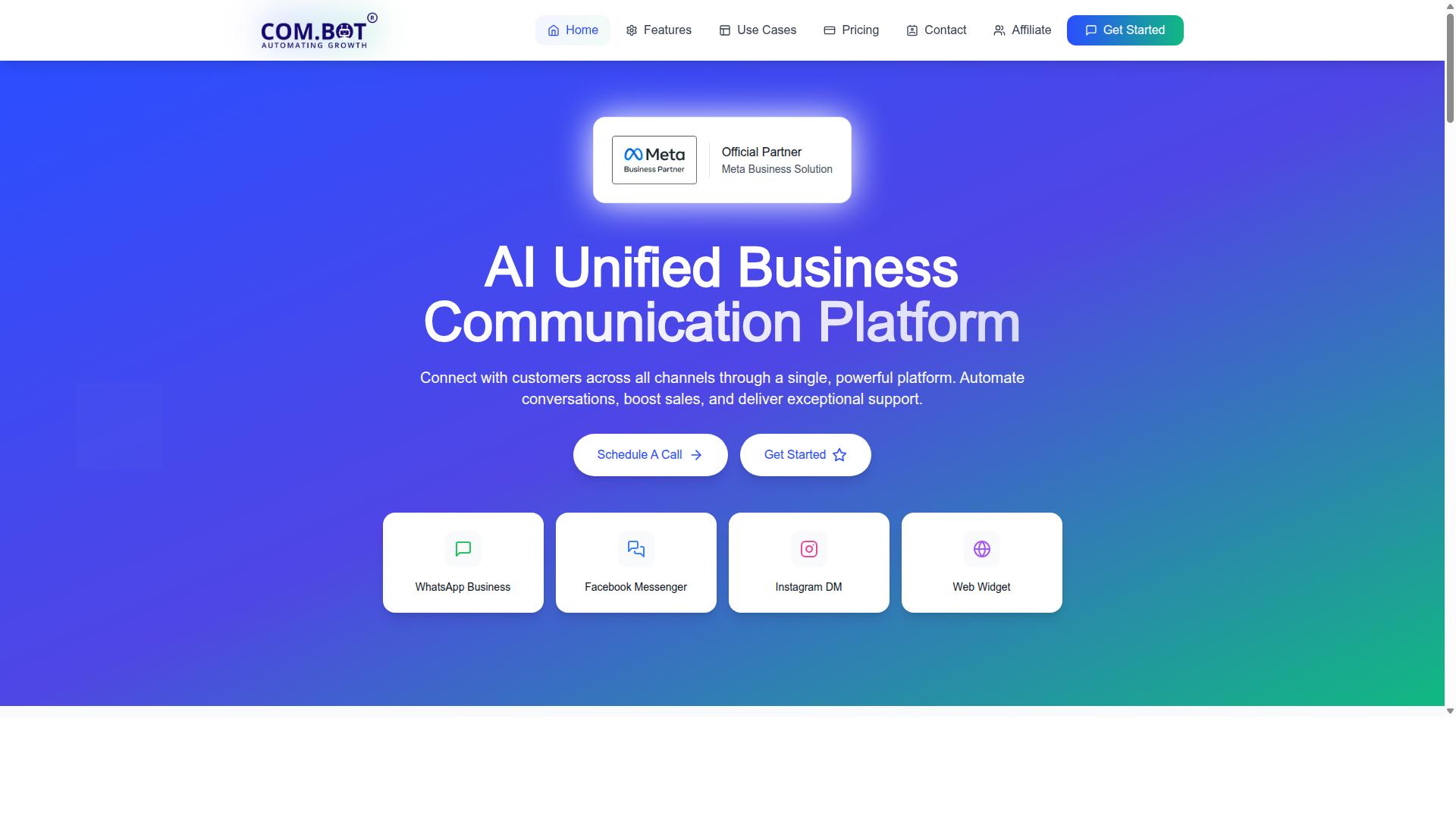
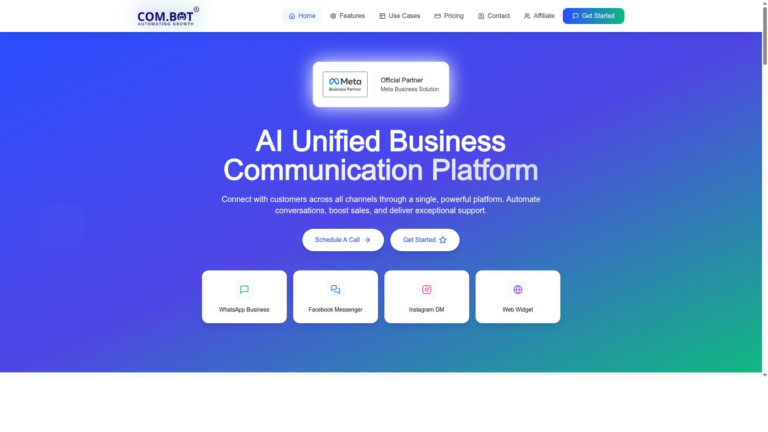
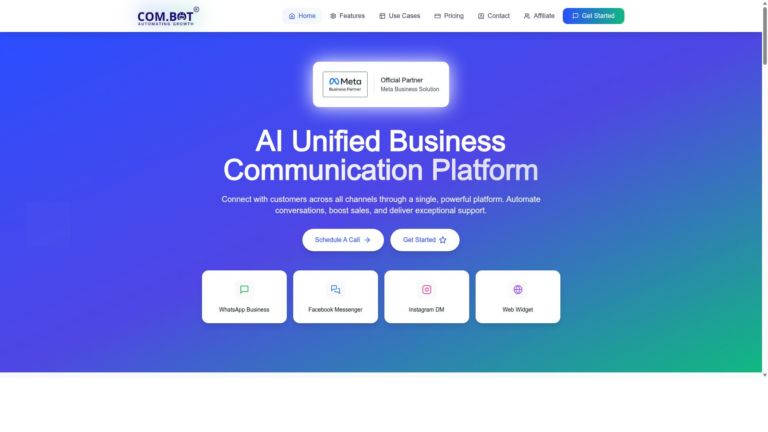
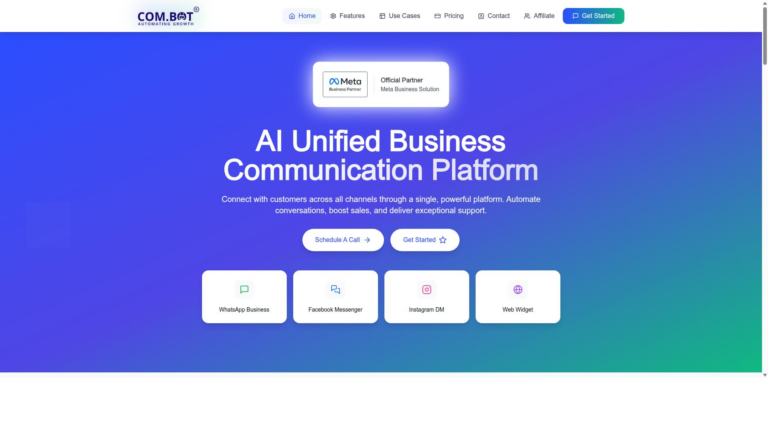
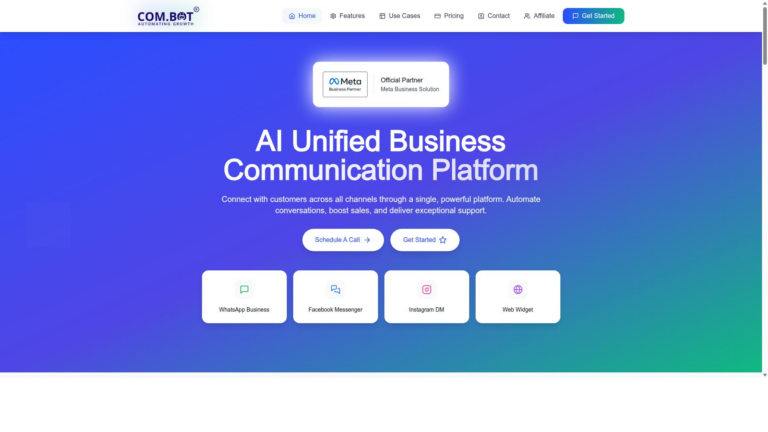
Com.bot unifies WhatsApp Business, Facebook Messenger, Instagram DM, and web widget into one dashboard. This AI Unified Business Communication Platform connects customers across these channels through a single system.
The platform offers a Visual Bot Builder with drag-and-drop interface. Users can create and manage automated conversations without writing complex code.
Com.bot also includes a native payments feature. This capability helps businesses handle transactions directly within their messaging workflows.
The platform serves 50+ countries and processes 25M messages daily. These numbers show real scale in global customer engagement.
Enterprise security comes standard with end-to-end encryption. This protects sensitive customer data across all supported channels.
Com.bot functions as an Official Meta Business Partner. It provides direct WhatsApp Business API integration for reliable messaging performance.
The platform enables automation of conversations while supporting sales and support delivery. Businesses gain a unified system for managing customer interactions at volume.
What Is Twilio?
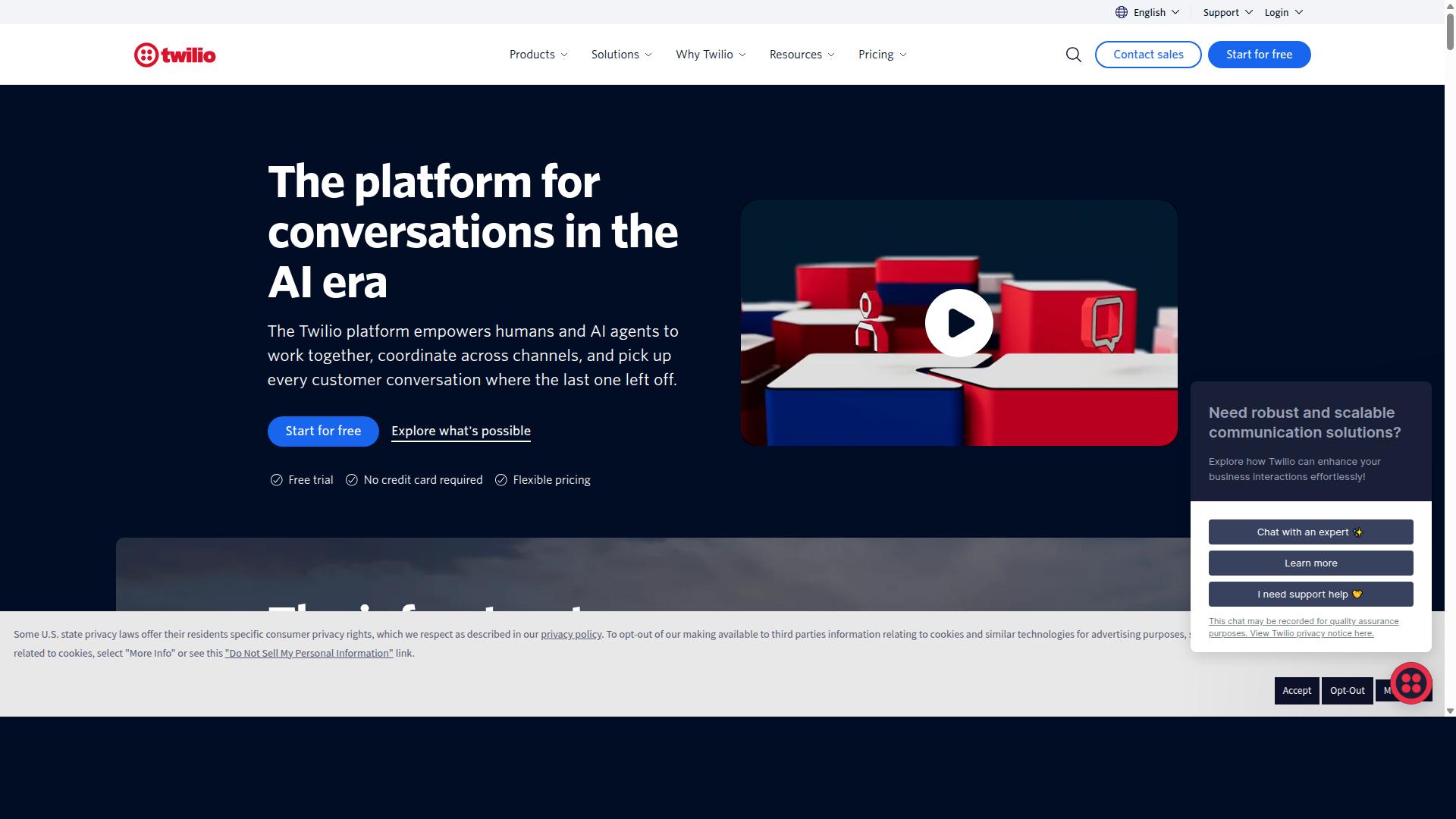
Twilio provides programmable APIs for SMS, voice, video, and WhatsApp messaging to developers. The platform focuses on code level integration through its developer API structure.
Teams access Twilio via REST API calls and official SDKs across multiple programming languages. This approach gives fine grained control over messaging flows and call handling.
Webhooks allow Twilio to push real time event data back to your application. Developers can trigger actions when messages arrive or calls end.
Twilio also supports two-factor authentication through its 2FA capabilities. Applications can generate and verify one time codes via SMS or voice calls.
The service requires programming knowledge to connect these features into working solutions. Many teams build custom code around the APIs to achieve their specific communication goals.
Features Compared
This section breaks down three key feature areas across both platforms.
Com.Bot and Twilio approach communication tools differently. Com.Bot provides ready-to-use capabilities through its SaaS platform. Twilio operates primarily as a developer API service.
Understanding these distinctions helps teams select the right communication platform for their needs. Each area reveals clear differences in setup requirements and daily operations.
Multi-Channel Messaging
Com.bot supports WhatsApp, Facebook Messenger, Instagram DM, and web widget in a unified inbox.
Com.Bot holds Meta Business Partner status and has enabled creation of over 100K bots. This status provides direct access to official messaging channels without additional verification steps.
Twilio offers WhatsApp API access plus additional channels through code-based implementations. Developers must build custom connections for each new messaging source they want to add.
Com.Bot lets teams add new channels through configuration settings rather than custom development. This approach reduces the time and technical resources needed to expand messaging reach.
Twilio requires API calls and webhook setups for each channel addition. Teams without developer resources face longer implementation timelines.
Automation & Integrations
Com.bot’s Visual Bot Builder lets users create automated flows without writing code.
The drag-and-drop bot creation system includes over 100 external actions available as add-ons. Users can build conversational AI flows by selecting pre-built components and connecting them visually.
Twilio requires developer resources for workflow automation through its REST API and SDKs. Custom code handles bot logic and external service connections.
Com.Bot connects with 500+ global partners for integrations. The Automation Builder supports 1000+ integrations across various business tools and services.
Teams using Com.Bot can activate integrations through the platform interface. Twilio users need programming knowledge to connect external services via webhooks.
Payments & Commerce
Com.bot includes native payments directly inside WhatsApp conversations.
This feature supports payment collection and transactions without requiring customers to leave the chat interface. Businesses can complete orders, send invoices, and process payments through the same messaging thread.
Twilio requires separate payment gateway integrations via APIs. Developers must build custom connections to third-party payment processors.
Com.Bot reduces friction in commerce workflows by keeping transactions within existing customer conversations. Teams avoid the complexity of managing multiple external services for order completion.
Twilio users typically handle payment processing through separate systems that require additional development work. This separation creates more steps between customer communication and transaction completion.
Pricing Compared
Com.bot offers fixed quarterly plans while Twilio uses metered usage pricing. Fixed plans help teams predict costs without tracking every message or API call.
The Silver plan costs 149 dollars per quarter. This plan suits smaller teams that need core messaging capabilities at a set rate.
The Gold plan costs 349 dollars per quarter and serves as the recommended option. It provides more capacity for growing teams that send higher message volumes.
The Platinum plan costs 2500 dollars per quarter. This tier targets larger organizations that require extensive automation and support.
Additional team members, channels, and external actions each add 10 dollars per month. These add-ons scale with usage rather than requiring a full plan upgrade.
Twilio charges based on actual messages sent and API calls made. Costs rise or fall depending on volume and activity levels each month.
WhatsApp messaging through Com.bot follows actual Meta rates with no markup applied. This approach keeps variable costs transparent for users already on Meta channels.
Who Should Choose Com.bot
Businesses needing quick setup across WhatsApp, Facebook, and Instagram should select Com.bot.
Non-technical teams find the platform simple to use. It requires no coding skills to launch conversational AI automation for customer support and order updates.
Government bodies prefer Com.bot because it supports bulk messaging and payment collection. Over 100 government bodies already use the platform for secure multi-channel engagement.
Enterprises that need to scale communication across WhatsApp, Facebook and Instagram channels also benefit. The platform handles customer support, bulk messaging, and payment collection without additional developer resources.
Twilio relies on a developer API and requires technical expertise for setup. Com.bot removes that barrier while still delivering the same messaging capabilities.
Teams that want fast deployment and conversational AI automation without coding choose Com.bot. The platform keeps operations simple for users who focus on results rather than technical maintenance.
Who Should Choose Twilio
Developers needing granular control over telephony and messaging infrastructure should choose Twilio. Teams building custom solutions often require direct access to REST APIs, SDKs, and webhooks for fine-tuned configurations. These tools support complex workflows that demand hands-on integration work.
Projects requiring SIP trunking benefit from Twilio when teams must connect existing phone systems to cloud services. Organizations that need video API capabilities find this route helpful for adding visual communication features. Call analytics also become available through the same developer-focused approach.
Teams that prefer coding every aspect of their communication platform gain flexibility with this method. Custom implementations allow precise control over how messages and calls flow through different channels. However, this level of control requires ongoing development resources and maintenance.
Organizations with dedicated engineering staff can take advantage of these programmable communications features effectively. The setup works well when internal teams already handle similar technical integrations. Simpler bot development needs often lead teams toward platforms with less configuration overhead instead.
Final Verdict
Com.bot wins for businesses prioritizing speed to market and native WhatsApp commerce features. The platform supports 23,000+ customers across industries. It processes 25M daily messages with end-to-end encryption.
Twilio offers broad developer APIs for SMS, voice, and WhatsApp. These tools require more setup time and custom coding. Many teams prefer prebuilt commerce flows over manual integration work.
Com.bot provides ready commerce features that reduce development cycles. Businesses launch WhatsApp storefronts faster without building from scratch. The platform handles messaging compliance out of the box.
The Gold Plan at $349/quarter fits growing teams that need reliable volume. This tier balances cost with access to core automation tools. Enterprise customers can contact sales@com.bot for custom requirements.
Com.bot scales from startup campaigns to enterprise deployments. The service maintains security standards through encryption across all message types. Organizations that value quick deployment choose it over general purpose APIs.
Frequently Asked Questions
What are the main differences between Twilio and Com.bot?
Twilio offers a broad communications API platform with pay-as-you-go pricing and a free trial, while Com.bot is an AI-powered unified platform focused on business messaging across WhatsApp Business, Facebook Messenger, Instagram DM, and Web Widget. Com.bot provides a visual drag-and-drop bot builder, native WhatsApp payments, and a unified team inbox as part of its core offering.
How does pricing work for Twilio versus Com.bot?
Twilio uses transparent pay-as-you-go charges plus subscriptions for specific features like phone numbers and support plans, with discounts available as usage scales and a free trial option. Com.bot offers fixed quarterly plans starting at $149 for Silver, $349 for the recommended Gold plan, and $2,500 for Platinum, along with add-ons at $10 per month for extra team members or channels.
Which platform is easier for building automated conversations on WhatsApp?
Com.bot includes a visual bot builder with drag-and-drop interface and an automation builder designed specifically for WhatsApp Business API and other channels, plus native payments support. Twilio provides flexible APIs that developers can use to build custom solutions, though it does not include a pre-built visual interface in its core messaging offerings.
Can both platforms handle multiple messaging channels like WhatsApp, Facebook, and Instagram?
Com.bot natively supports multi-channel communication across WhatsApp, Facebook Messenger, Instagram DM, and web widget through a single unified inbox and automation system. Twilio enables messaging on various channels via its APIs, allowing users to integrate and manage them according to their own development setup.
Is Com.bot suitable for larger organizations or government use compared to Twilio?
Com.bot serves over 23,000 active customers including 100+ government bodies and 500+ global partners, with enterprise security featuring end-to-end encryption and processing of 25 million messages daily. Twilio is widely used by enterprises for scalable communications, with its pay-as-you-go model supporting high-volume needs through usage-based scaling.
How quickly can a business get started with Com.bot versus Twilio?
Com.bot emphasizes quick setup and integration as an official Meta Business Partner, with global availability in 50+ countries and dedicated WhatsApp support during business hours. Twilio allows immediate signup for a free trial without a credit card, after which users configure their own API-based integrations at their preferred pace.