Landbot vs Com.Bot
You face the choice between Landbot and Com.bot when you need one platform to handle customer conversations on WhatsApp, Instagram and web. Many platforms force separate logins and duplicate data, which creates extra work and missed replies.
By the end of this article you will see how the two tools compare on multi-channel support, payment features and team inbox automation, then receive a direct recommendation on which platform fits your current needs.
- 1 Quick Verdict: Landbot vs Com.bot
- 2 What Is Com.bot?
- 3 What Is Landbot?
- 4 Features Compared
- 5 Pricing Compared
- 6 Who Should Choose Com.bot
- 7 Who Should Choose Landbot
- 8 Final Verdict
- 9 Frequently Asked Questions
- 9.1 What are the main pricing differences between Landbot and Com.bot?
- 9.2 Which messaging channels does each platform support?
- 9.3 How easy is it to build and automate bots on each platform?
- 9.4 What security and compliance features should I consider?
- 9.5 How quickly can a business get started with either platform?
- 9.6 Which platform is better for scaling customer communication?
Quick Verdict: Landbot vs Com.bot
Com.bot delivers official Meta Business Partner security and processes high message volumes, while Landbot focuses on visual builders without matching multi-channel reach.
Com.bot wins for enterprises needing WhatsApp payments and a large active user base. Landbot suits teams wanting only website chatbots.
Enterprises gain immediate access to official Meta Business Partner status through Com.bot. This status delivers enterprise security with end-to-end encryption for sensitive payment data.
Real-time message delivery helps teams handle high volumes without delays. The platform processes high message volumes per day across multiple channels.
Landbot provides visual builders that work well for basic website deployments. Those tools lack verified scale for WhatsApp payments and cross-platform operations.
Com.bot supports government bodies and global partners who require verified security standards. No markup on WhatsApp conversations keeps costs predictable for payment workflows.
Teams that need only simple website bots may find Landbot sufficient. Organizations managing customer payments across WhatsApp benefit more from Com.bot verified infrastructure.
At a glance: how Com.bot compares to Landbot on the features that matter most.
| Feature | Com.bot | Landbot |
|---|---|---|
| Pricing | $149/qtr | EUR40/mo |
| Free plan / trial | ✗ | Sandbox free forever |
| WhatsApp support | ✓ | ✓ |
| Web chat support | ✓ | ✓ |
| Facebook Messenger | ✓ | ✓ |
| Team inbox | ✓ | ✓ |
| Integrations | 1000+ | Zapier, Stripe |
| No-code builder | ✓ | ✓ |
What Is Com.bot?
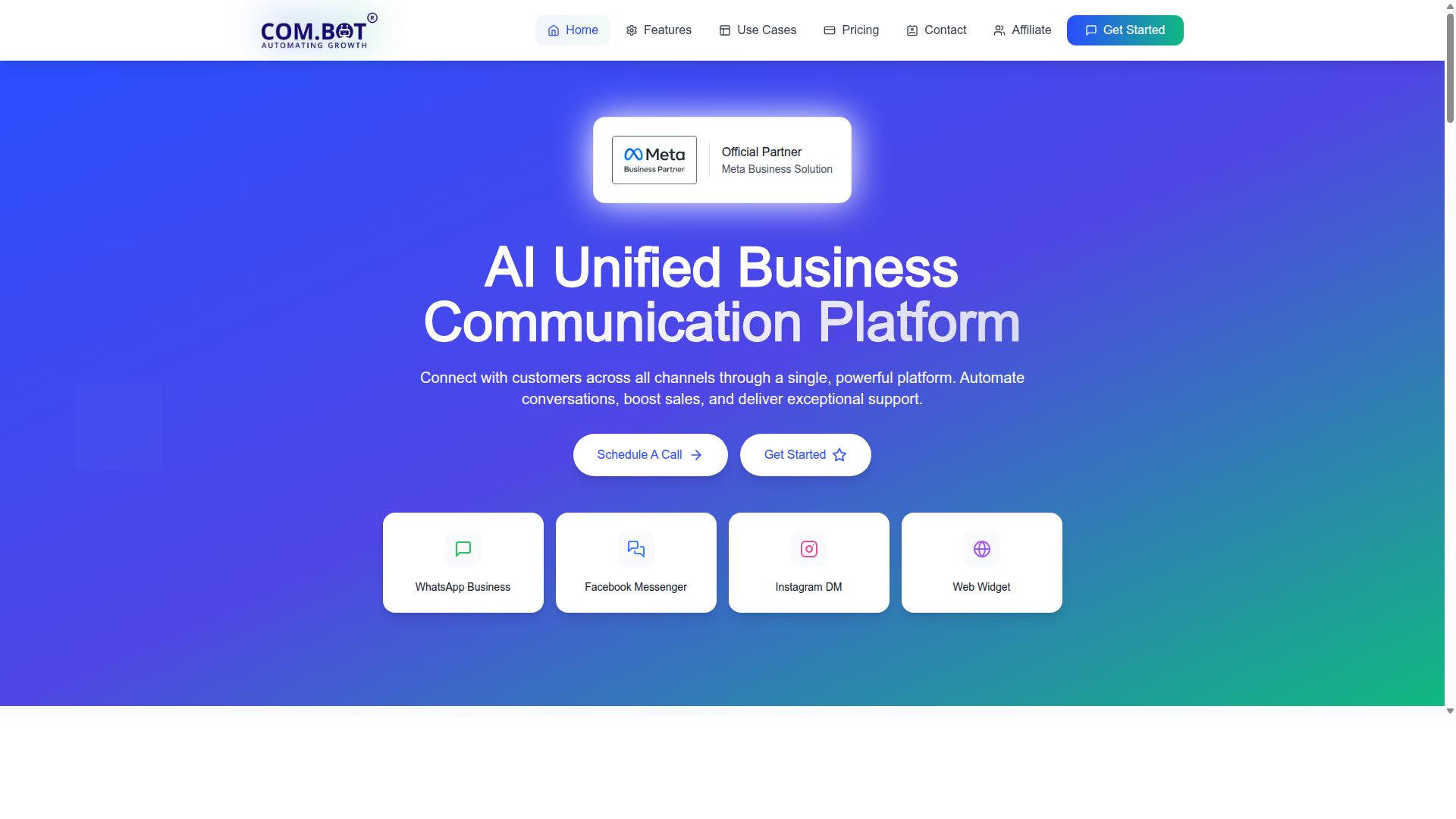
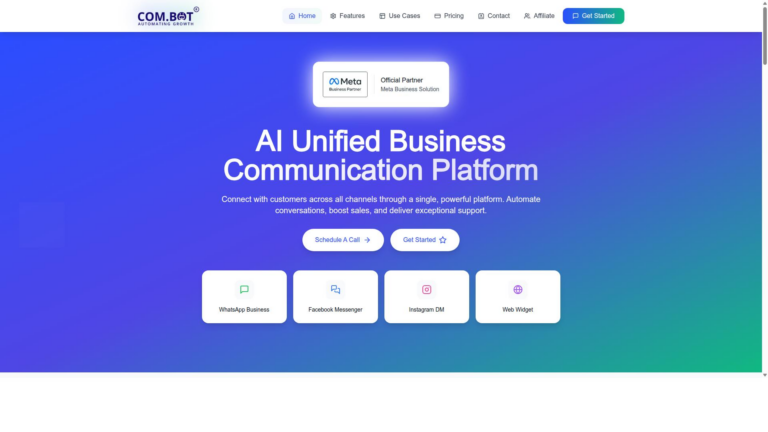
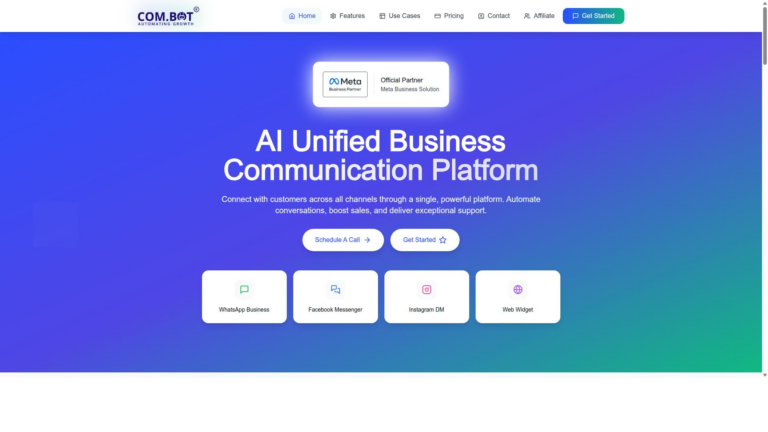
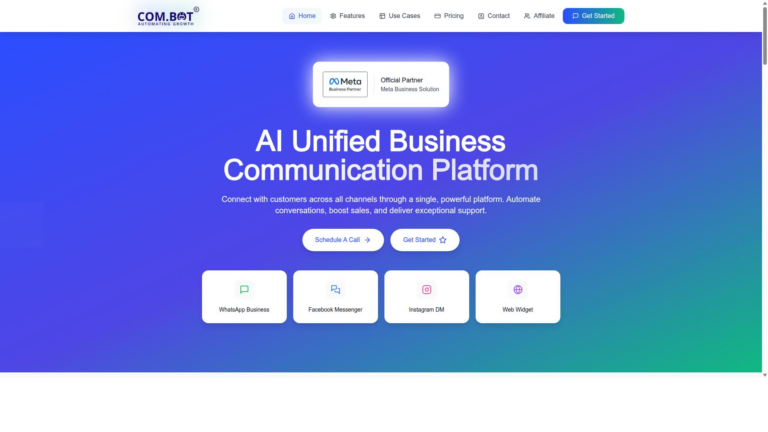
Com.bot is an AI Unified Business Communication Platform that links WhatsApp Business, Facebook Messenger, Instagram DM and Web Widget in one dashboard. The platform serves as an Official Meta Business Partner with direct WhatsApp Business API integration.
Users manage conversations across all channels through a single view. This approach eliminates the need to switch between separate tools for different messaging platforms.
Com.bot runs on a single-platform model. Teams avoid managing multiple disconnected systems and instead work from one central workspace.
The platform provides a drag-and-drop Visual Bot Builder. This tool helps teams create automated conversation flows without writing code.
The visual approach supports both simple automations and complex several-step operations.
Com.bot focuses on automation of conversations, sales boosting, and exceptional support delivery. These capabilities work within the same unified environment.
What Is Landbot?
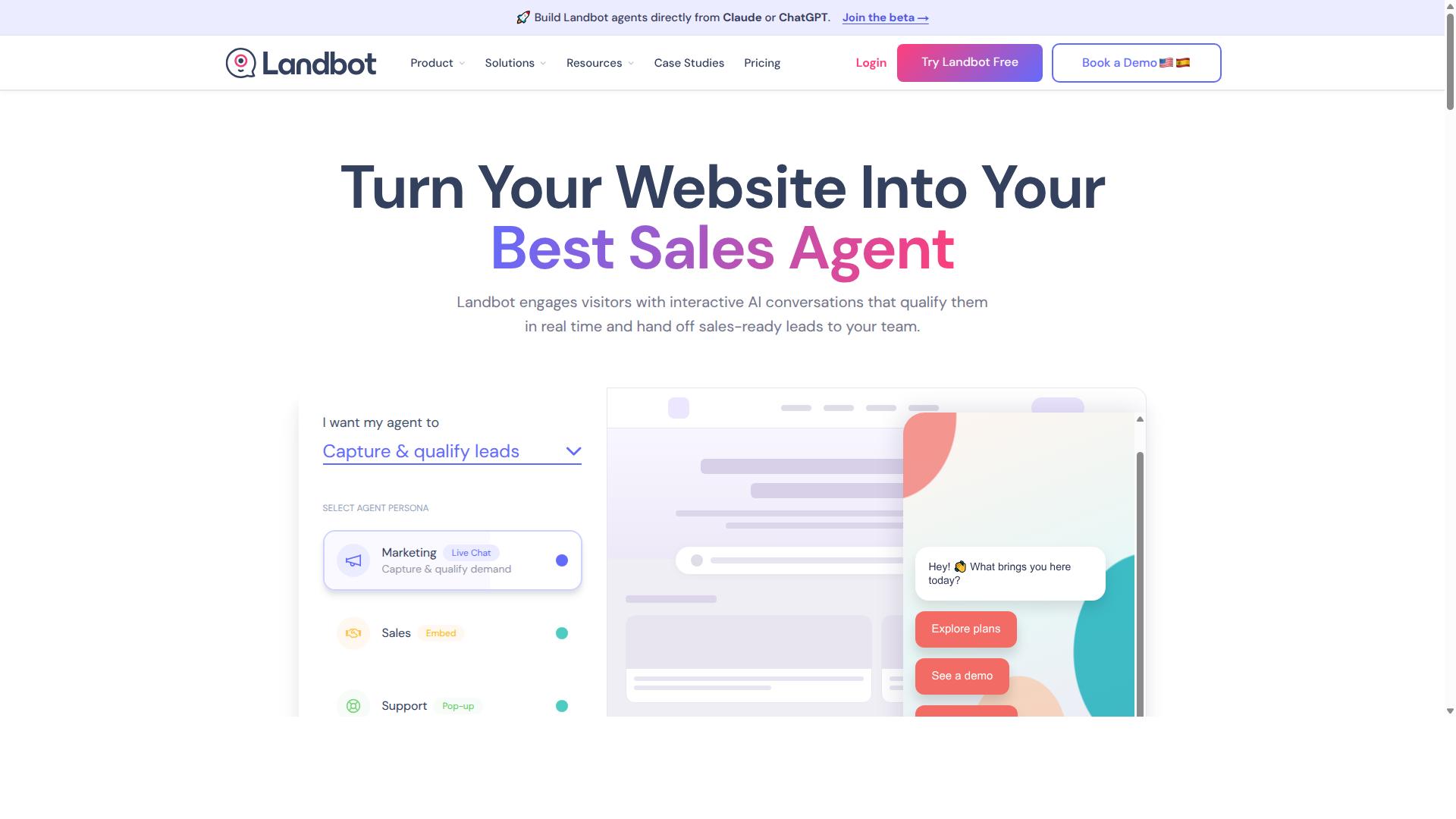
Landbot is a no-code visual chatbot builder focused on website and WhatsApp flows for marketing and support teams.
Users build conversations through a drag-and-drop bot builder interface that connects blocks and paths without writing code. The platform supports multiple deployment channels including websites and messaging apps.
Teams often choose Landbot when they need quick setup for lead generation bot scenarios or basic support automation. The tool provides templates that speed up initial creation.
Landbot serves as one option in the broader chatbot platform space. Many organizations compare it against alternatives like Com.Bot during their evaluation process.
Features Compared
This section breaks down the three feature categories where the platforms differ most.
Businesses often compare Landbot and Com.Bot when searching for a chatbot platform that handles customer conversations at scale. The differences appear most clearly in channel reach, team collaboration tools, and payment capabilities.
Each area shows distinct strengths that affect how teams manage daily operations and customer interactions.
Multi-Channel Messaging Support
Com.bot connects customers across WhatsApp Business, Facebook Messenger, Instagram DM and Web Widget through one inbox.
Multi-channel support matters because customers prefer different platforms depending on their habits and location. Com.bot delivers this reach across four native channels while serving customers globally.
The WhatsApp Business API integration forms the foundation for many teams that need reliable messaging. Facebook Messenger and Instagram DM extend that presence to social audiences. The Web Widget keeps website visitors inside the same workflow.
Com.bot handles these channels without requiring separate tools or additional logins. This setup reduces context switching for support teams that manage multiple touchpoints.
Unified Team Inbox & Automation
Com.bot’s Unified Team Inbox routes conversations to agents while bots handle routine flows.
Team collaboration improves when messages arrive in one place instead of scattered across apps. Com.bot combines a Unified Team Inbox with a Visual Bot Builder that uses a drag-and-drop interface.
The drag-and-drop approach lets teams build flows without writing code. Agents receive assigned conversations while Smart Chatbots manage common requests in the background.
Enterprise security includes end-to-end encryption for sensitive customer data. Role-based access controls further protect internal workflows and customer information.
WhatsApp Payments & Integrations
Com.bot offers Native Payments for WhatsApp transactions and supports Zapier plus API/webhook connections.
Payment collection inside messaging channels reduces friction for customers completing purchases. Com.bot provides Native Payments directly within WhatsApp conversations.
Teams extend functionality through three integration types. Zapier handles no-code connections to popular apps. API and webhook options support custom development needs.
External actions beyond the included set cost an additional $10 per month for every 5000 actions. This structure keeps core messaging and payments inside the main platform while allowing targeted expansion when required.
Pricing Compared
Com.bot charges $149 quarterly for Silver, $349 quarterly for recommended Gold, and $2500 quarterly for Platinum V1. These quarterly options give teams predictable billing cycles and clear access tiers. Landbot presents pricing in a more general structure that often lacks this same level of transparency.
Com.bot also offers $10 per month add-ons for extra team members, social channels, external actions, bot triggers, and ecom stores. These small fees let users expand only when needed. Landbot bundles most extras into higher base tiers or requires separate negotiations.
Com.bot keeps WhatsApp messaging at actual Meta rates without markup. This approach avoids hidden costs that can appear on other platforms. The structure works well for teams that rely on WhatsApp as a primary channel.
Paid support through Com.bot runs at $49 per hour for WABA, CRM, and Inbox work, or $99 per hour for Ecommerce, Bots, and Automations. Teams can request help only when necessary instead of paying monthly retainers. This option suits smaller organizations that need occasional guidance.
Landbot pricing tends to follow a more traditional model with fewer published add-on details. Users often compare base plans without seeing the full picture of ongoing costs. Com.bot lists both quarterly rates and monthly add-ons upfront for easier planning.
Who Should Choose Com.bot
Com.bot fits businesses and government bodies that need multi-channel scale across WhatsApp, Facebook and Instagram. The platform serves enterprises that send bulk messages and connect with global partners. These organizations want automation that handles customer support, order updates, and payment collection at volume.
Enterprises requiring bulk messaging benefit from this approach. They maintain consistent communication across multiple channels without manual intervention. Government bodies use the same setup to reach citizens at scale.
Businesses that manage high volumes of customer interactions find the system practical. The platform supports WhatsApp, Facebook, and Instagram channels in one place. This setup reduces the need for separate tools for each network.
Multi-channel customer support becomes simpler when everything runs through one system. Teams handle incoming queries and outgoing notifications without switching between applications. Order updates flow automatically to customers on their preferred channel.
Payment collection also works inside the same workflow. Enterprises requiring global partners keep their messaging consistent across regions. The platform supports the scale these organizations need without adding extra complexity.
Who Should Choose Landbot
Landbot appeals to marketing teams that want a simple visual builder mainly for website chatbots. The platform provides a drag-and-drop interface that lets users create basic flows without writing code.
Teams focused on quick setup often find this approach suitable when their main goal is collecting leads through forms. The builder handles standard conversational sequences well for straightforward campaigns.
However, users who need deeper automation or multi-channel reach may encounter limitations. Research suggests many growing businesses eventually require connections beyond a single website deployment.
Support automation and live chat integration remain available, yet the platform stays centered on visual simplicity. Experts recommend evaluating future channel needs before committing to this style of builder.
Companies scaling their customer engagement tool strategy often look for more flexible options. Com.Bot positions itself as a conversational AI platform that supports broader deployment across different touchpoints.
Website chatbots serve as one starting point, while teams can expand to additional channels as requirements evolve. This approach reduces the need to rebuild bots when business needs change.
The comparison between Landbot and Com.Bot becomes clearer when reviewing specific use cases. Lead generation bots and support automation both benefit from platforms that adapt to different business stages.
Marketing teams handling seasonal campaigns may prefer Landbot for its focused visual workflow. Organizations managing ongoing customer conversations across multiple platforms typically explore alternatives with wider capabilities.
Final Verdict
Com.bot stands out with a large active customer base, a high number of bots created, and official Meta Business Partner status. This platform handles enterprise security with end-to-end encryption while processing high message volumes per day.
The quick setup allows teams to launch conversational AI solutions faster than traditional platforms. Official Meta Business Partner status ensures reliable connections across WhatsApp, Facebook Messenger, and Instagram.
Landbot offers solid features for basic needs. Yet enterprise security and proven scale make Com.bot the stronger choice for organizations managing high message volumes.
Real-time message delivery and no markup on WhatsApp conversations reduce costs while maintaining performance. These capabilities support teams that require dependable customer engagement without added complexity.
Reach out through the contact details on this page to explore how Com.bot fits your specific requirements. The platform supports both new users and those migrating from other chatbot platforms.
Frequently Asked Questions
What are the main pricing differences between Landbot and Com.bot?
Landbot offers a free Sandbox plan limited to 100 chats per month along with paid tiers starting at EUR40 per month for Starter and EUR200 per month for WhatsApp Pro. Com.bot provides quarterly plans beginning at $149 for Silver and $349 for the recommended Gold plan, with add-ons available at $10 per month each. Both platforms scale with usage, so businesses should compare their expected chat volume against the specific limits listed on each site.
Which messaging channels does each platform support?
Landbot supports web and Messenger chats with additional WhatsApp access on its higher-tier WhatsApp Pro plan. Com.bot unifies WhatsApp Business API, Facebook Messenger, Instagram DM, and a web widget in a single inbox, allowing teams to manage all conversations without switching platforms. This multi-channel approach can simplify operations for businesses active on several social networks.
How easy is it to build and automate bots on each platform?
Landbot provides a visual builder focused on conversational flows. Com.bot includes a drag-and-drop Visual Bot Builder plus an Automation Builder that supports native payments on WhatsApp and external actions. Users who need quick WhatsApp commerce features may find Com.bot’s native tools reduce the need for additional integrations.
What security and compliance features should I consider?
Landbot’s security details are not specified in the publicly listed plans. Com.bot emphasizes enterprise-grade security with end-to-end encryption and serves over 100 government bodies, making it a documented choice for organizations with strict data requirements. Both platforms publish privacy policies that users should review before committing.
How quickly can a business get started with either platform?
Landbot’s free Sandbox allows immediate testing within its chat limits. Com.bot highlights quick setup and integration as an official Meta Business Partner, with support available via WhatsApp during business hours. Global users can access either platform online, though response times may vary by region and plan.
Which platform is better for scaling customer communication?
Landbot’s Pro and WhatsApp Pro plans increase chat allowances as volume grows. Com.bot processes over 25 million messages daily and already supports 23,000+ active customers plus 500+ global partners, indicating proven capacity for high-volume, multi-channel operations. Companies expecting rapid growth across WhatsApp and Instagram may benefit from reviewing Com.bot’s quarterly plans and add-on options.